The “Slow But Deadly” Dive Bomber
By WavesToJets
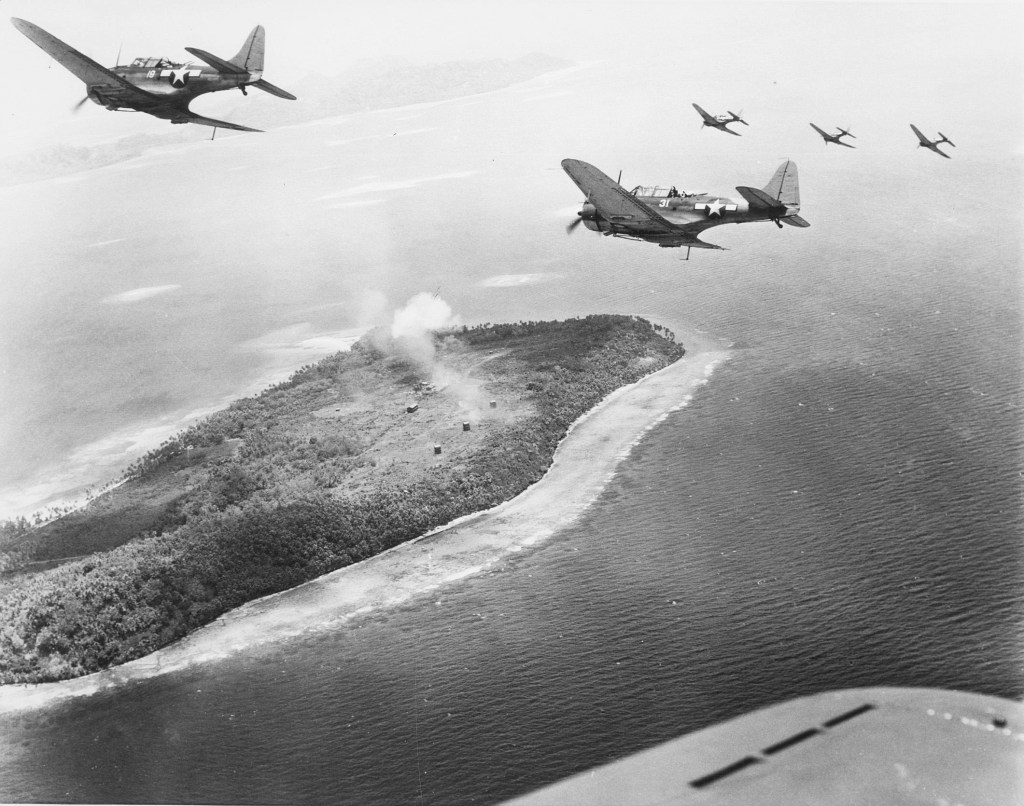
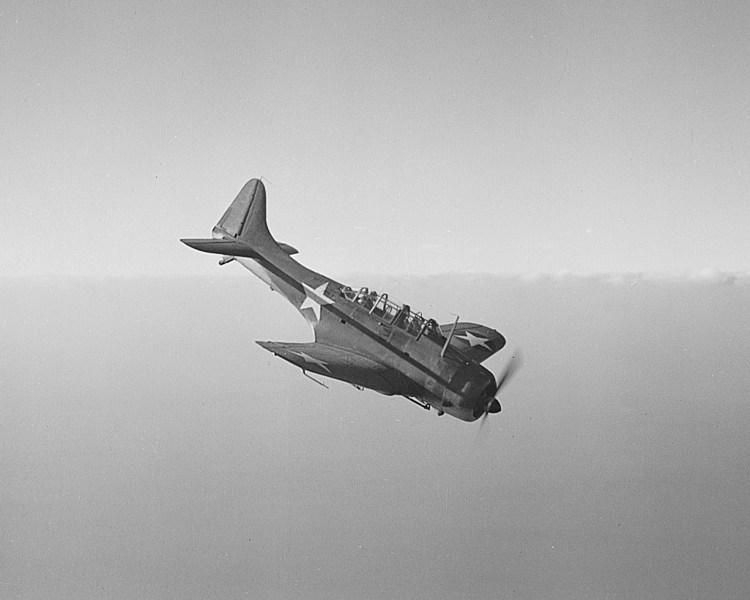
The Douglas SBD Dauntless was a World War II-era airplane that was used in various forms by the United States Navy, Marines, and Army Air Forces.
A scout plane and a dive-bomber, the Dauntless was introduced to the Marines in June of 1940, to the Navy in November 1940, and finally to the Army (as the A-24 Banshee) in 1941.
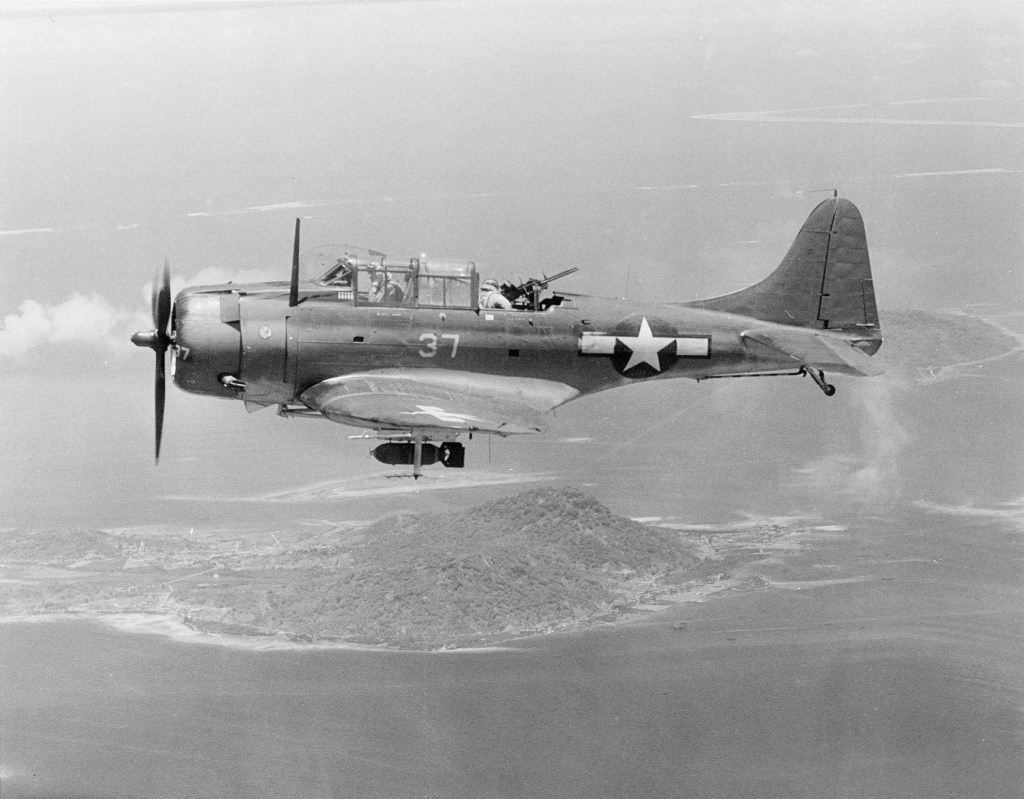
The Dauntless played an important part in the United States’ early involvement in the war, responding first to the Japanese attacks on Pearl Harbor.
It was then used critically in the Battle of Midway — sinking four Japanese fleet carriers and one heavy cruiser.
Technological Background

Techniques in dive-bombing were experimented by the US Marine Corps shortly after World War I and were officially recognized by the US Navy in the 1920s.
With aircraft carriers providing a limited amount of space for bombers to carry and reload bombs, dive-bombers were purported to improve capacity and accuracy, hence, the ability to use fewer bombs.
The Dauntless was patterned after the XBT-1 and XBT-2 designs by Ed Heinemann and a team of engineers based at Northrop in the mid-1930s.
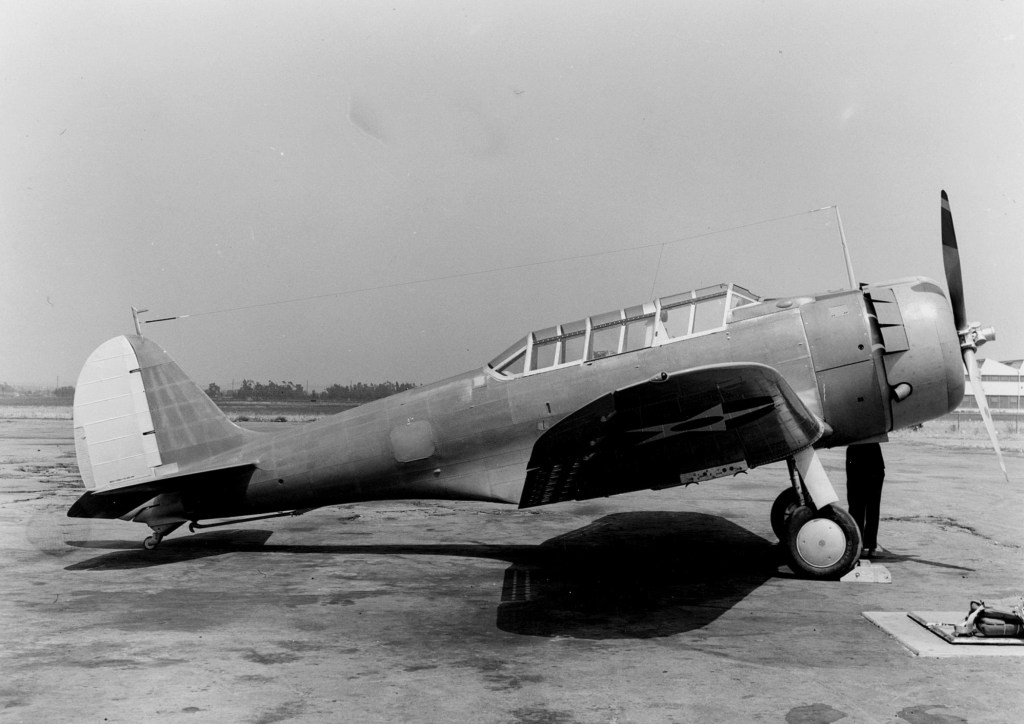
When Heinemann’s El Segundo, California factory was sold to Douglas in 1938, the XBT-2 became the XSBD-1 (short for the Experimental Scout Bomber Douglas) – the prototype of the SBD Dauntless.

Key characteristics of the aircraft included fixed wings, fully retractable landing gear, a bomb fork, and a Wright R-1820-32 engine of 1,000 horsepower.
Armaments included .50 and .30 caliber machine guns, the capacity to carry one 1,000-pound bomb and two 100-pound bombs, a two-person cockpit, and dive flaps in the aft edges of the main wings.
In Service
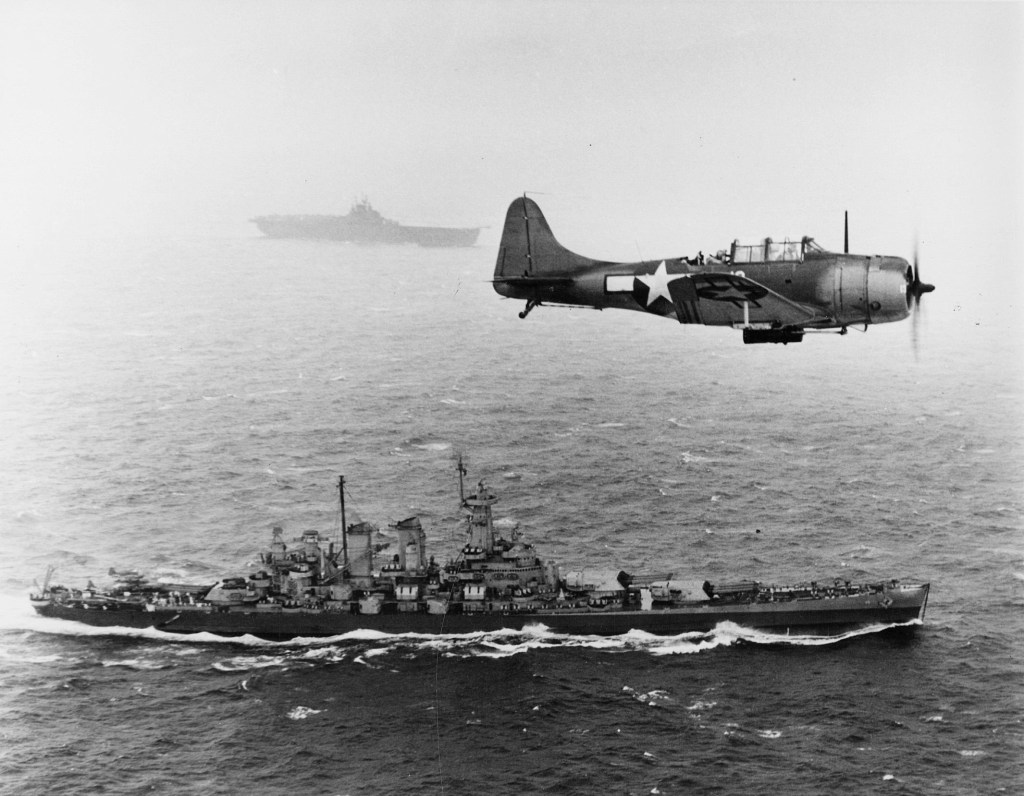
The SBD Dauntless was first used in combat on December 7, 1941 against Japanese aircraft during the attack on Pearl Harbor. The plane was also used in raids on the Marshall and Gilbert Islands in Micronesia in February 1942.
That same month, the United States Army Air Forces (USAAF) used their version of the Dauntless — the A-24 Banshee — in attacks against Fiji and Bali.
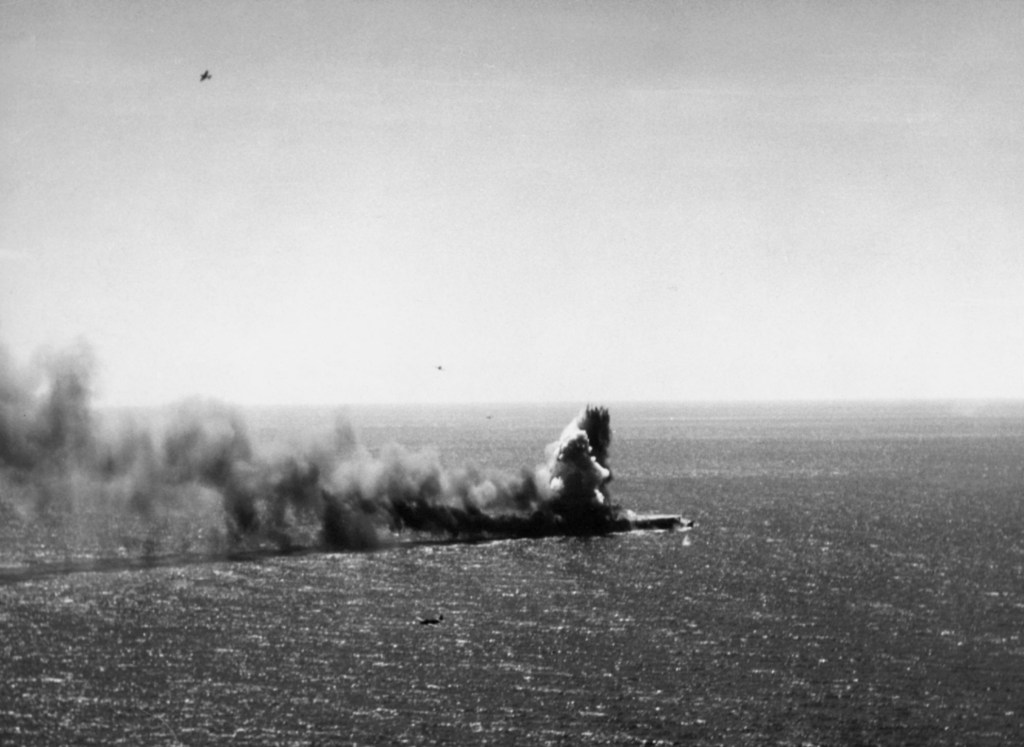
In the Battle of the Coral Sea in May 1942, Navy pilots of the Dauntless were responsible for spotting the Japanese fleet and sinking the Shoho light aircraft carrier.
Because of the plane’s relatively low speeds –but effectiveness in battle, the SBD Dauntless became nicknamed “Slow But Deadly”.
At Midway
Perhaps the most crucial use of the SBD Dauntless was in the Battle of Midway. This battle took place at Midway Atoll in the early summer of 1942.

On the morning of June 4th, 1942, several TBD Devastator torpedo planes were intercepted by Japanese Zeros on an attack on one of the Japanese Navy’s air carrier fleets.
The wave of SBD Dauntlesses that followed the TBD Devastators flew at a higher altitude than the Zeros. This was used to an advantage, dive-bombing and sinking the Japanese fleet carriers Akagi, Soryu, and Kaga.
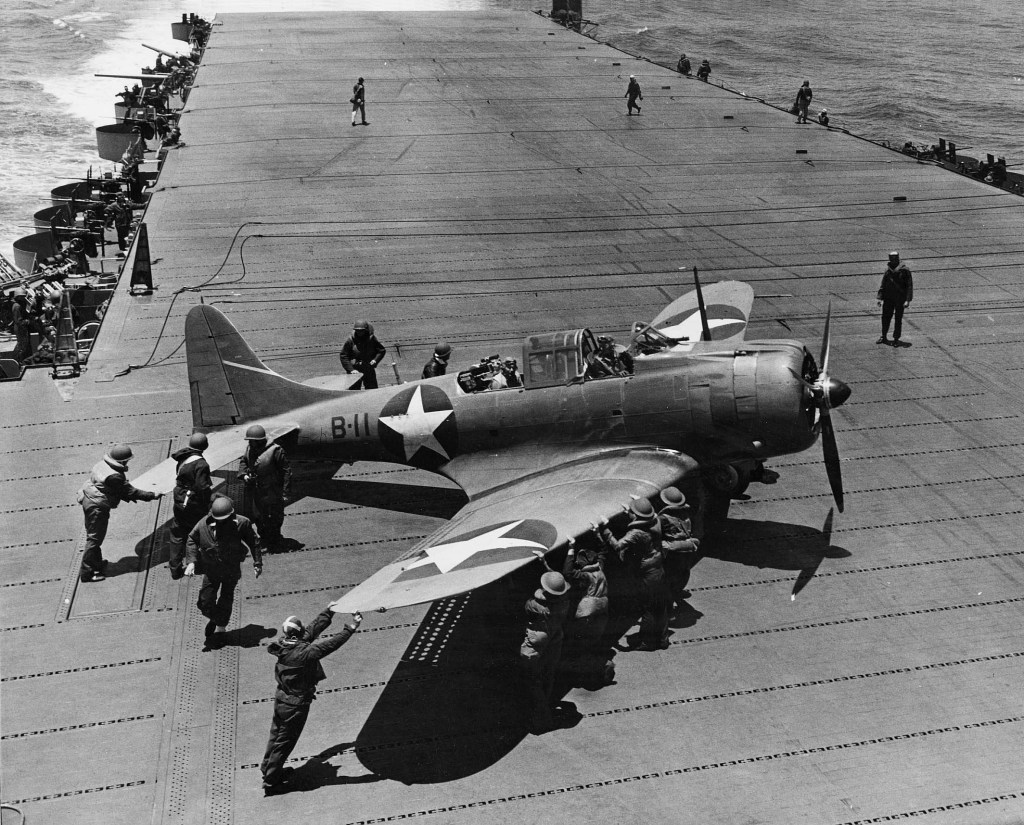
Dauntless pilots also bombed the carrier Hiryu on June 4th, which was badly damaged and abandoned the next day by the Japanese.
In Other Theatres
The Dauntless also figured in attacks on Japanese shipping convoys in the Battle of Guadalcanal, which took place between August 1942 and February 1943.

In the North African campaign, the Dauntless was used against land targets, and in submarine patrols in other areas of the Atlantic.
The Dauntless was relegated to training purposes later in the war, though the Marines did use the planes to attack remnant Japanese hold-outs in the Pacific. It was largely replaced by the Curtiss SB2C Helldiver, a newer dive-bomber, in 1944.
The SBD Dauntless In Flight
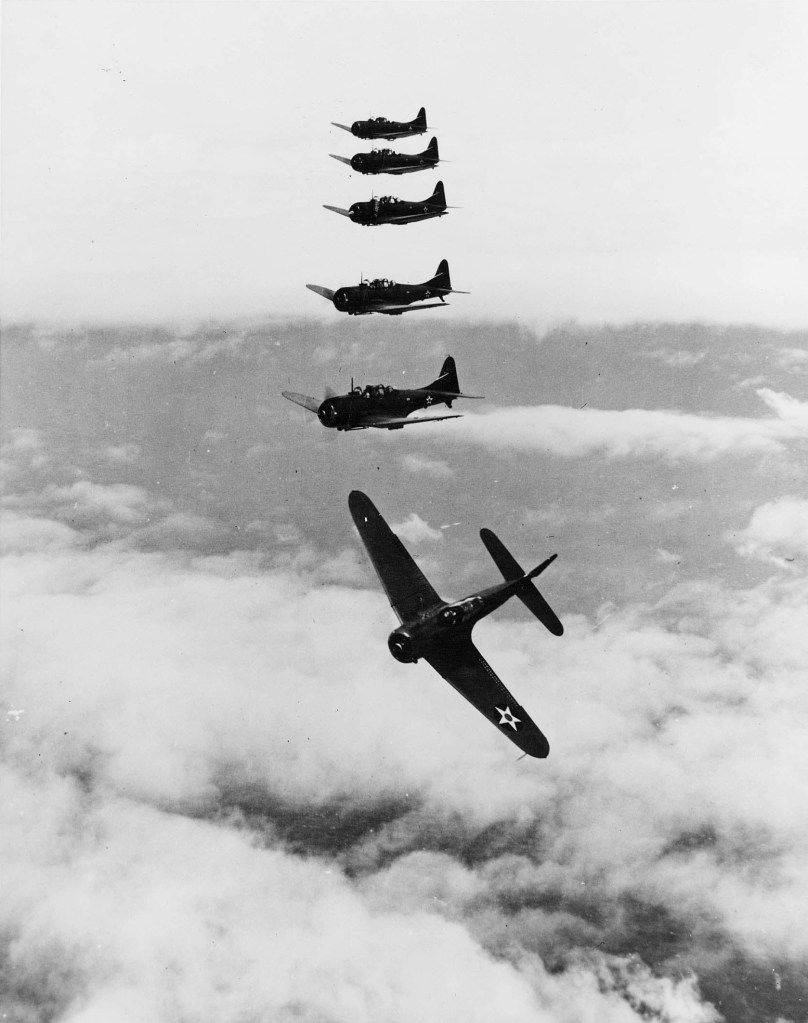
Pilots of the Dauntless would usually climb to an altitude of 18,000 feet and descend to 8,000 feet once a target was spotted.
At that point they would start diving at an angle of at least 70 degrees, releasing their bombs at 2,000 feet.
Diving speeds with flaps extended could reach as much as 276 miles per hour, and pilots pulled up with a resultant 4 to 6 G-force on their bodies.

Normally though, the plane had a top speed of 245 miles per hour, and a cruising speed of 144 miles per hour.
Model Variations
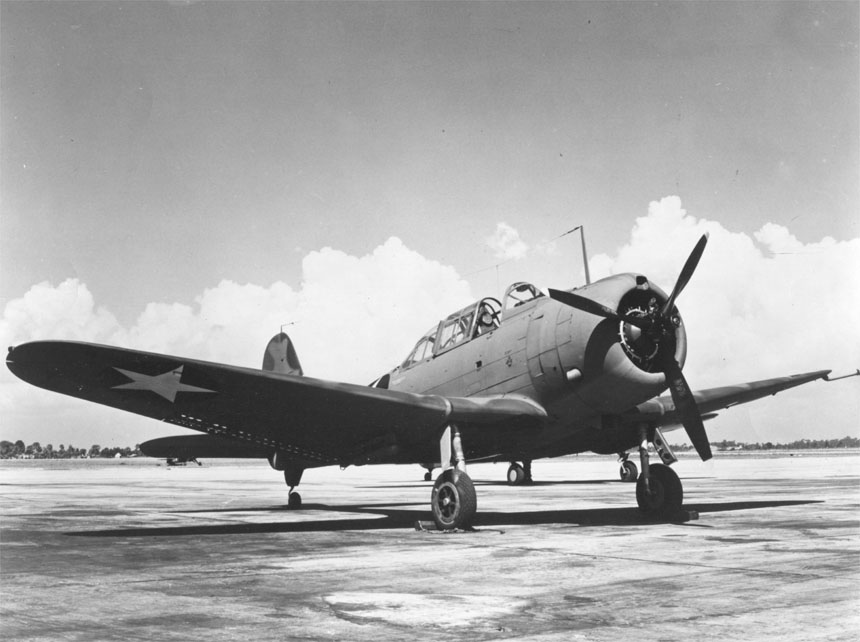
The SBD Dauntless was manufactured in several variant models, including the:
SBD-1 – A low-fuel capacity model given by the Navy to the Marines for use from land bases,
SBD-2 – An increased fuel-capacity model with autopilot features, used by the Navy in Pearl Harbor,
SBD-3 (the Army’s A-24) – A fully combat-ready model used in most battles of 1942, with an armored windscreen, self- sealing wing tanks, added crew armor, and two .30-caliber tail guns. Capable of flying at altitudes of 27,100 feet, and a maximum speed of 250 miles per hour,
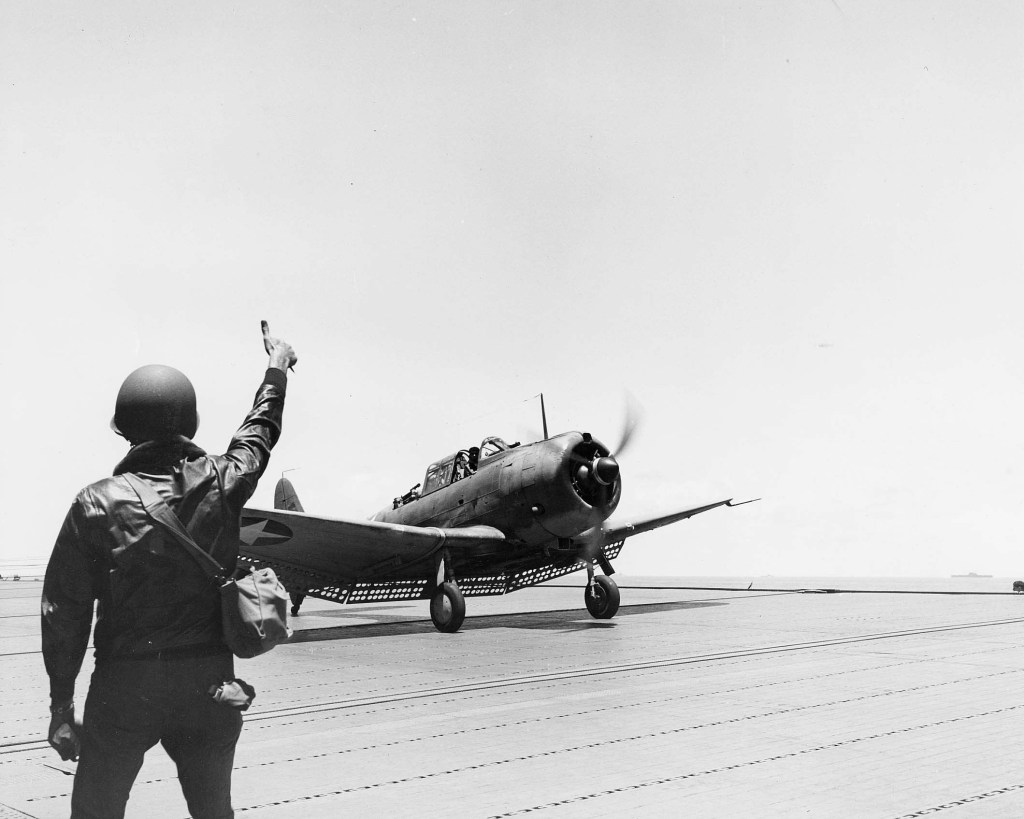
SBD-4 (the Army’s A-24A) – A version of the dive-bomber with an electrical system with radar, a hydromatic propeller (whose spinning is powered by engine oil pressure on both sides of the propeller piston), and a reduced speed of 245 miles per hour,
SBD-5 (the Army’s A-24B) – The most mass-produced version of the bomber with an anti-fogging windscreen and a larger engine, with radar common. It was used in most naval battles in 1943, and the
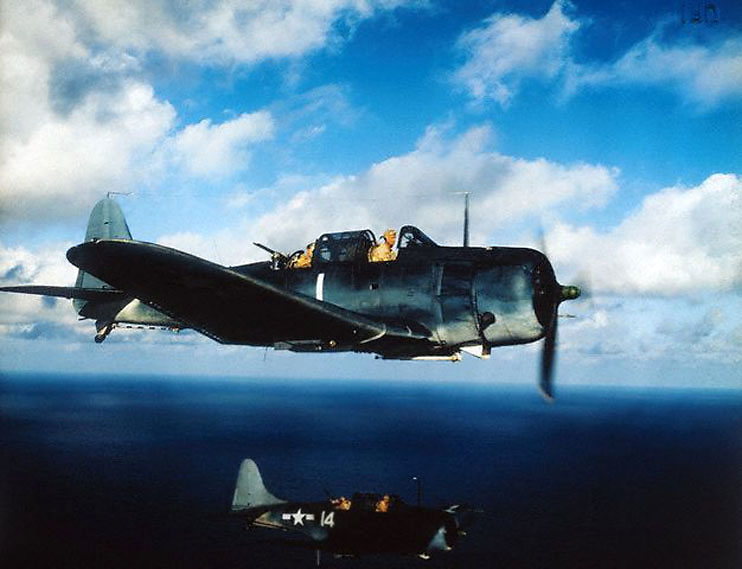
SBD-6 – A version patterned after the SBD-5 with a larger engine 262 miles per hour and an increased maximum altitude of 28,600 feet.
 Waves To Jets