Successor To The Havoc
By WavesToJets
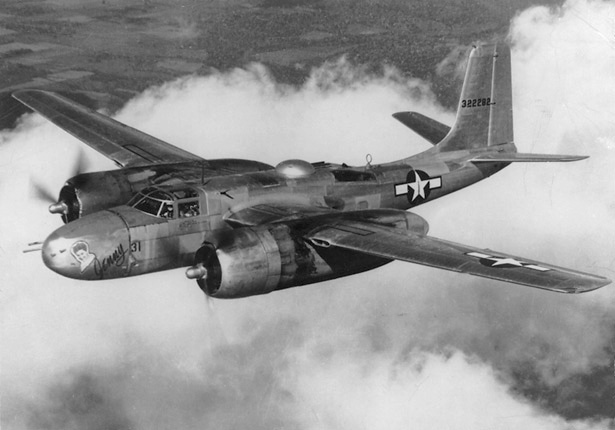
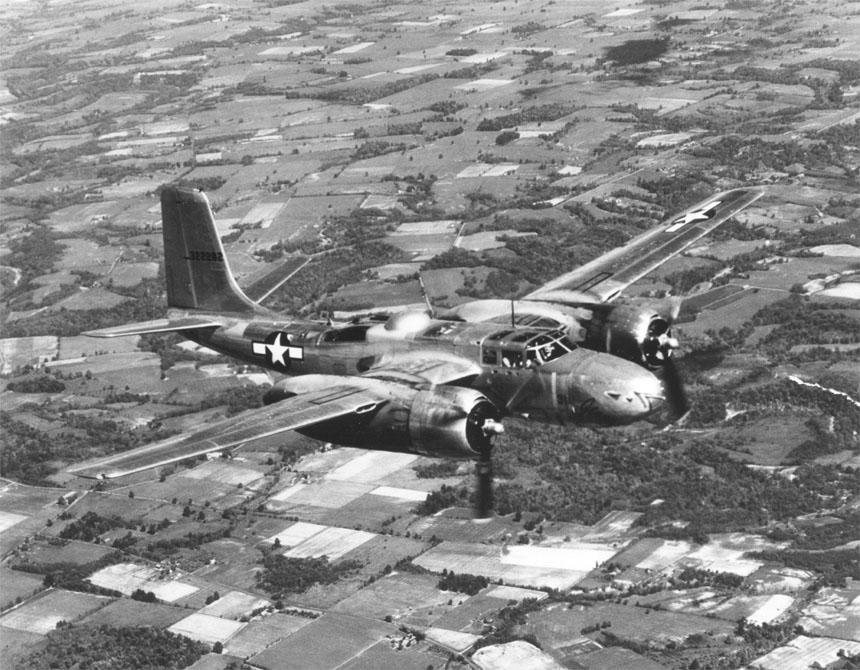
The A-26 Invader was a World War II, Korean, and Vietnam War-era light bomber that was produced by the Douglas Aircraft Company.
Noted for its double radial engines, multiple machine gun arrangement, bomb load, and ability to travel at relatively high speeds, the A-26 was Douglas’ successor to its earlier DB-7 (Douglas Boston 7) – also known in the United States Army Air Forces (USAAF) as the A-20 Havoc.
The A-26 was designated the B-26 by the United States Air Force (USAF) after World War II – which was also the wartime designation of the unrelated Martin B-26 Marauder.
In any case, the A-26 Invader was used as a bomber and ground-attack aircraft in the Pacific and European theaters of World War II.
The aircraft was also used in the French Indochina and Vietnam War, and in the Korean War. The A-26 was also sold to other countries as a light bomber – and has been in military service (albeit in different countries and conflicts) for over 30 years.
Technological Background
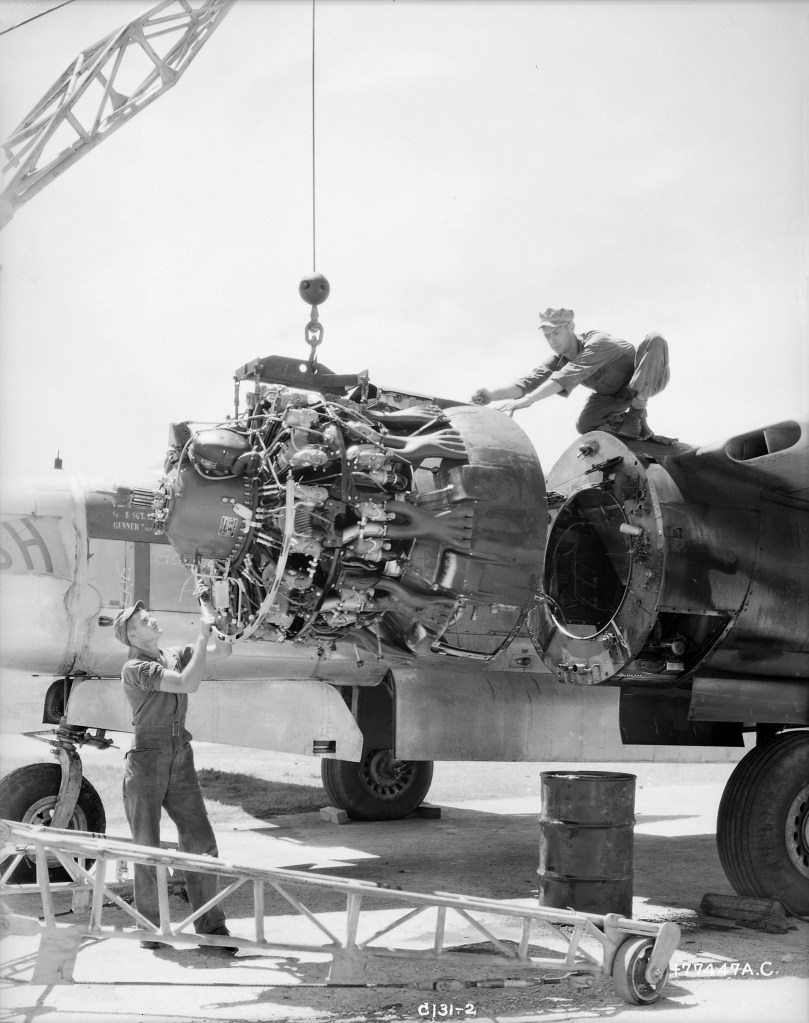
The A-26 Invader was developed by the Douglas Aircraft Company. Engineers like Robert Donovan, Ed Heinemann, and Ted R. Smith helped design the craft, which in many ways was like Douglas’ DB-7, also known as the A-20 Havoc.
Improvements on the A-26’s wing design were made by Apollo Milton Olin (A.M.O.) Smith, an engineer who specialized in fluid dynamics. The A-26’s laminar flow wing – a wing specifically tailor-made to reduce drag on the underside of the wing, was the result of A.M.O. Smith’s designs.

Like the A-20 Havoc, the A-26 Invader was made to be a light bomber that would fit a crew of three – but the A-26 was longer, wider, and had more powerful engines. Whereas the A-20 was 47 feet, 11.875 inches long and had a wingspan of 61 feet, 3.5 inches, the A-26 had a length of 50 feet and a wingspan of 70 feet.
Also, whereas the A-20 Havoc had two 1,600-horsepower Wright R-2600-23 Twin Cyclone engines, the A-26 Invader had two 2,000-horsepower Pratt & Whitney R-2800 Double Wasp engines. This increased the cruise speed from 266 miles per hour to 280 miles per hour.
The A-26 could also reach a top speed of 359 miles per hour at 16,700 feet, far more than the A-20’s speeds of 310 – 325 miles per hour at lower altitudes.
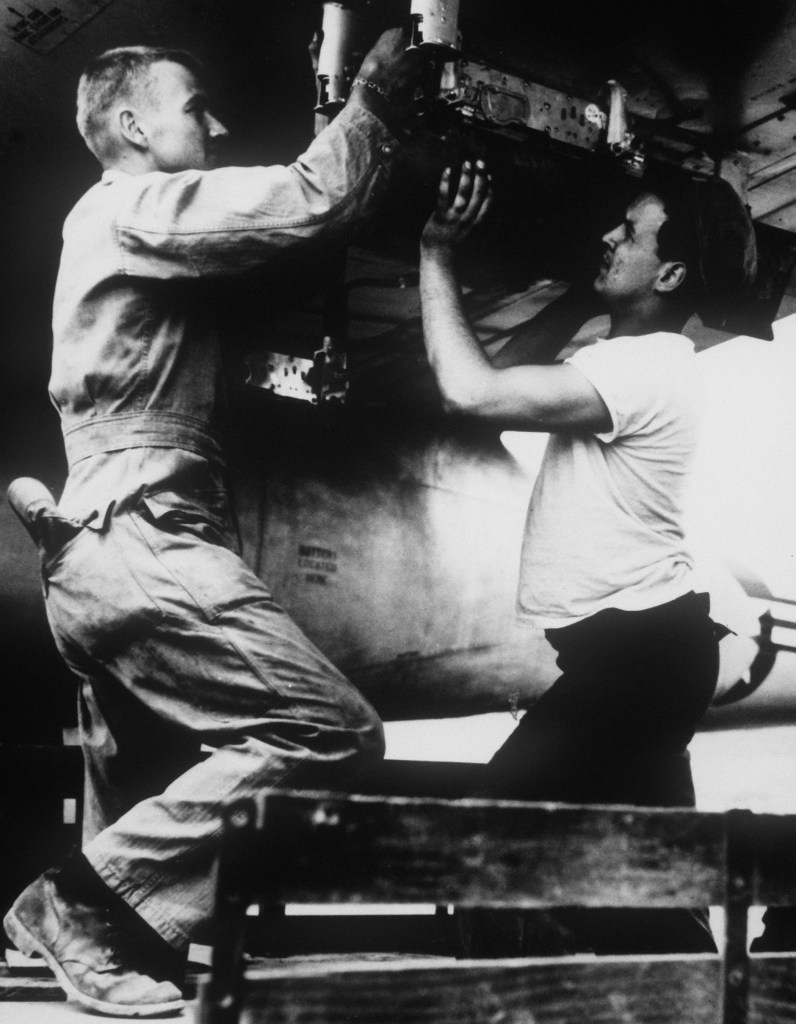
The A-26 was able to carry up to 6,000 pounds of bombs, 2,000 pounds on the underside of the wings and 4,000 pounds in the bomb bay. The gun armament consisted of two .50-caliber M2 Browning machine guns in a remotely-controlled dorsal turret, and two .50-caliber machine guns in a remotely-controlled ventral (underside) turret.
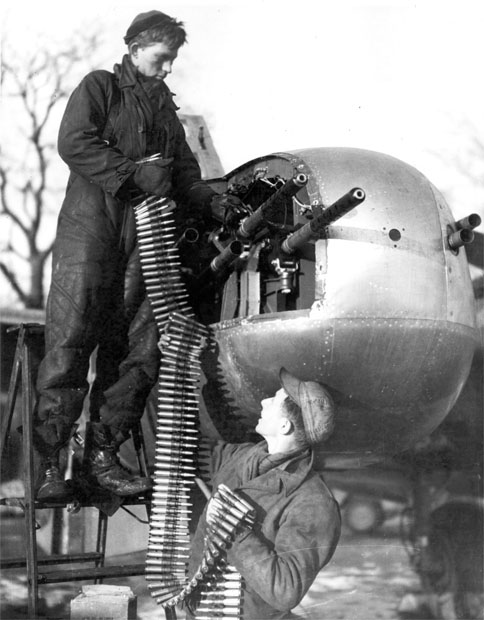
The nose could fit six or eight .50-caliber machine guns in the A-26’s default set-up, however, as later variants of the plane’s nose would be adjusted to better the bombardier’s vision (with a glass-paneled nose) this gun arrangement was reduced to two .50-caliber machine guns.
The wings could house three .50-caliber machine guns internally, or carry an underside wing machine gun set-up of four .50-caliber machine guns in gun pods under each wing (bringing the total number of wing machine guns to eight).
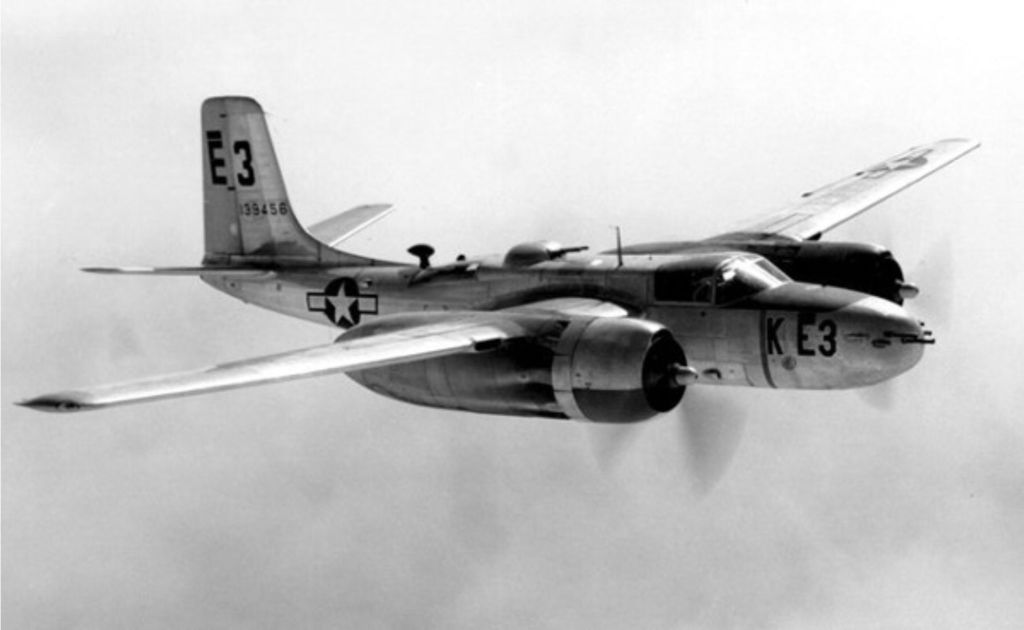
The A-26 Invader was developed first starting in January 1941, with a prototype displayed to the United States Army Air Corps (USAAC) in April of the same year. On July 10th 1942, the test pilot Ben Howard flew the XA-26 prototype model in Mines Field, El Segundo, California.
Later prototype models (the XA-26A and XA-26B) were made with crew adjustments, and finally the A-26B – the first main production variant of the A-26, was delivered to the United States Army Air Forces (the USAAF, changed from the USAAC in March 1942) on September 10th, 1943. The A-26C, a variant based on the XA-26 with a glass-paneled bombardier-friendly nose, was also produced in great numbers.
In Service
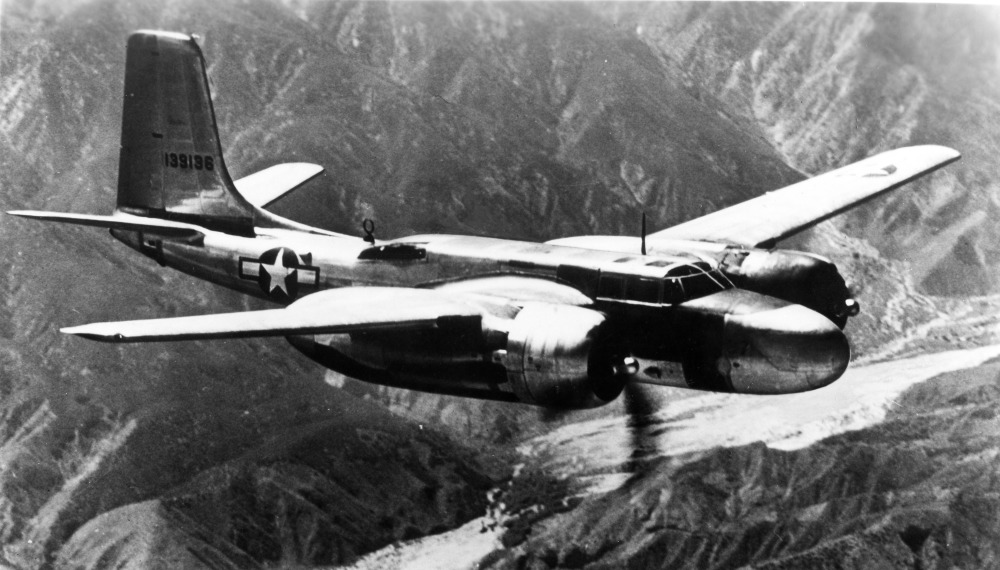
Sources differ as to when the A-26 was first used in combat. In Europe, the A-26s of the United States Twelfth Air Force were used on January 27th, 1944 to bomb buildings, roads, and railroads in the cities of Ceccano, Poggio Mirteto, Ciampiano, and Piedimonte, Italy.
On February 20th, 1944 the Twelfth Air Force’s A-26s struck trucks, troops, and tanks near Carroceto, Italy. These planes were also used to bomb the towns of Fondi and Piedimonte, as well as a factory to the east of Carroceto. This was in conjunction with the Twelfth Air Force’s P-40 Warhawks in defending the Allied beachhead at Anzio, Italy.
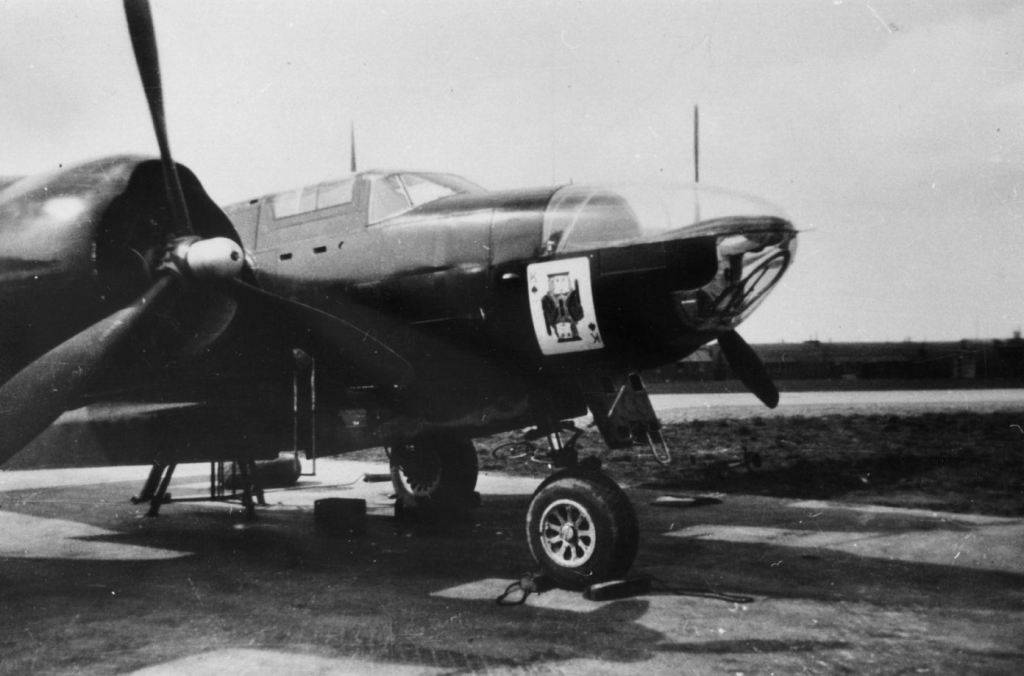
On April 24th 1944, the Tenth Air Force of the China, Burma, India (CBI) theater launched an attack on Japanese bomb storage facilities in the towns of Kamaing, Hopin, and Moguang, in Burma (now Myanmar). P-40s, P-51s, A-26s and B-25s were used, numbering 100 or so in total. This same group also attacked railways in Chaungwa, Manywet, and Myitkyina, Burma.
The most well-known date of the A-26’s service may be June 23rd, 1944. On this date, the A-26 was used by the Fifth Air Force to attack islands off the coast of Manokwari, New Guinea. This date is widely circulated as the first use of the A-26 in combat; however, some sources state that this was only the first use of the plane by the USAAF in the Southwest Pacific.
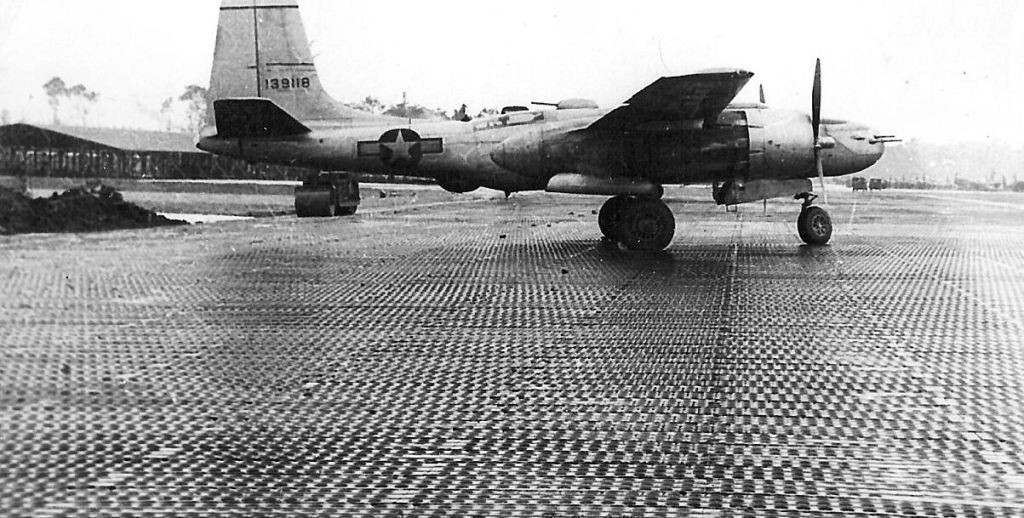
The A-26 would also be involved in strafing and bombing missions on Japanese-run internment camps on Taiwan, and on air fields, bridges, industrial areas, and seaplane stations in southern Japan. Bombing runs such as these continued for the rest of the war, even after the August 9th, 1945 bombing of Nagasaki.
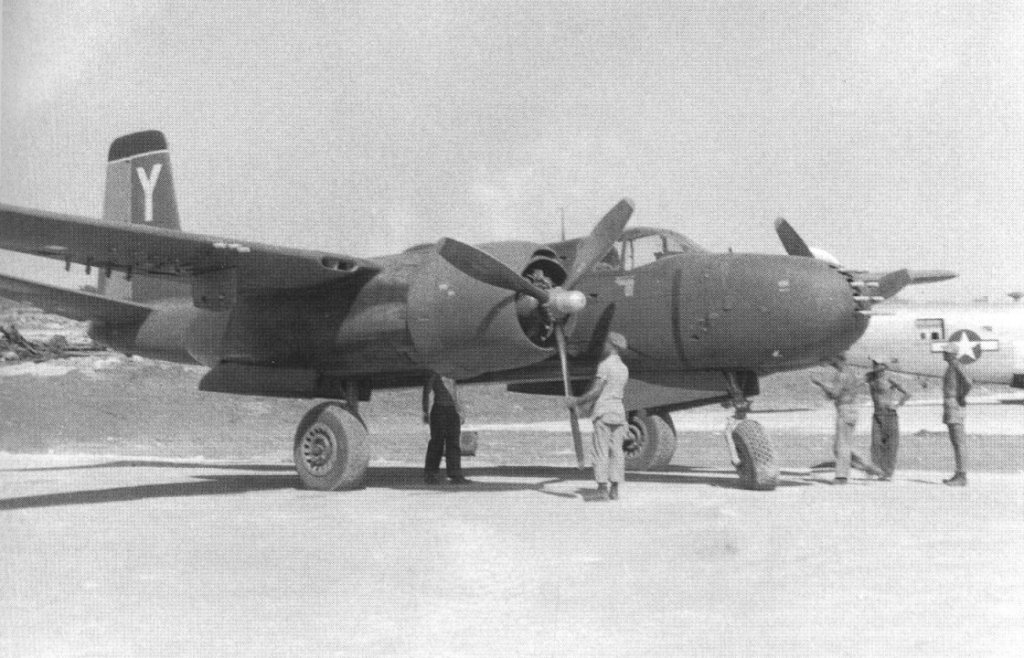
In Europe, the Ninth Air Force used the A-26 to attack rail bridges, storage depots, motor yards, communication centers, regional headquarters, road junctions, and road bridges in Belgium and throughout Germany. Ninth Air Force bombing runs with the A-26 in Europe started in late November 1944 and concluded on May 3rd, 1945.
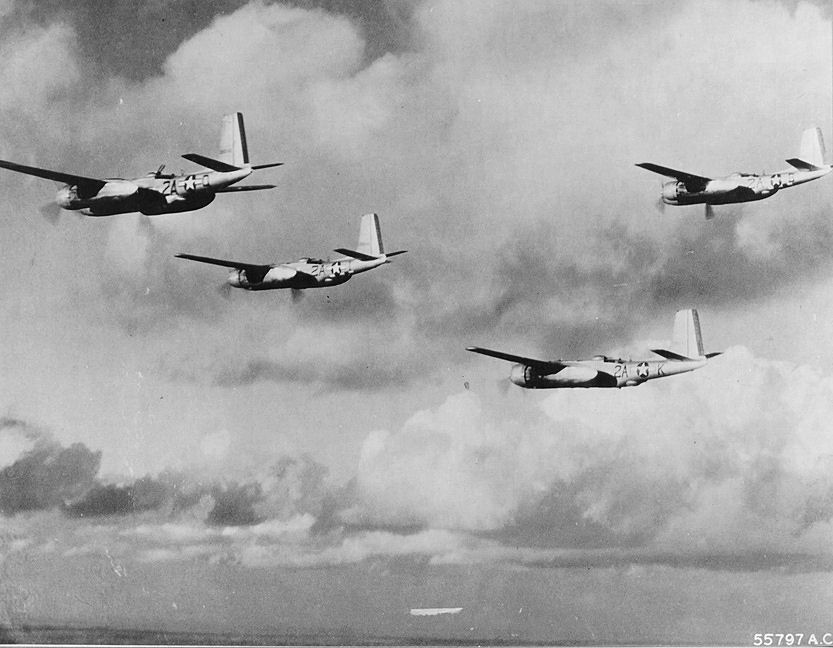
The A-26 Invader, unlike many of its World War II counterparts – continued to be used well after the conflict. In the United States, the plane was re-designated the B-26 Invader from 1948 to 1965. This may have lead to confusion among some with the WWII-era Martin B-26 Marauder bomber, but this latter plane was retired in 1947.
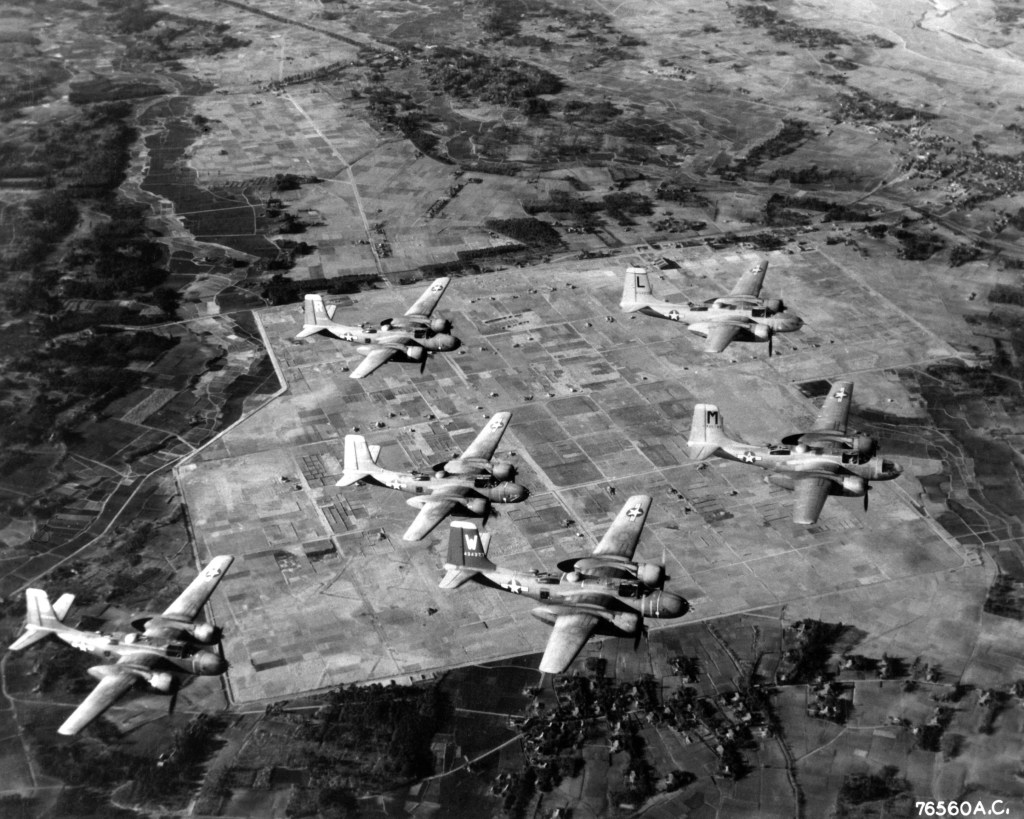
The B-26 Invader was used in the Korean War, escorting personnel airlift evacuation planes of the 374th Troop Carrier Wing (TCW) on June 27th 1950, after the North Korean invasion.
The next day, the U.S. 3d Bombardment Group’s (BG) B-26s bombed railroad yards in what is now Munsan, South Korea, near the 38th Parallel. The 3d BG’s B-26s would continue to bomb bridges, roads, troops, trains, tanks, and enemy traffic early in the war.
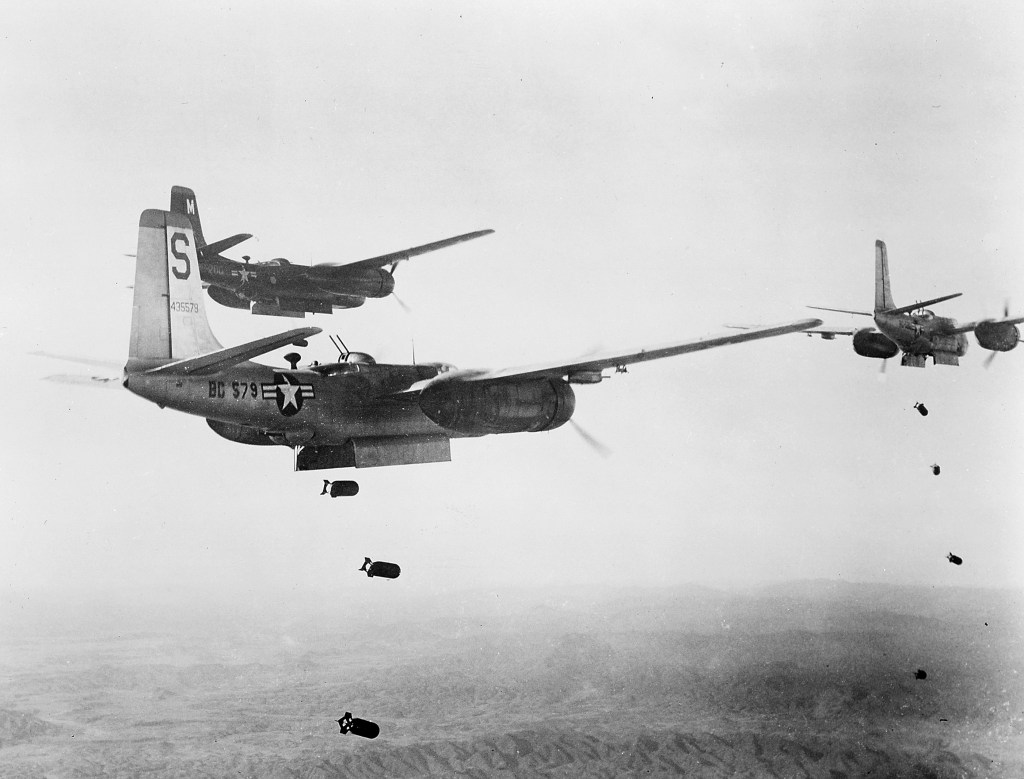
On November 4th 1950, B-26s would be used to support the U.S. Eighth Army at what is now Chongju, North Korea. The attack killed an estimated 500 enemy soldiers.
On November 19th, the town of Musan, North Korea (close to the border with China), was bombed by 50 B-26s – destroying three-fourths of the barracks area there.
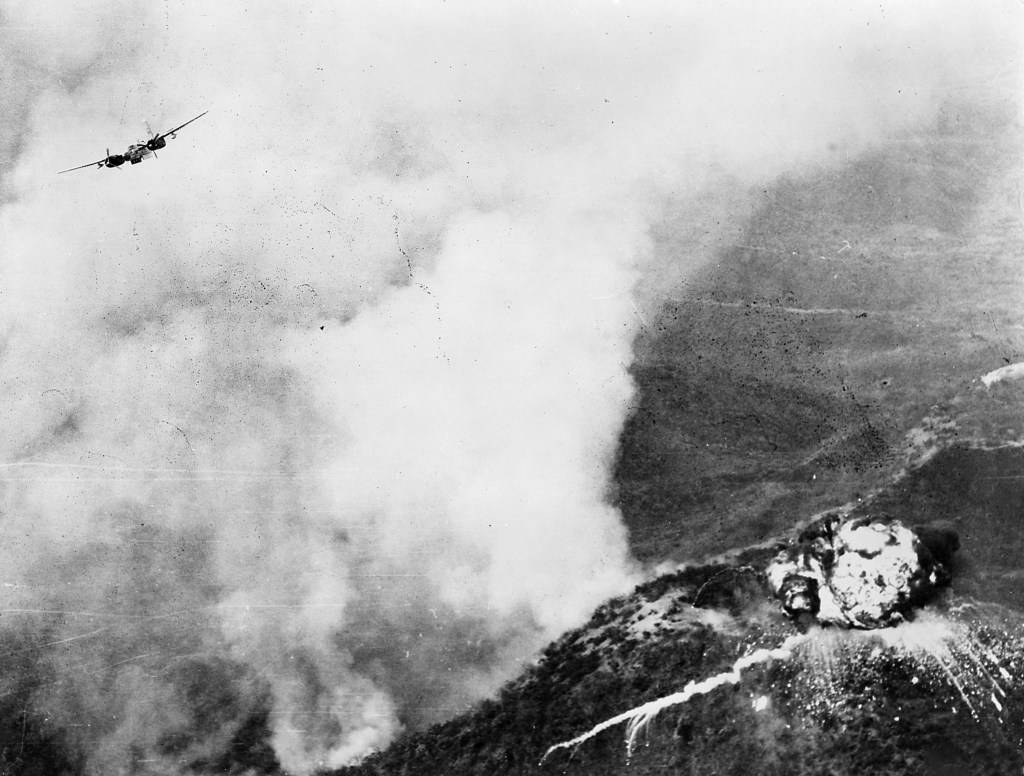
After the Battle of the Ch’ongch’on River in December 1950, the UN forces were on retreat. This, however would not last for the entire duration of the rest of the conflict, as the Communist forces and the UN forces would fight a push-and-pull battle around the 38th Parallel until July 27th, 1953.
In this period, the B-26 was used as close air support, but also as a night bomber – bombing enemy truck convoys and railways, assisted by flares launched by friendly planes and a new system of radar called SHORAN (Short Range Navigation).
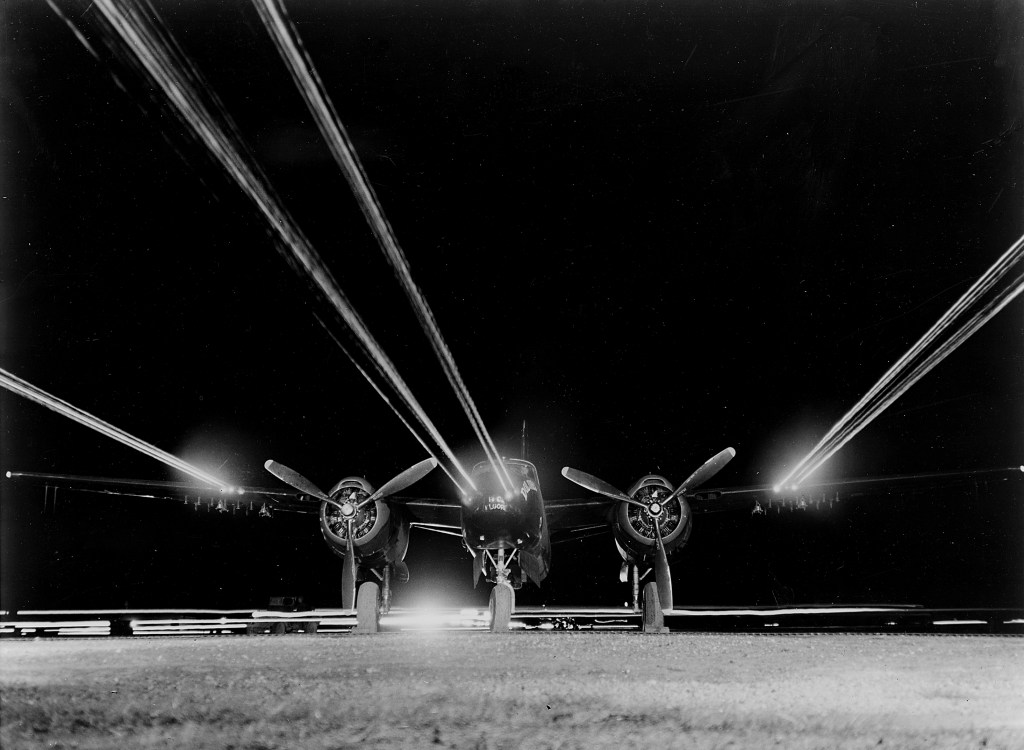
The B-26 was used by France’s Groupe de Bombardement I/19 Gascogne in the French Indochina conflict of the early 1950s, also by the United States during the Bay of Pigs Invasion.

In the Vietnam War, heavily modified B-26s (known as B-26Ks, and later as A-26As) were used to attack North Vietnamese supply lines, with the last United States combat use of the plane occurring in 1969.
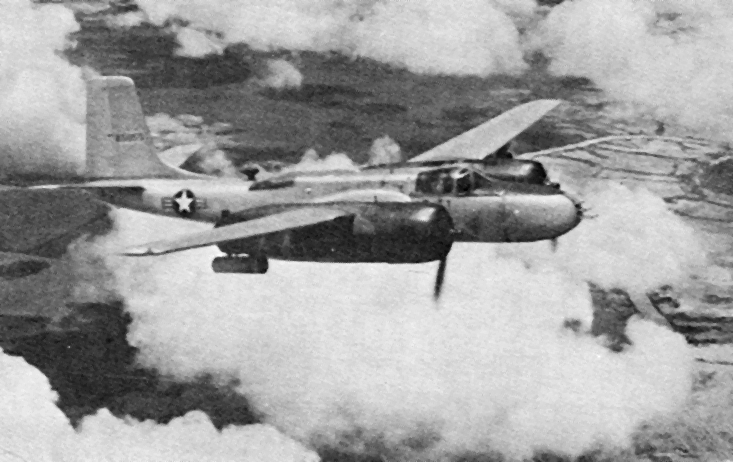
The B-26 Invader was also used by a number of other countries. Armed forces in Asia, Africa, the Middle East, and Central and South America all used this plane, either for training or combat purposes.
The A-26 Invader In Flight
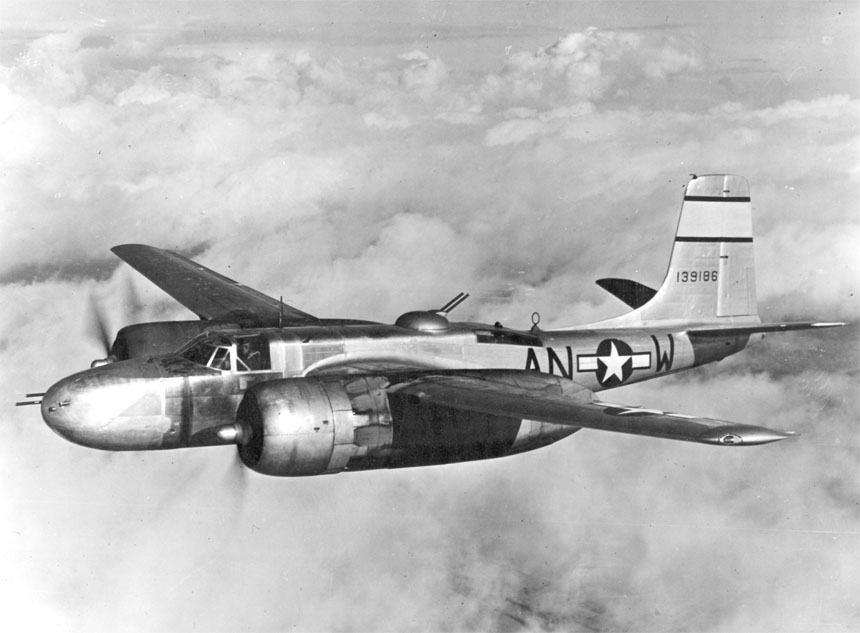
With a maximum speed well over 300 miles per hour, the A-26 Invader was a fast-paced attack bomber, capable of flying at maximum altitudes of 28,500 feet.
The craft was also capable of strafing enemy targets at lower speeds.
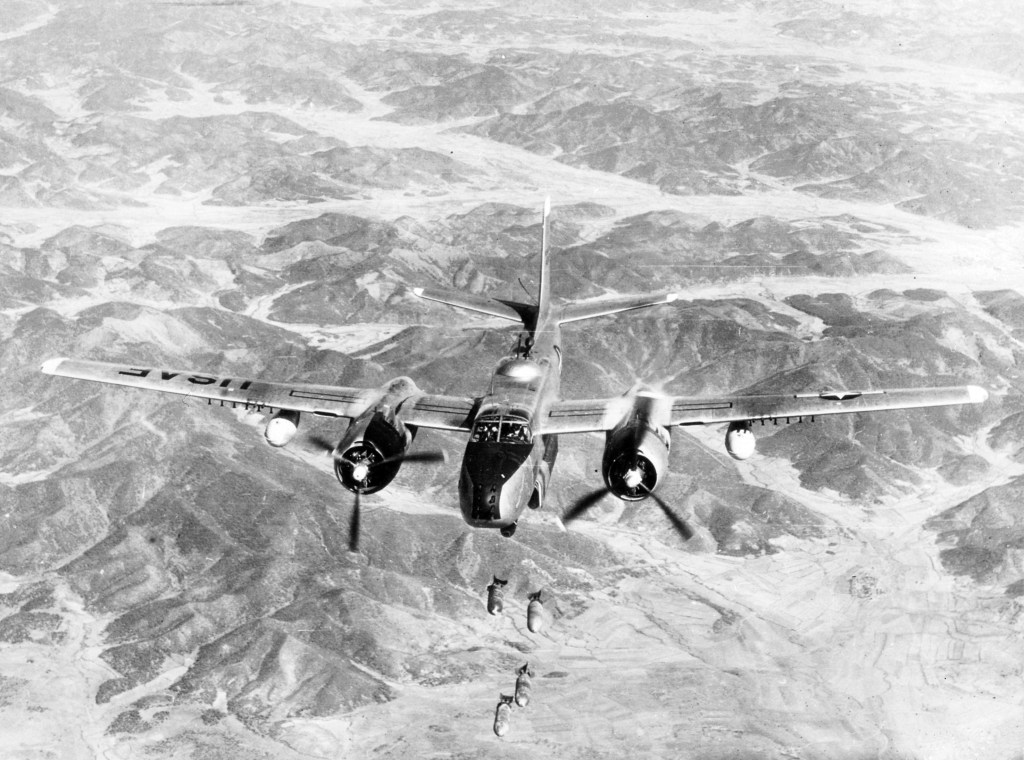
In the Korean War, B-26s were believed to be vulnerable at altitudes under 4,000 feet, so bombing operations were fashioned to be conducted above this height, especially during and after August 1952.
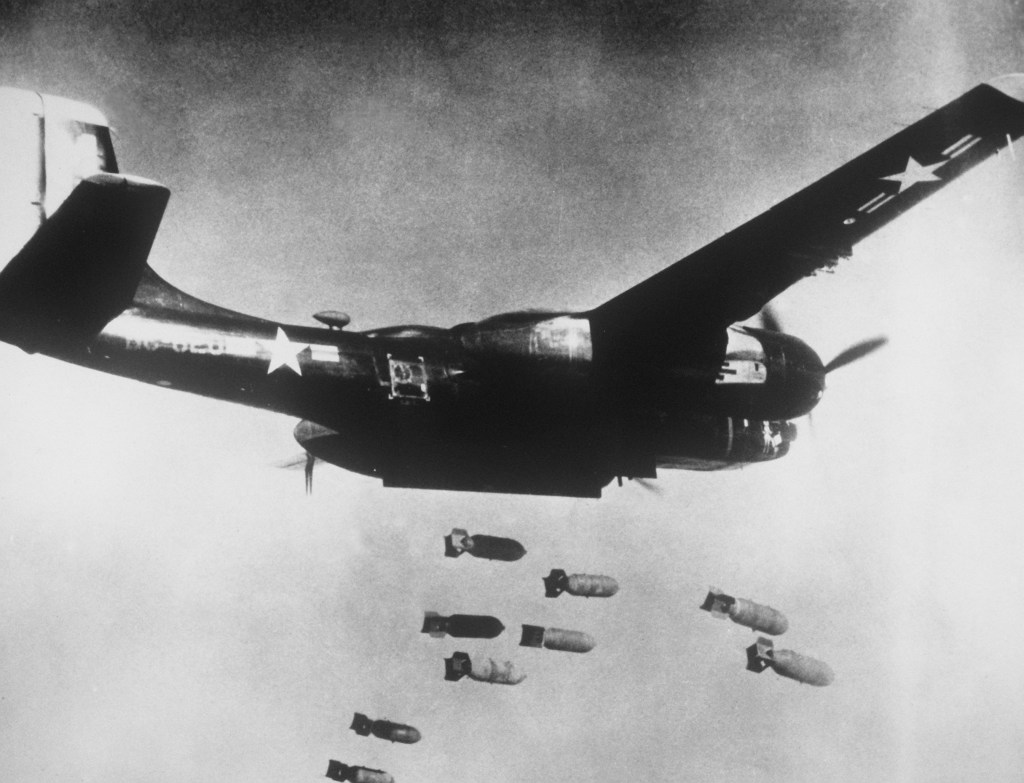
Night operations were also a mainstay of the A/B-26 Invader, with the relatively slow craft not as vulnerable to anti-aircraft guns and enemy fighters.
Model Variations
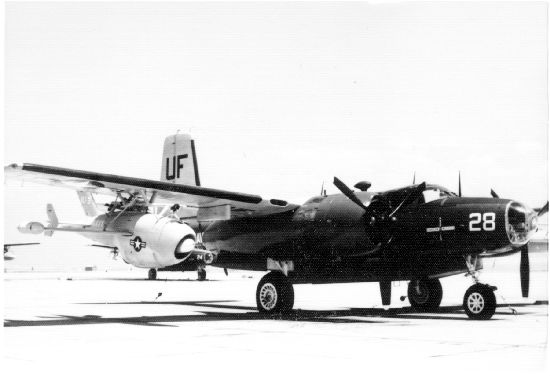
The Douglas A-26 Invader had many variants, some of the most prominent included the:
XA-26 – A prototype model of the A-26.
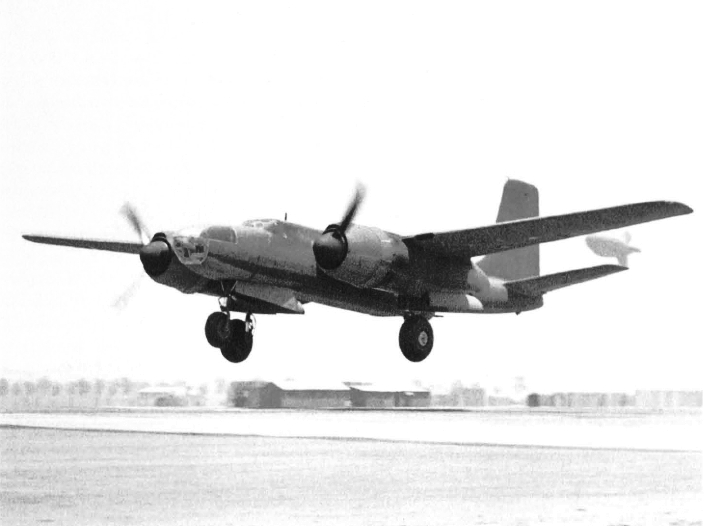

A-26B – A version of the A-26 with a “solid” front end. 1,355 were produced. Starting in 1948, it was renamed the B-26B.

A-26C – A version of the A-26 with a glass-paneled front end. 1,091 were produced. Beginning in 1948, it was referred to as the B-26C.
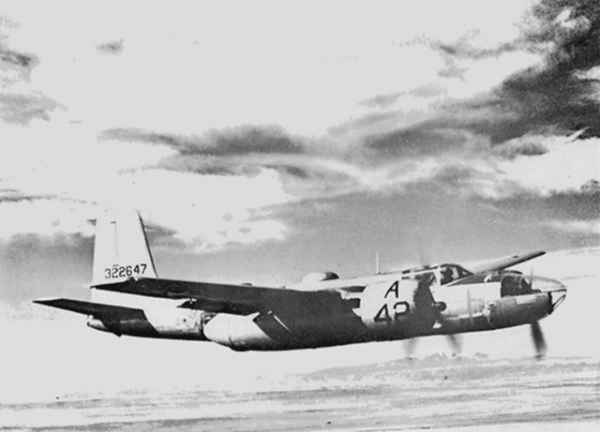
JD-1 – A version operated by the U.S. Navy after WWII. About 150 of these were used for training purposes.
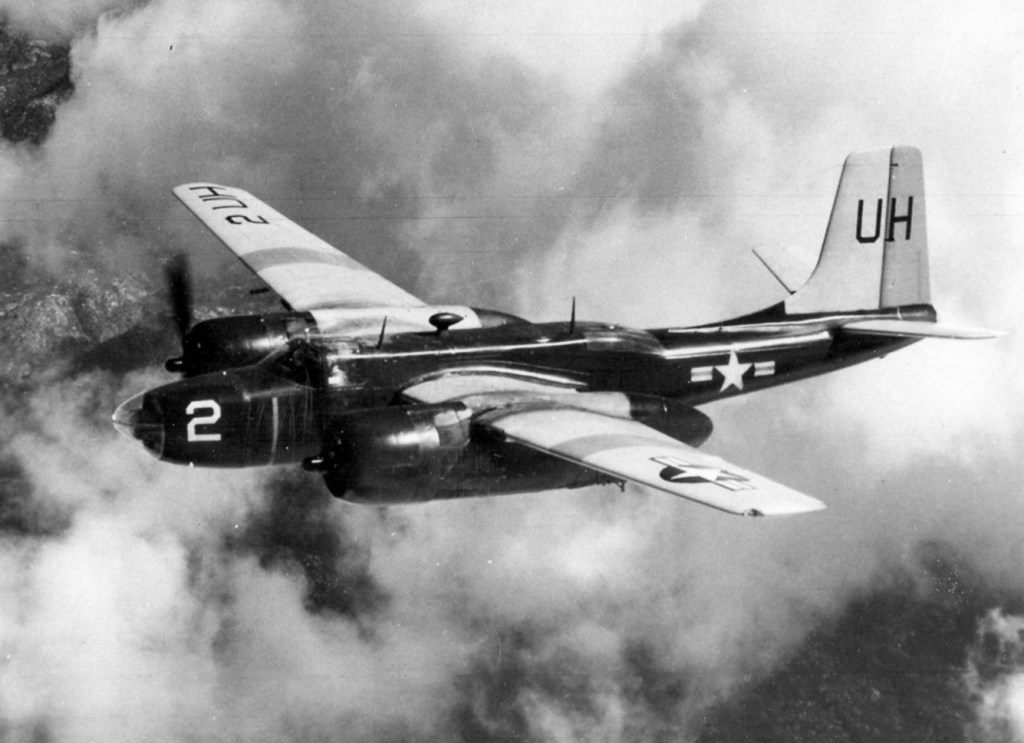
B-26K – Modified A-26Bs and Cs with 2,500 horsepower Pratt & Whitney R-2800-52W engines and wing-tip fuel tanks installed. About 42 in number, this version was used in the Vietnam War until 1969.

 Waves To Jets