
“Billy’s Bomber”
By WavesToJets
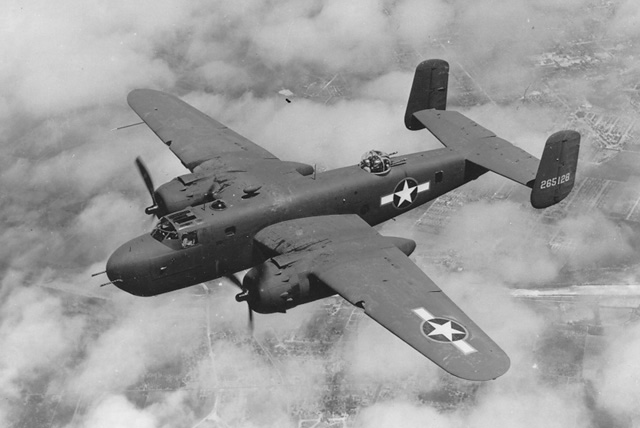
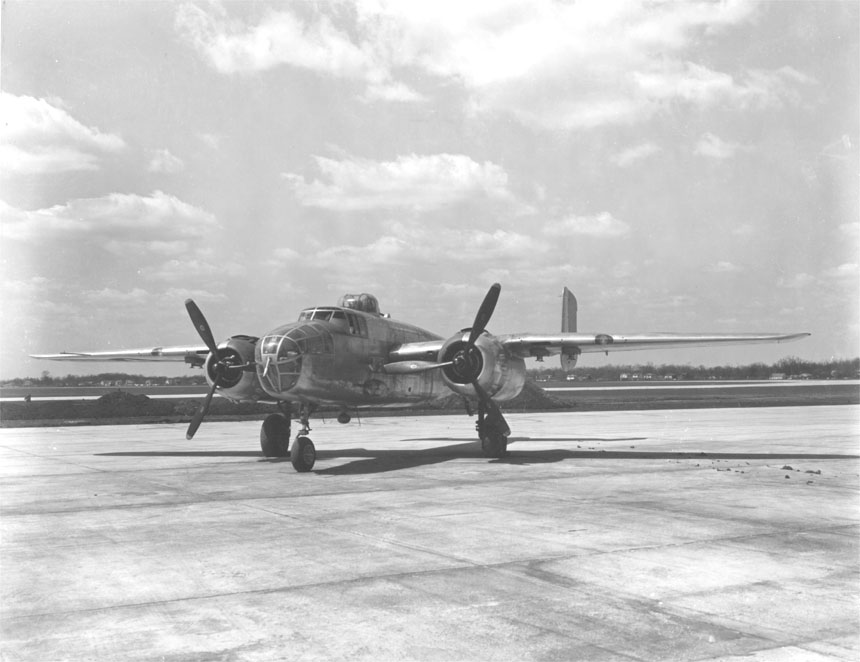
The North American B-25 Mitchell was a World War II-era medium bomber whose contributions to the Allies were numerous, including service in the Pacific, Mediterranean, China-Burma-India (CBI), and North African theaters.
Pioneered by North American Aviation (NAA), the B-25 was named after United States Army General William “Billy” Mitchell, an early proponent of the development of an independent dedicated air branch of the United States Armed Forces.

A double-engine, dual-propeller craft, later versions of the B-25 were capable of traveling over 1300 miles at speeds of 230 miles per hour, carrying six crew members and up to 3,200 pounds of bombs.
Technological Background
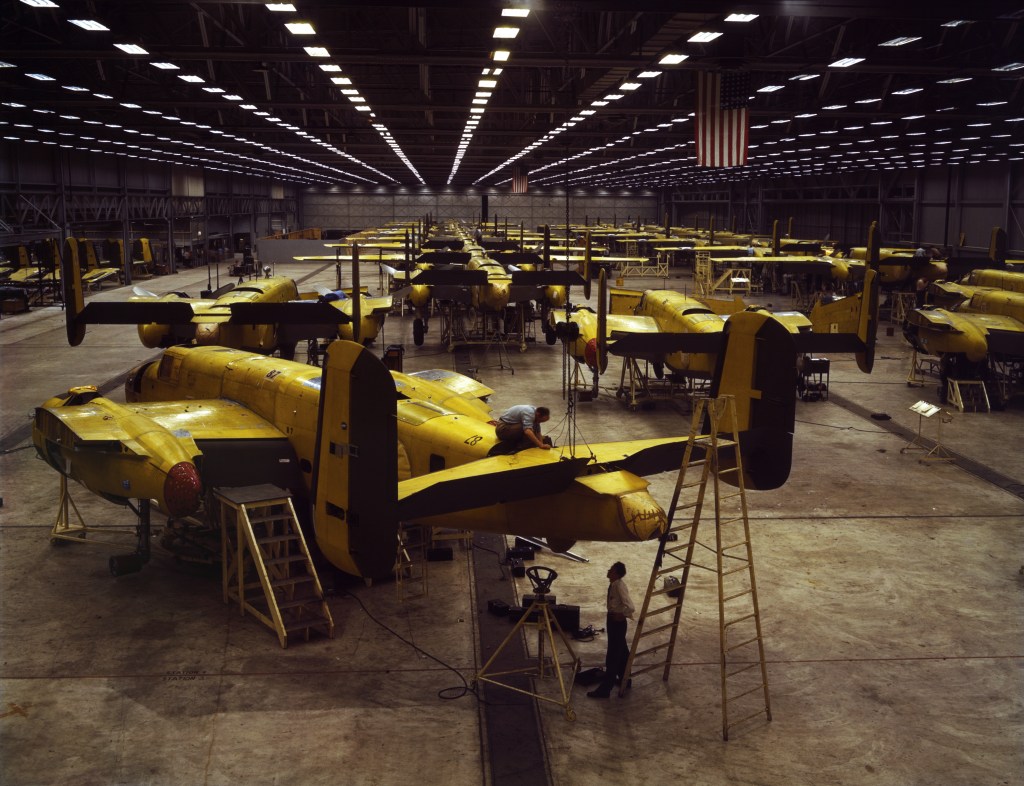
The B-25 was developed out of NAA’s NA-62, a design that stemmed from the company’s NA-40B prototype bomber.
In September 1939, the United States Army Air Corps (USAAC) approved North American’s designs and the first B-25s flew on August 19th 1940.

The B-25 was known for having two Wright R-2600 engines with at least 1,700 horsepower each. It had a slight inverted-wing plane, as its first consistently upward-dihedral wing shape limited its stability. With a length of 53 feet and a wingspan of 67.5 feet, the B-25 was a larger-sized medium bomber capable of carrying a crew of five or six people.

The plane had up to eight .50-inch caliber machine guns, and was sometimes equipped with a 3-inch caliber cannon and four frontal machine guns – and could hold over 3,000 pounds of bombs. The plane could reach altitudes of over 20,000 feet and could reach maximum speeds of over 320 miles an hour.
In Service
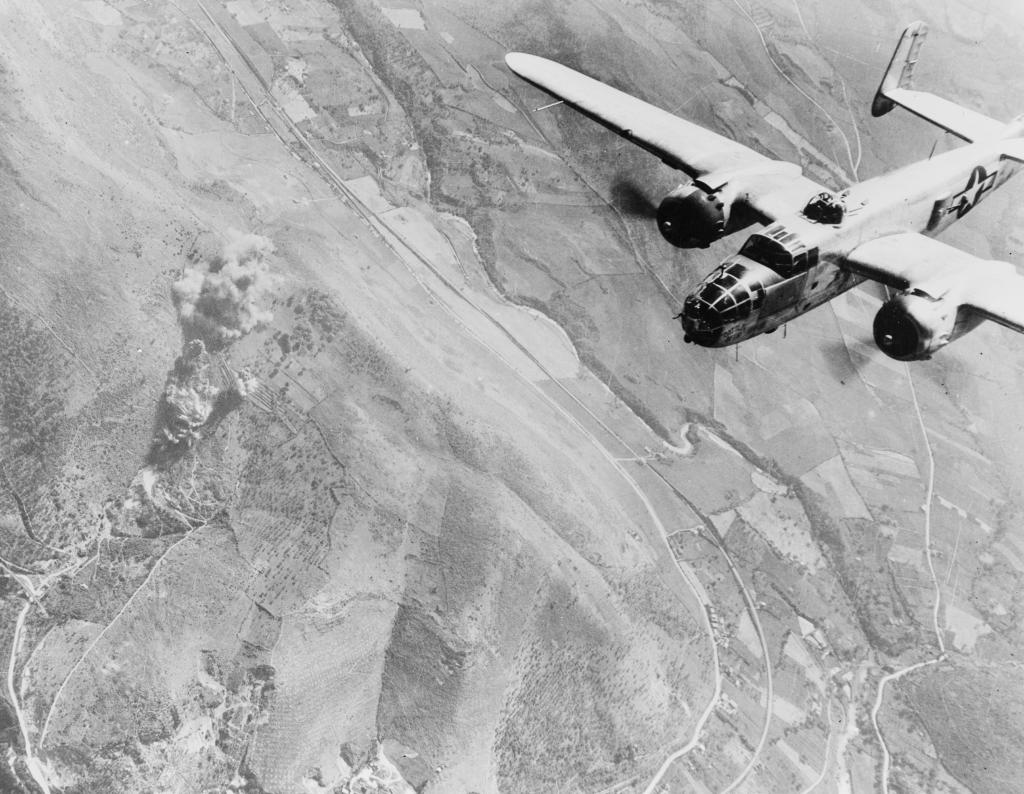
The B-25 was used to great extent in the Mediterranean, North Africa, in the CBI, and the Pacific.
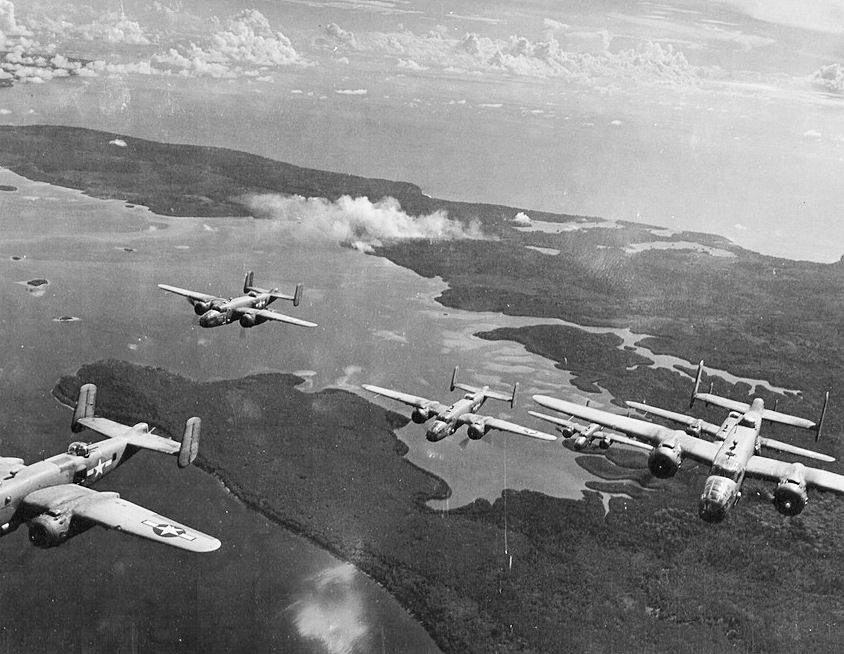
In the Pacific, the plane was perhaps most notably identified with the Doolittle Raid, one of the first major retaliatory measures against Japan by the United States after the attack on Pearl Harbor.
On April 18th, 1942, a total of 16 B-25s launched from the naval air carrier the USS Hornet at about 650 miles from the Japanese coast.
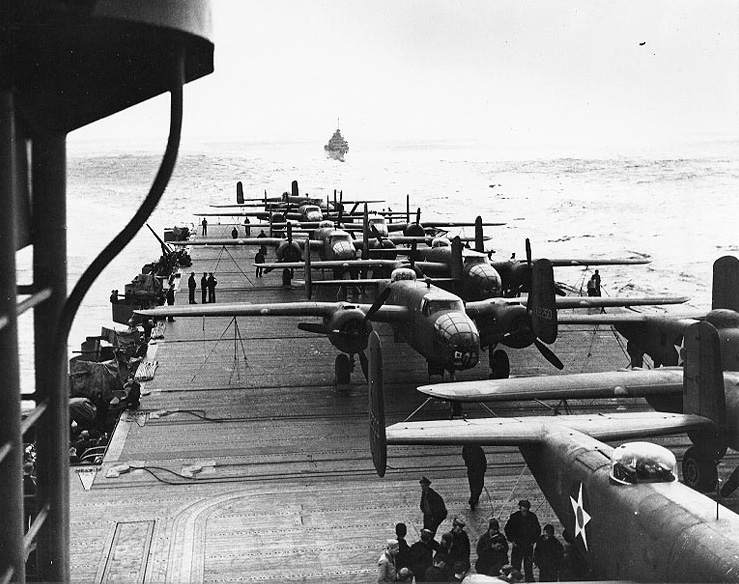
Close enough to make a bombing run, but not close enough (or having enough adequate room) to land back on the Hornet, the B-25s flew over Tokyo, bombed it, and proceeded westward to mainland Asia.
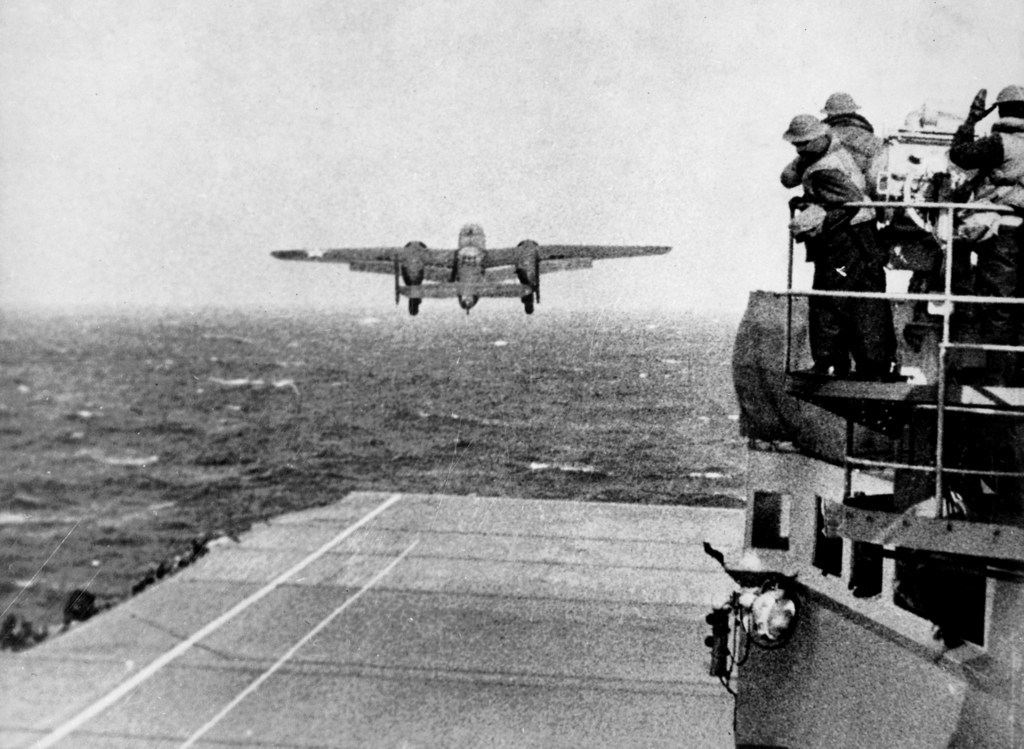
Most of these B-25s crash-landed in China, with one being captured by the Soviets. Though the damage on Japan was minimal, the Doolittle Raid was still considered a significant morale booster for the American public at the time.
In the Mediterranean, units like the 310th Bomb Group successfully used the B-25 against Axis military combat and transport ships near North Africa, Anzio, Corsica, Salerno, Sicily, and Southern France.

They were able to destroy bridges and other land targets – and they were also able to down a number of enemy aircraft. The B-25’s heavy guns were effective against transport planes like Junkers Ju 52s to air combat fighters like Messerschmitt Bf 109s and Focke-Wulf Fw 190s.
In the CBI theatre, B-25 pilots in the Tenth and Fourteenth Air forces made headway in destroying bridges (with units like the 490th Bombing Squadron coming to be known as the “Burma Bridge Busters”) with skip-bombing techniques. They also carried supplies to Allied positions and strafed and bombed Japanese units.
Several B-25s were modified by Colonel Paul “Pappy” Gunn in the Pacific theater, participating in the Battle of the Bismarck Sea in March 1943. These bombers were fitted with many extra .50 Browning machine guns, making Allied strafing of Japanese transport ships a much easier task.
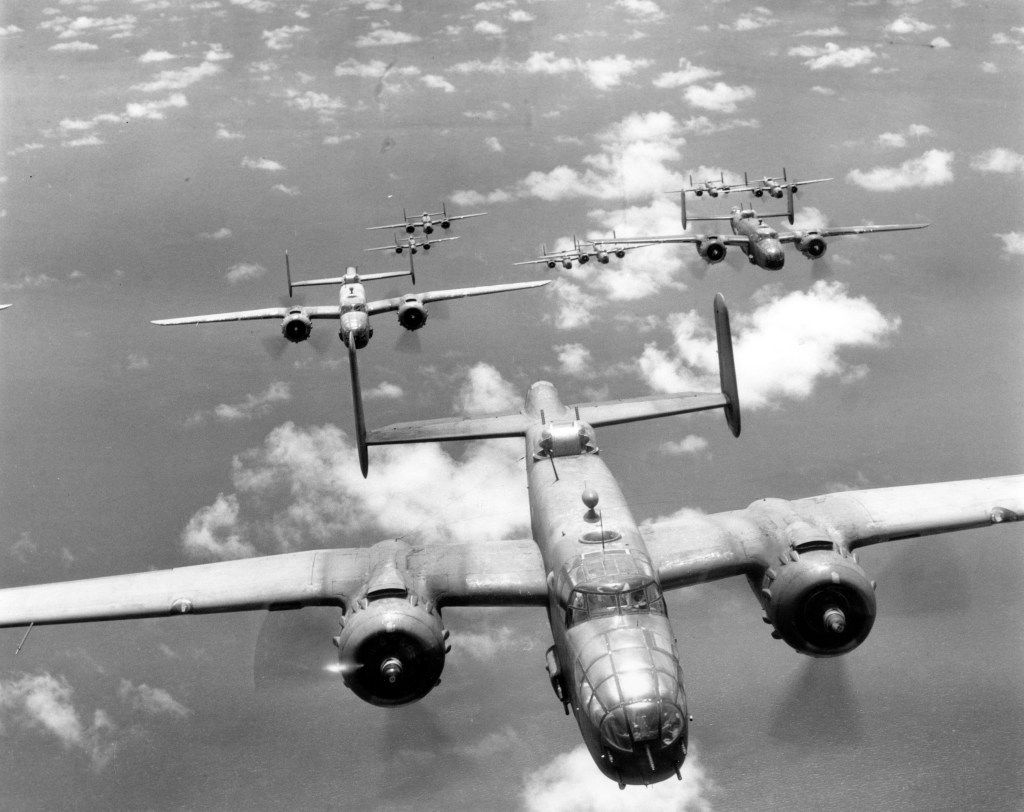
The US Navy eventually received over 700 B-25s and designated them PBJ-1s (Patrol Bomber “J” [NAA’s aircraft designation by the Navy]). The U.S. Marines also received and used B-25s as PBJ-1s.
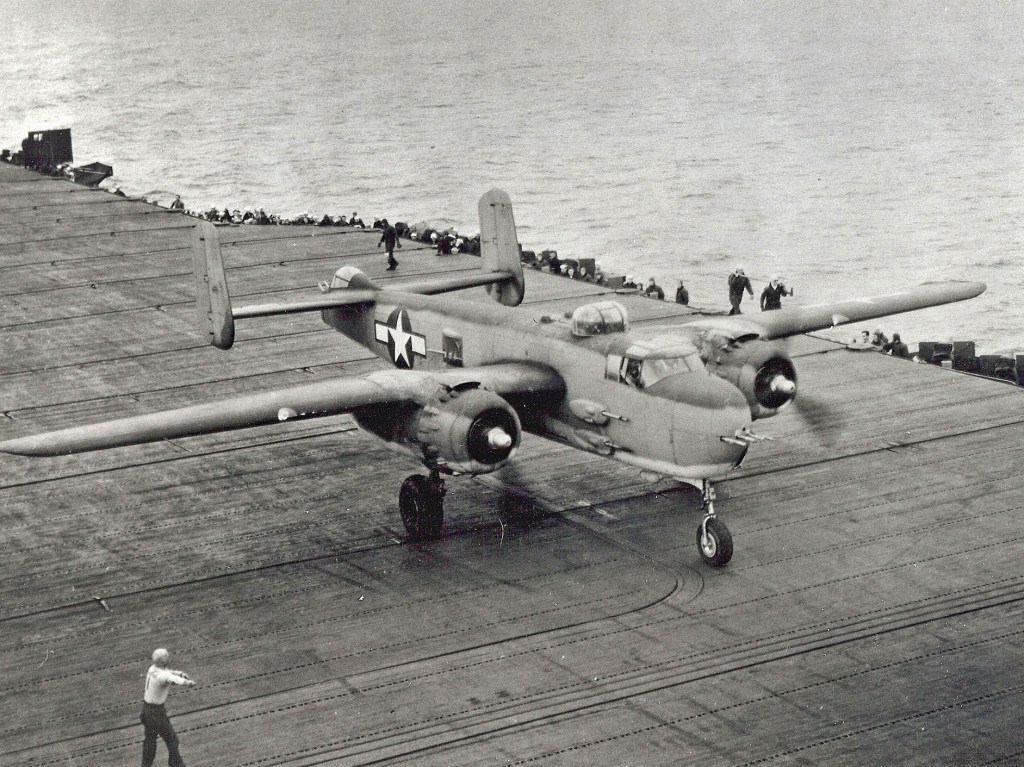
The B-25 Mitchell In Flight
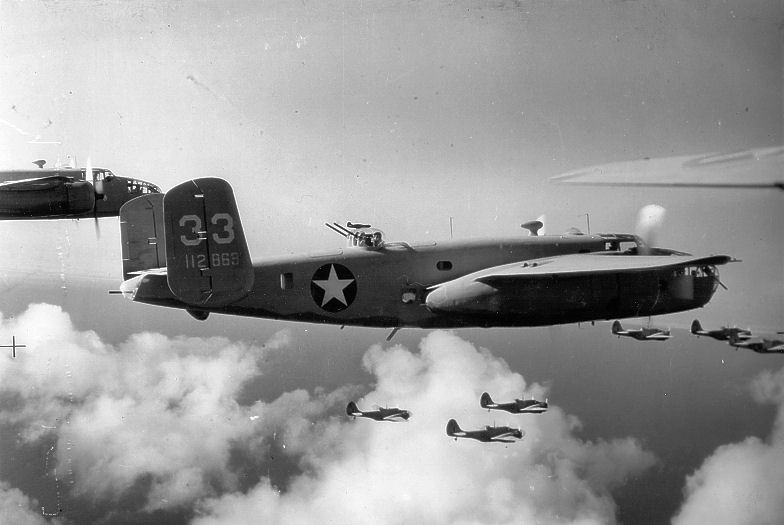
As a bomber, the B-25 Mitchell had an extensive range; in some cases it exceeded 3,000 miles. Later models of the B-25 were capable of bombing from heights of above 20,000 feet.
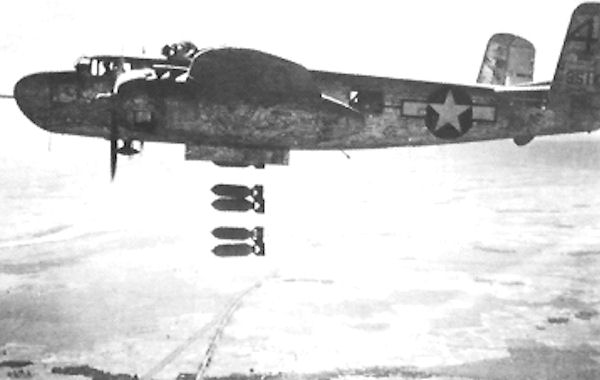
B-25 pilots also used bombing from mast-height altitudes to disrupt transport shipping convoys and skip-bombing techniques to destroy ships and bridges.

Low-altitude strafing was a common technique to attack soldiers on the ground in areas with relatively fewer anti-air defenses (as was the case in the CBI theatre).
Model Variations

Many variants of the B-25 Mitchell were manufactured, including the:
B-25NA – First version built.
B-25A – Extra armor for pilot and co-pilot, self-sealing fuel tanks added.
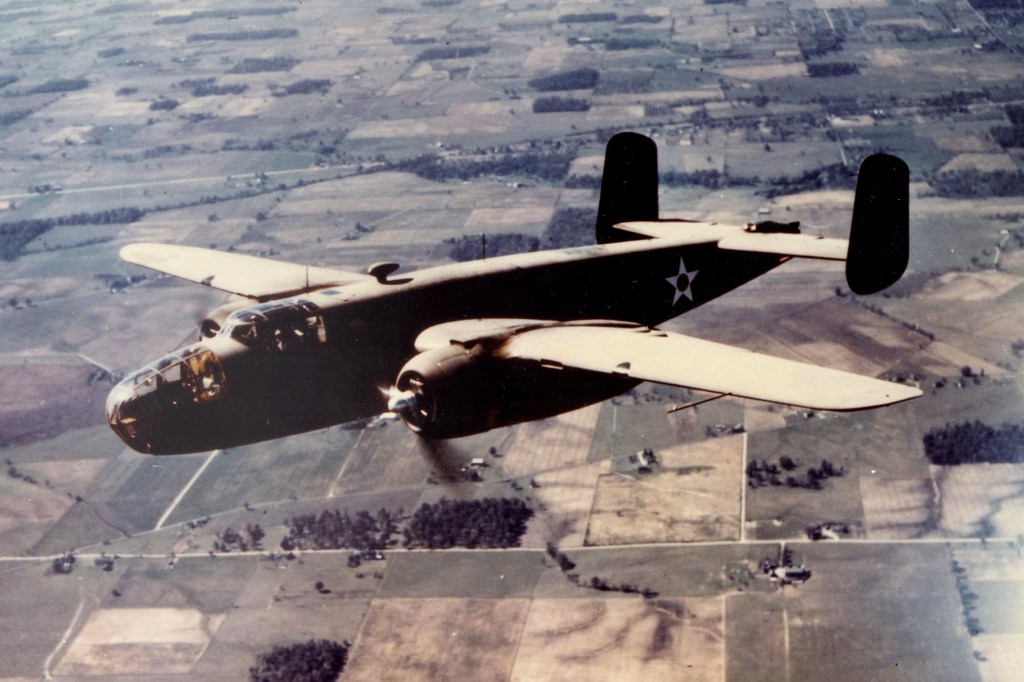
B-25B – Rear gun placements modified with remotely operated underside machine gun.

B-25C/D – De-icing equipment, Plexiglas windows, and heavier guns in the nose. The C was manufactured in a different factory location than the D (the former in Inglewood, California, the latter in Kansas City, Kansas), but they were otherwise the same B-25 model.

B-25G/H – After single-instance testing models of XB25-E and F, the B-25G and H had heavier gun armaments and a more fuel capacity for longer distances.
The nose in the B-25G and H variants was opaque — as opposed to the clear nose of earlier models — and housed two .50-inch caliber machine guns and one .75-inch caliber cannon.
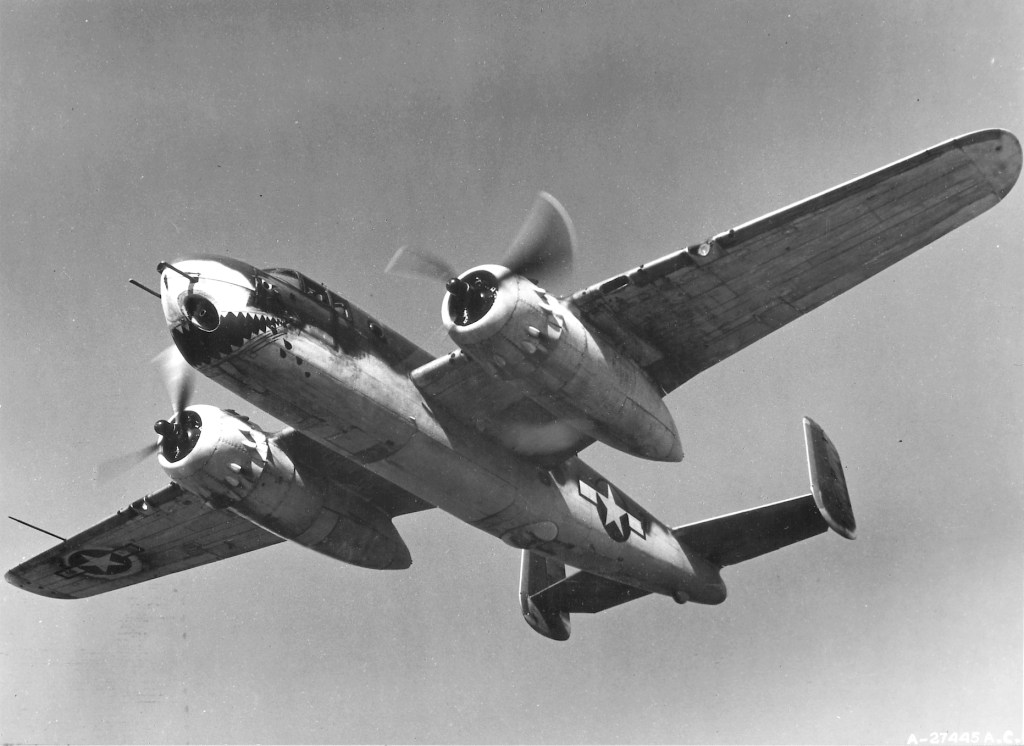
B-25J – Larger bomb bay, more .50 machine guns and a transparent nose.
 Waves To Jets