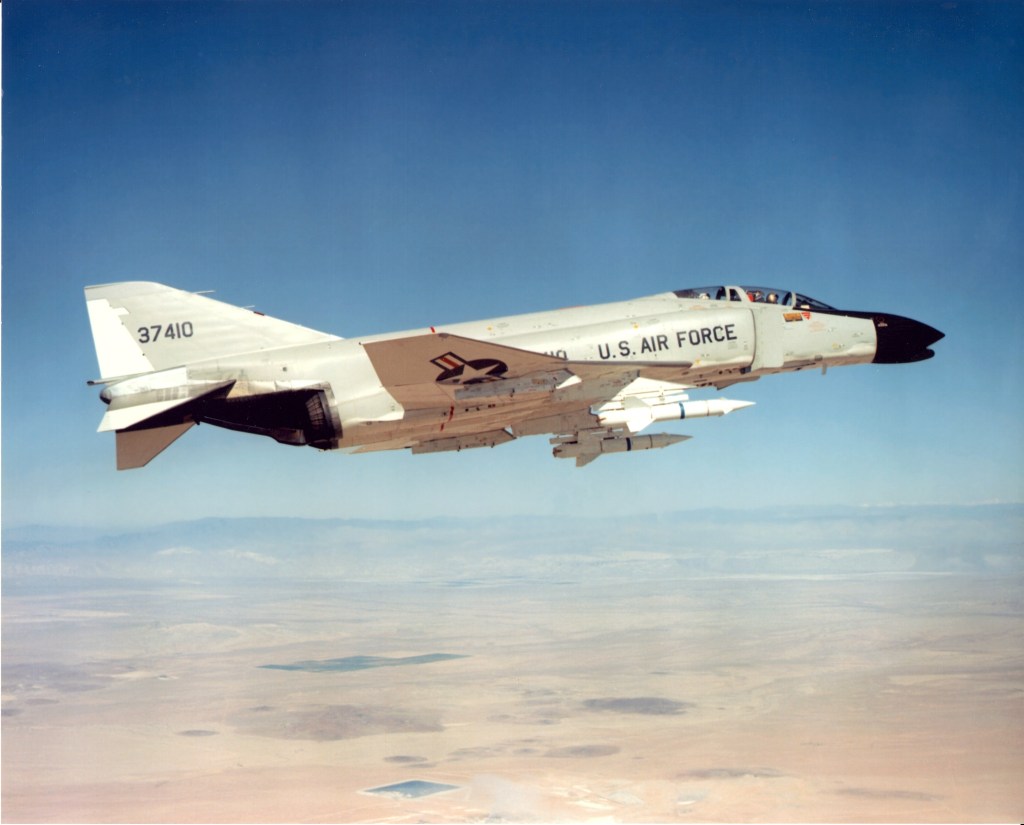
“Snoopy”
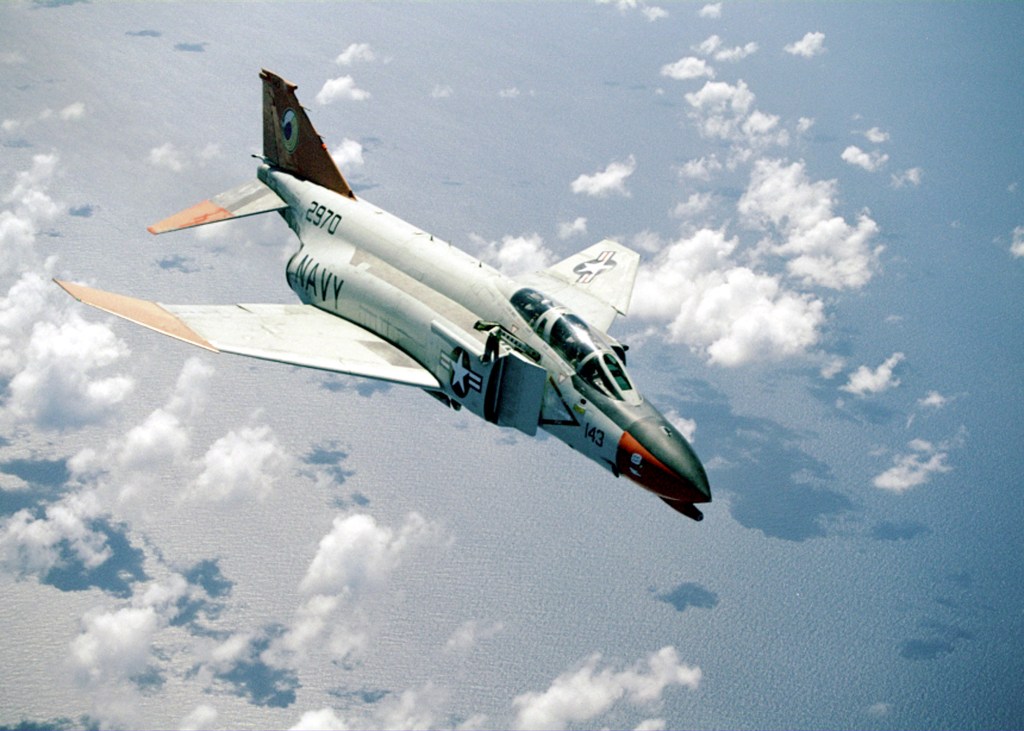
By WavesToJets
The F-4 Phantom II was one of the most capable fighters of its era. A large and heavy supersonic aircraft, the F-4 Phantom II reached sustained usage worldwide as an air-to-air fighter, reconnaissance craft, and fighter-bomber.
The McDonnell Aircraft Corporation first produced the F-4 Phantom II, developing it in the 1950s and 1960s. The United States would later use the aircraft in three branches of its military, most prominently during its involvement in the Vietnam War (ca. 1955 – 1975).
The F-4 Phantom II would later be sold and used internationally, with some companies (such as Mitsubishi in Japan) producing their own instances of the craft under license. In total, 5,195 instances of the craft were made.
Though phased out of U.S. combat service in the 1990s, the F-4 Phantom II would stay in service internationally for decades, well into the early 21st century.
Here are five more facts about the F-4 Phantom II.
1. The F-4 Phantom II broke several speed records.
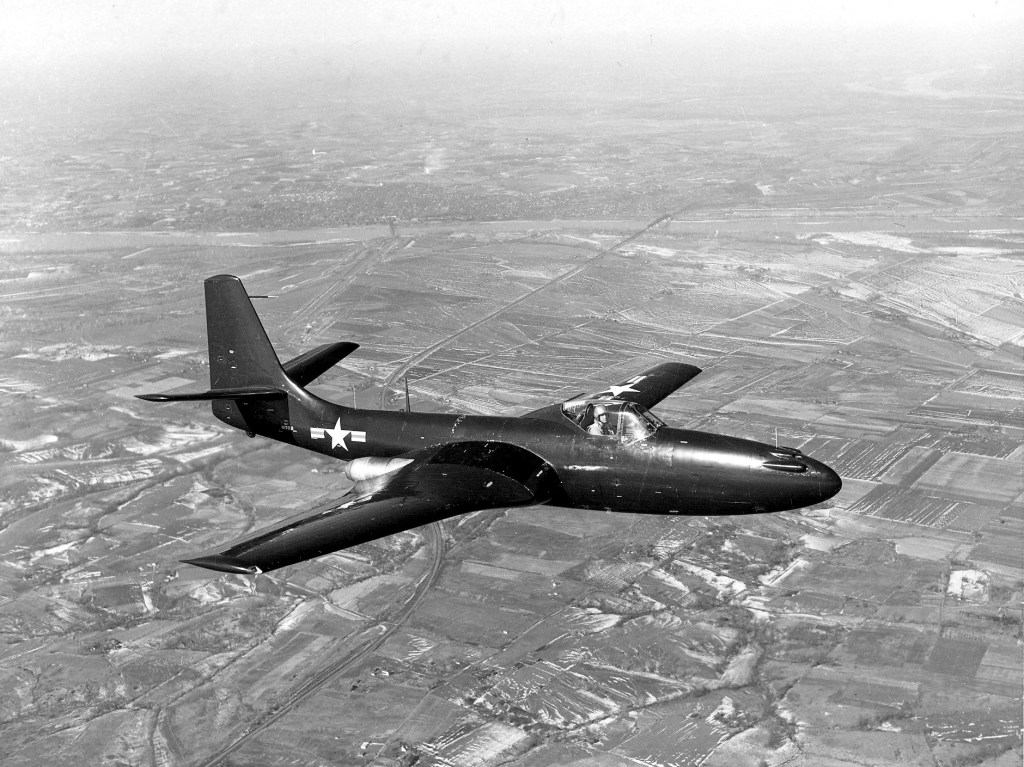
The McDonnell (later McDonnell Douglas) F-4 Phantom II was so named after the FH Phantom, a jet fighter first developed in the mid-1940s.
The earlier FH Phantom flew for the first time on January 26th, 1945. The United States Navy, Naval Reserve, and Marines utilized the aircraft between 1947 and 1954.
During its run, the FH Phantom could reach a then-impressive maximum speed of 505 miles per hour. It was the first Naval aircraft to reach such speeds, particularly the first naval jet fighter to reach 500 miles per hour.
The F-4 Phantom II would succeed the FH Phantom – though not in an immediate sense. The F-4 Phantom II was designed in the early to mid-1950s. The pre-production version, the YF4H-1, took flight for the first time in May 1958.
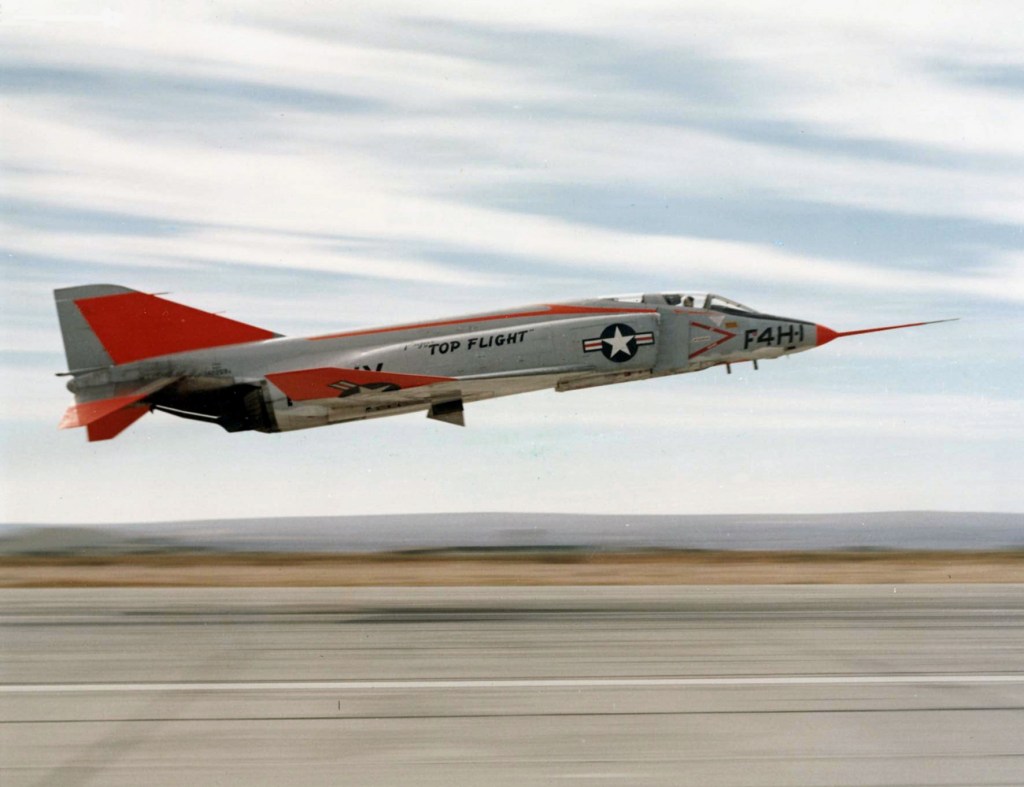
Early versions of the F-4 Phantom II (such as the F-4A) were equipped with General Electric J79-GE-2/2A engines, units with 16,100 pounds of afterburning thrust capacity.
The F-4B Phantom II was fitted with two General Electric J79-GE-8 engines that operated with 17,000 pounds of thrust – and could reach cruise speeds of 575 miles per hour. At 48,000 feet, the F-4B had a maximum speed of 1,485 miles per hour.

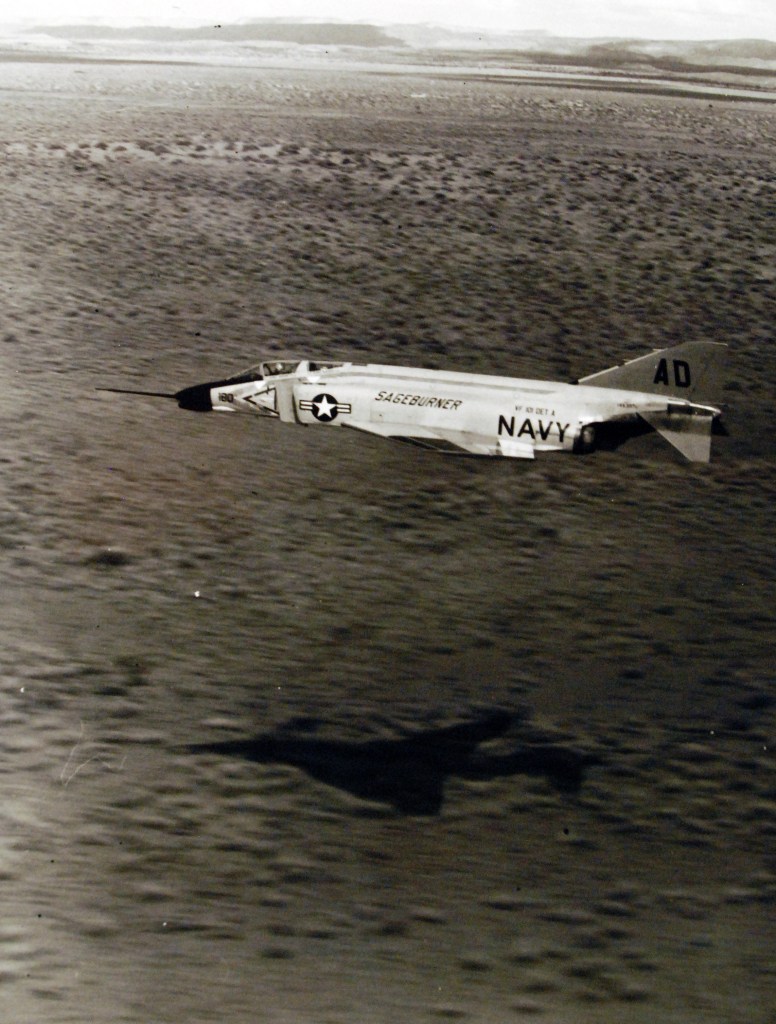
The U.S. Navy used the F-4 Phantom II to break world records; the F-4 reached a total of 16 world records in different areas.
An early record was an altitude record set on December 6th, 1959. U.S. Navy Commander Lawrence E. Flynn Jr. climbed to a record 98,557 feet using a prototype XF4H-1 Phantom II. This flight, part of the Navy’s Operation Top Flight, operated out of Edwards Air Force Base, Kern County, California – and to reach the record altitude, Flynn reached a climbing speed of Mach 2.5.
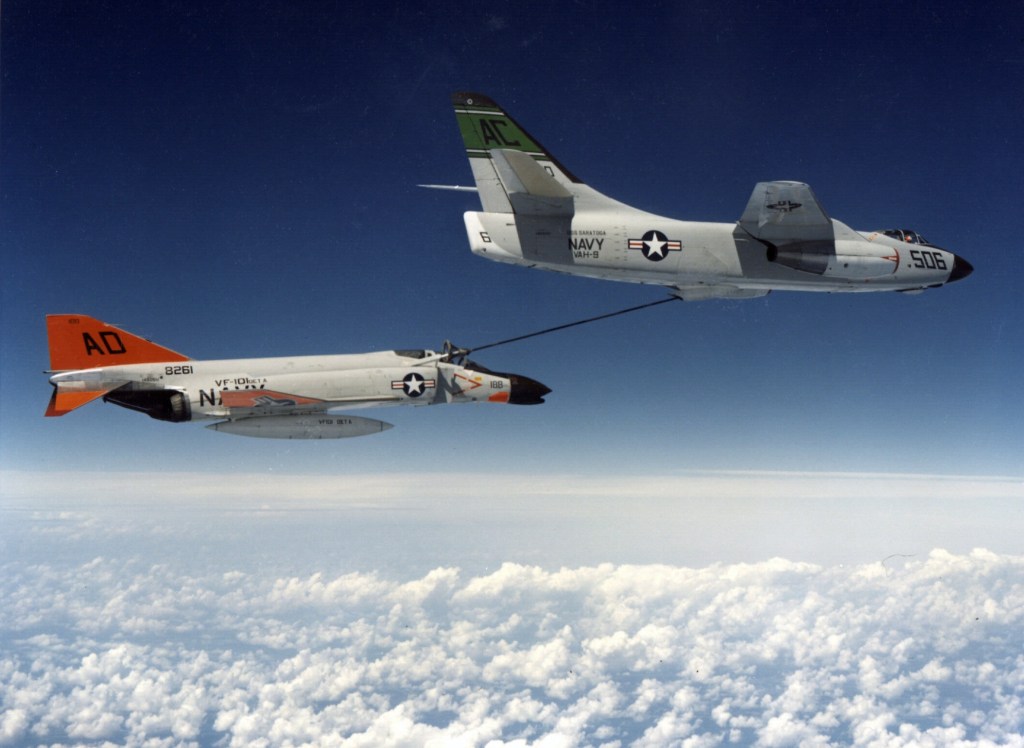
The F4H-1 and F4H-1F Phantom II reached record speeds of 1,216.78 and 1,390.24 miles per hour, respectively, on September 5th and September 25th, 1960. These records were also part of Operation Top Flight.
In a final top speed world record, the Navy’s prototype YF4H-1 reached, with some modification, a top speed of 1,606.342 miles per hour on a straight 20-mile course (in two ways, because the record required a two passes in opposite directions) on November 22nd, 1961.

The pilot of this 1961 record-setting flight, Lt. Col. Robert B. Robinson, was a U.S. Marine who was operating in the Navy’s Operation Skyburner out of Edwards Air Force Base.
In addition to operating in the U.S. Navy as a defensive fighter, the F-4 would also see service in the U.S. Air Force, U.S. Naval Reserves, and the U.S. Marines. The Phantom II would remain in U.S. service from December 30th, 1960 to January 1st, 2017 – though the craft’s later years would be spent operating as a target drone.
The most-produced version of the aircraft, the F-4E Phantom II, had a cruising speed of 585 miles per hour.
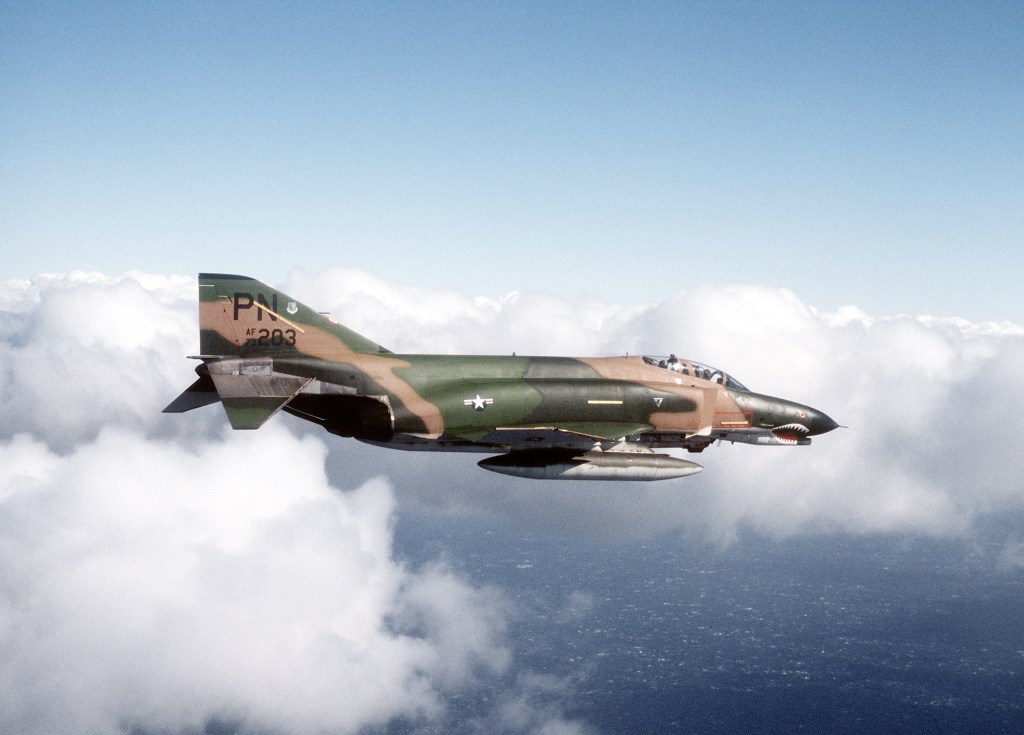
The F-4E could reach speeds of Mach 2.23, also 1,470 miles per hour at 40,000 feet. These high speeds were due to the plane’s two General Electric J79-GE-17A engines, producing 17,845 pounds of afterburning thrust.
2. The F-4 Phantom II was a large and heavy two-seated aircraft.

Compared to its successors, the F-4 Phantom II was a relatively large fighter-bomber. The early F-4B, for example, had a length of 58 feet, 3.75 inches, a wingspan of 38 feet, 5 inches, and empty weight of 28,000 pounds.
The F-16 Falcon, which would eventually come to replace the F-4 Phantom II in U.S. military service, was comparatively smaller. One of the F-16’s first versions, the F-16A, would have a length of 49 feet 3.5 inches, a wingspan of 32 feet 9.5 inches, and an empty weight of 16,285 pounds.

By the time the F-16 was adopted for service, F-4 Phantom II had been around for roughly 20 years. The reduction in weight and size of the F-16 was the result of a conscious effort to create lighter, more maneuverable air-to-air fighters.
Still, the F-4 Phantom II’s size reflected a trend in the late 1950s and 1960s for developing larger, heavier, faster aircraft. These aircraft would ostensibly take on the role of supersonic and durable fighters, bombers, and reconnaissance craft, all in a single airplane. Such advancements were nearly unheard of in the World War II/Korean War eras.
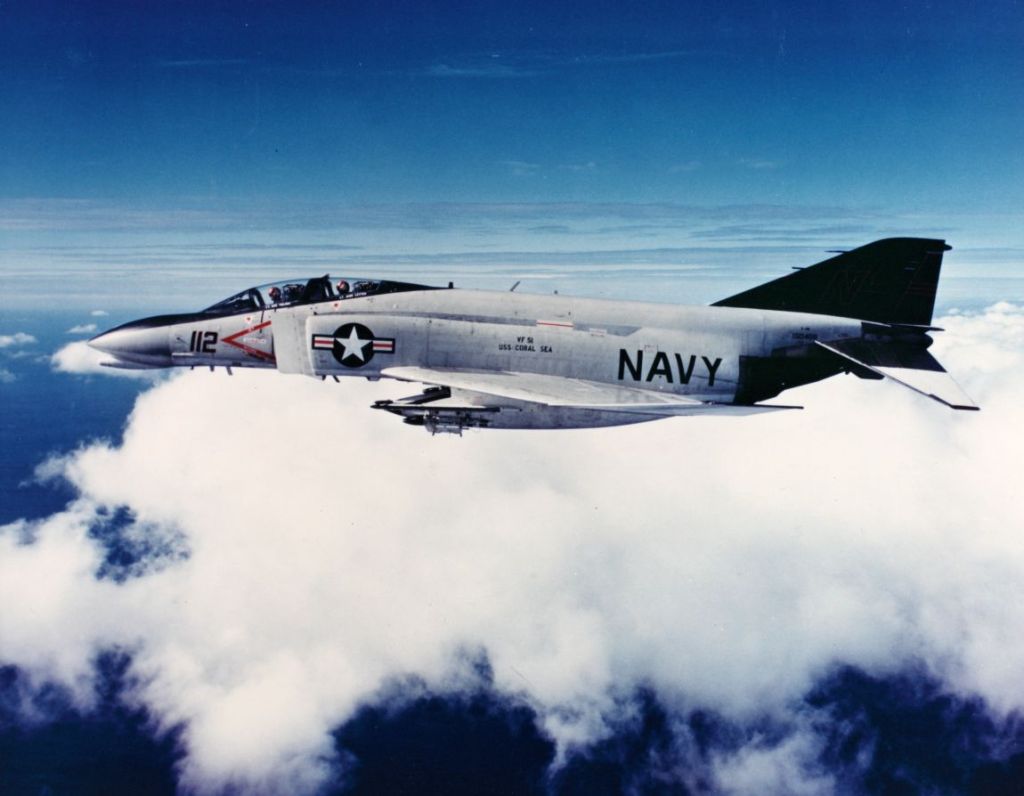
To these ends, F-4 Phantom II was developed with high-speed engines, the capacity to carry a very large bombing load, and high-powered radar installations. The aircraft was also constructed so it could accommodate two people: 1) a pilot, and 2) a radar intercept officer (or weapon system officer).
The F-4 Phantom II is distinguishable from other fighter aircraft with its large, dark nose, which is used to house radar equipment. It also has unique wings, with the wingtips angled up 12 degrees. This was to substitute for a 5-degree dihedral (the angle between the right and left wings) adjustment that was not feasible given the construction of the existing fuselage/main wing components. Perhaps because of “dog-eared” wings and large nose resembling a dog, the F-4 earned the nickname, “Snoopy”.

The Phantom II’s dual engines were of the General Electric J79 variety, ranging from the 16,150 pound-thrust (static) J79-GE-2 (or 2A) engines of the F-4A Phantom II – to the 17,844 pound-thrust J79-GE-10 engines (with afterburner) of the F-4J Phantom II.
The aircraft’s weapons capacity was up to 18,650 pounds (on the F-4E Phantom II). This was twice the weapons load capacity of a B-17 Flying Fortress, a prominent Second World War-era bomber. Using nine exterior hardpoints, the F-4 Phantom II could carry external fuel tanks, guided bombs, gun pods, glide bombs, air-to-air missiles, air-to-ground missiles, anti-radar weapons, and nuclear weapons.
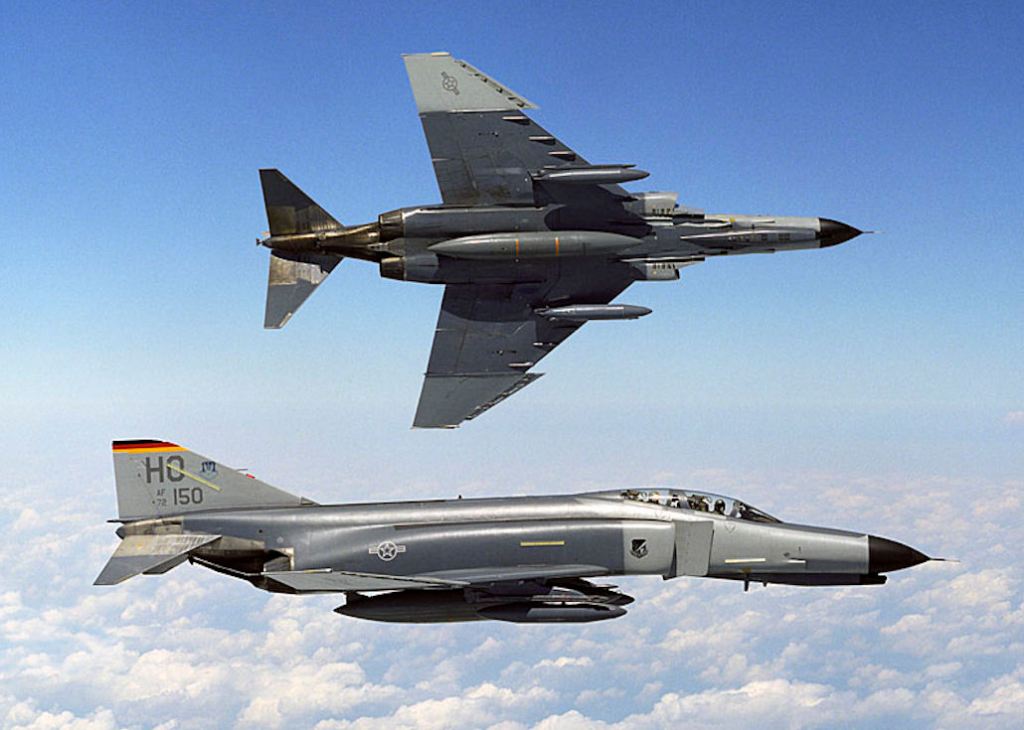
The F-4E Phantom II’s gun armament consisted of a 20 mm M61 Vulcan cannon. It could carry 640 rounds, and was mounted towards the front of the craft’s nose, underneath the fuselage.
The F-4’s radar ranged from the AN/APQ-50 type in early production versions to the more advanced -72 and -100 types, among others. Generally, these were fire-control radar – systems that used radio waves to find targets and clarify their location for weapons use.
3. The F-4 Phantom II has been in service for decades.
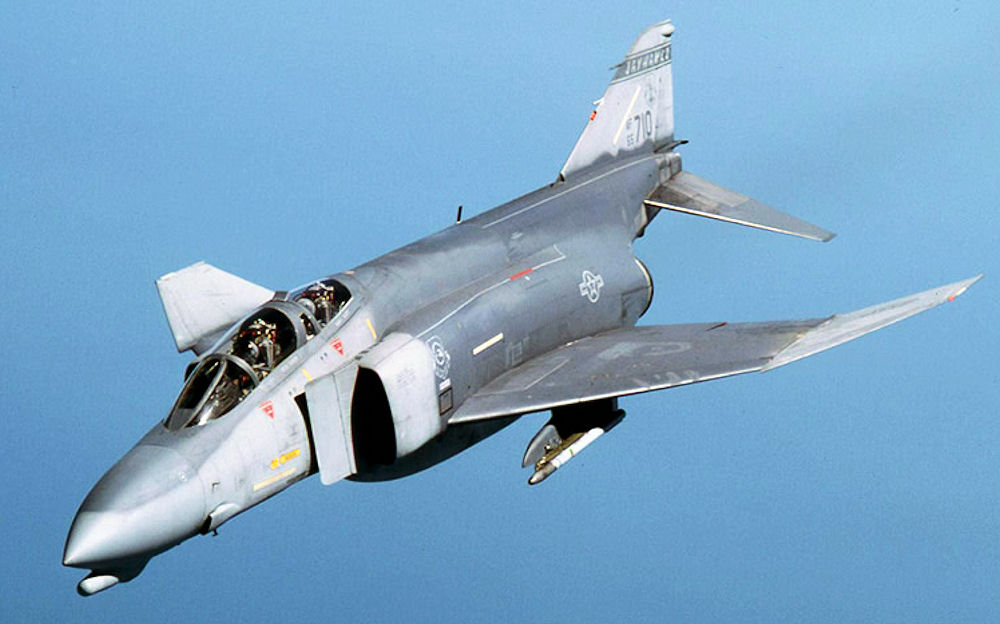
The F-4 Phantom II has its development roots in the early 1950s, when McDonnell Aircraft was drafting improvements for the existing U.S. Navy F3H Demon.
Though the Navy denied McDonnell Aircraft’s “Super Demon” – which the company proposed in September 1953 – the military branch later came to McDonnell in May 1955 with requirements for an all-weather defensive interceptor.
The new prototype would be known as the XF4H-1. A pre-production version of the craft was known as the YF4H-1, and the Navy ordered two prototypes and five pre-production versions on July 25th, 1955.
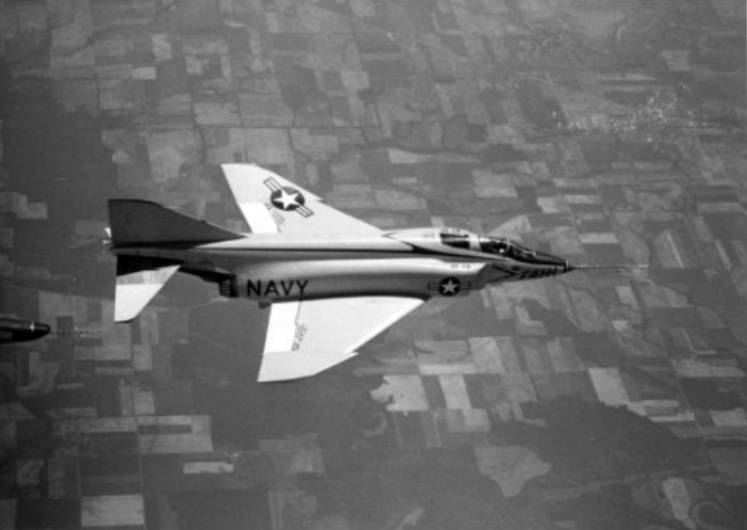
The YF4H-1 would see flight for the first time on May 27th, 1958 with pilot Robert C. Little, a McDonnell test pilot, operating out of Lambert-St. Louis Municipal Airport. Early test flights saw the craft reach speeds between Mach 1.3 and Mach 1.68.
The U.S. Navy was the first branch of the American military to receive the F-4 Phantom II, at Naval Air Station (NAS) Miramar, California, on December 30th 1960. The Marines would follow, receiving F-4Bs at Marine Corps Air Station (MCAS) El Toro, California, in June 1962.
The U.S. Air Force had tested Naval F-4Bs, but received their first group of the F-4C Phantom II aircraft in November 1963. This was at MacDill Air Force Base (AFB), Florida.
There were several official names for the early versions of the aircraft. The prototype version (as mentioned before) would be designated the XF4H-1. The Navy would initially adopt this naming convention once production versions were delivered to them.
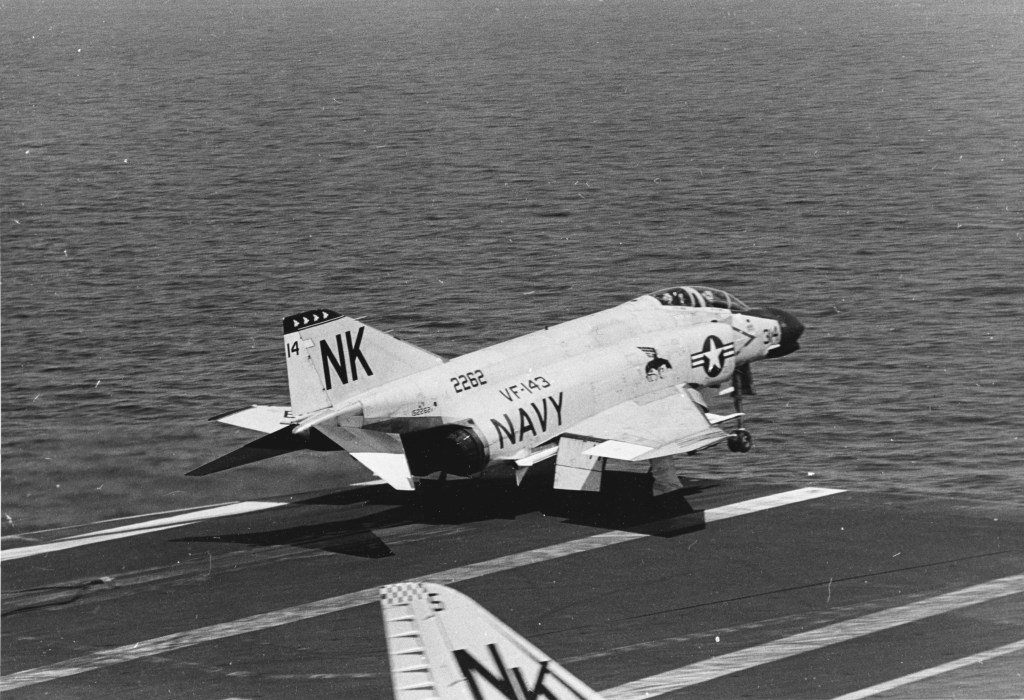
For example, the first of these production versions was known to Navy as F4H-1F. The next version would be known as the F4H-1.
The F4H-1F and the F4H-1 would be renamed the F-4A Phantom II and F-4B Phantom II, respectively, in 1962. The “F-4x” convention was part of a way to standardize the name of the craft between all branches of the U.S. military.
The U.S. Air Force (USAF) originally named the aircraft the F-110, but adopted the “F-4x” naming convention in September 1962. The USAF versions of the craft included the F-4C, F-4D, F-4E, and the F-4G “Wild Weasel V”.
Each USAF craft had upgrades of some kind. The F-4C had a wider weapons array and a different (when compared to the Naval F-4B’s) refueling system. The F-4D had an advanced radar and an upgraded avionics system.
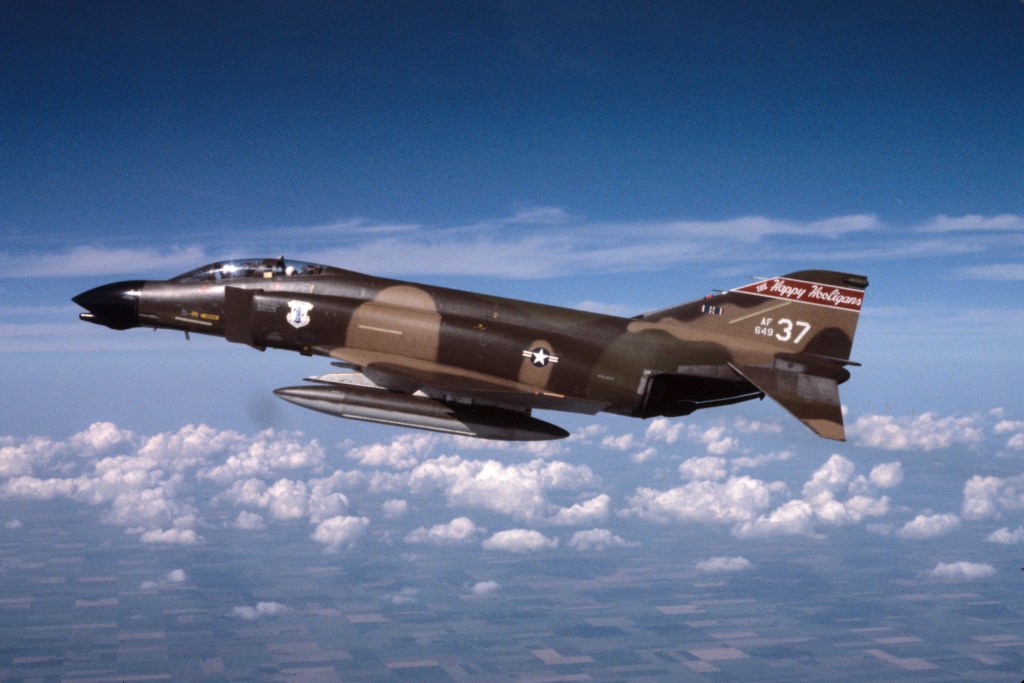
The F-4E had more powerful engines, a nose-mounted cannon, and an even more advanced radar unit. Finally, the F-4G “Wild Weasel V” was an F-4E specifically modified to locate and destroy radar defense installations.
The Navy and Marine Corps operated the early F-4A and F-4B models, of which the F-4B was comparable to the USAF’s F-4C. For both branches, MacDonnell Aircraft manufactured and delivered improved versions of the F-4B starting in 1966 – this craft was referred to as the F-4J.
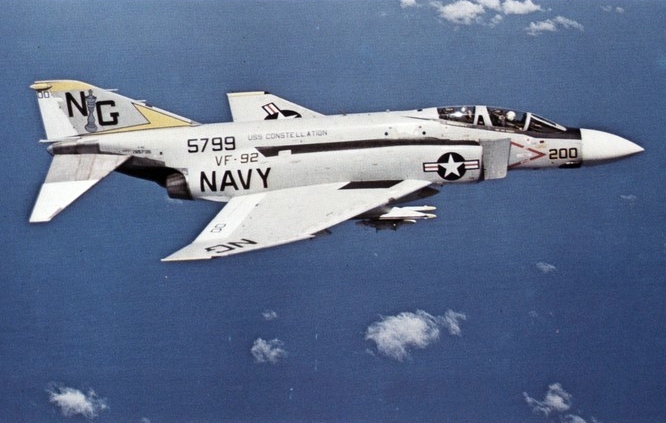
The Navy’s internal improvements to the F-4B resulted in smokeless-engined variant called the F-4N, first flying in 1972.
The F4-J, in turn, was also modernized – by the Navy itself – with smokeless engines (among other improvements), first flying in 1977. This version became known as the F-4S.
The Marines would use the F-4S until 1992; the Navy until 1987. The Navy would also use an unmanned target training version, the QF-4, until 2004. The USAF would use the F-4G until 1996, and the QF-4 until 2016.

The F-4 Phantom II would see continued service in other countries. Greece, South Korea, Iran, and Turkey currently operate F-4Es. Other countries – such as Egypt, Germany, Israel, Japan, the UK, and Australia – would operate F-4 and RF-4 (reconnaissance) variants in various periods from the 1970s to 2020.
4. The F-4 Phantom II was capable in air-to-air combat.
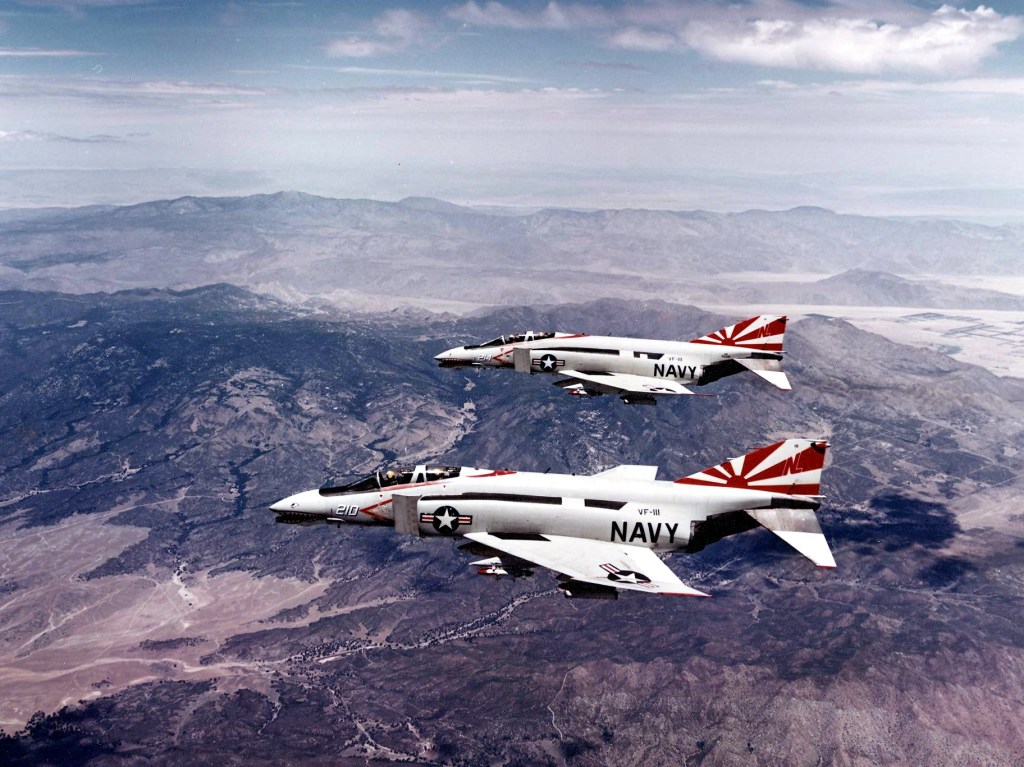
The F-4 Phantom II saw combat action in the Vietnam War, under the use of the U.S. Navy, Marines, and the USAF. The Navy first used the F-4 as a bomber escort in the theatre on August 5th, 1964.
The F-4 was used in ground attack, defensive, close air support, and air-to-air combat roles. The fighter was very capable in air-to-air usage – with a total of 150.5 kills of MiGs (Mikoyan-Gurevich aircraft) attributed to the F-4 in all branches.
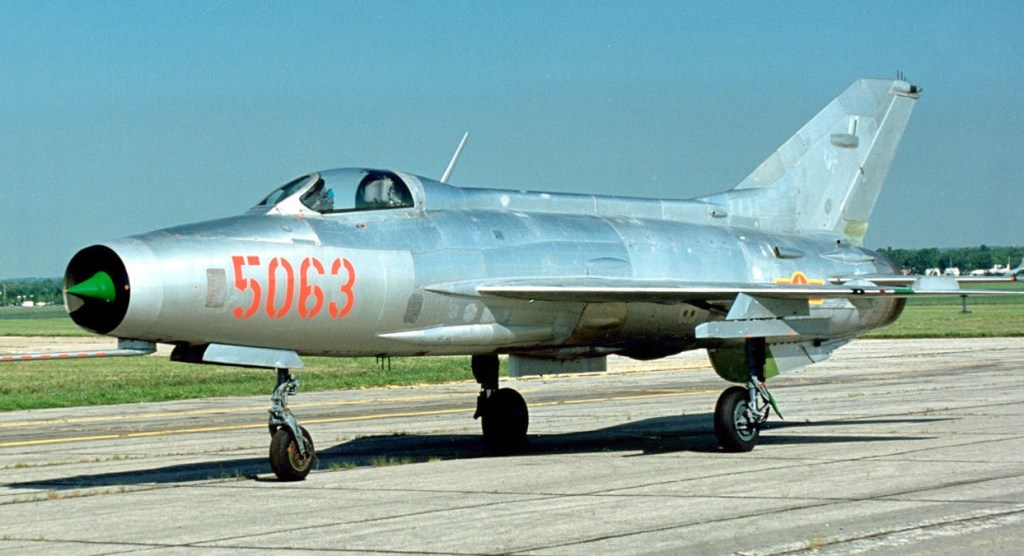
By branch, the USAF claimed 107.5 MiG kills, the Navy 40 MiG kills, and the Marines 3 MiG kills. The first air-to-air victory was Naval F-4B downing a Chinese MiG-17 on April 9th, 1965.
The first air-to-air victory against a North Vietnamese MiG was on June 17th, 1965. This was also from a Naval F-4B, with Commander Louis Page and Lt. John C. Smith as pilot and radar intercept officer, respectively.


In the USAF, the 45th Tactical Fighter Squadron of the 15th Tactical Fighter Wing shot down North Vietnamese MiGs on July 10th, 1965, a first time for the branch. Frequently-used USAF F-4 air-to-air weapons included the AIM-7 Sparrow and the AIM-9 Sidewinder missiles.
There were a total of 42 F-4 Phantom II losses due to air-to-air combat during the Vietnam War, in all U.S. armed service branches. The F-4 was used in air-in-air battles during the Yom Kippur War and the Iran-Iraq War by Israel and Iran, respectively.
5. Variants of the F-4 Phantom II have been produced internationally.
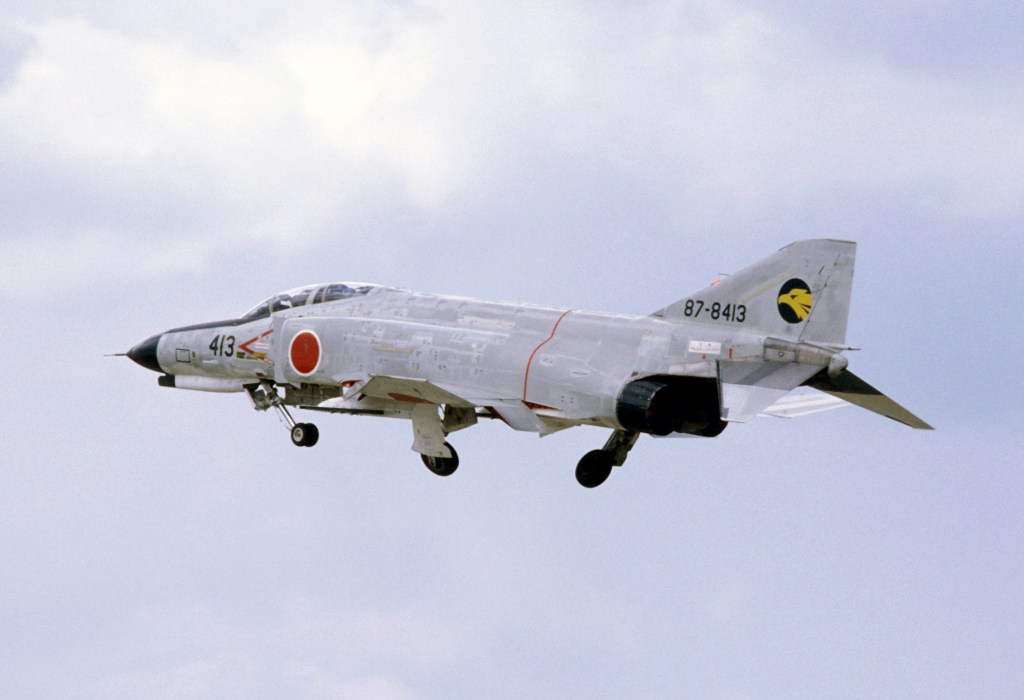
The F-4 Phantom II was originally the result of MacDonnell Aircraft’s production, making it an American-made jet. The F-4, however, has also been produced internationally under license.
Starting in the 1970s, MacDonnell Douglas produced two prototypes of what would become the F-4EJ, or the Japanese version of the F-4E. Mitsubishi Heavy Industries would produce the next F-4EJs under license.
Mitsubishi made a total of 138 F-4EJs, with the first Japanese-made model flying on May 12th, 1972. The last F-4 produced in the world was actually a Mitsubishi-produced F-4EJ, completed on May 20th, 1981.
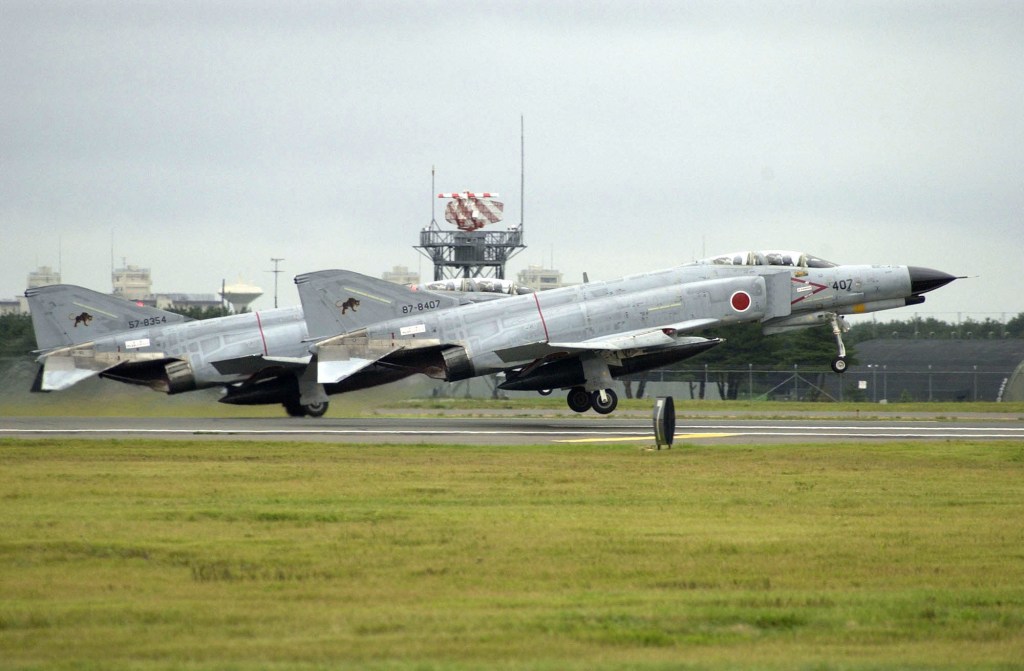
The F-4EJ and its reconnaissance counterpart, the RF-4EJ, saw a decades-long service period with the Japanese Air Self-Defense Force (JASDF). The JASDF took these planes out of service on March 17th, 2021.

With an impressive combination of armament, speed, and avionics, the F-4 Phantom II enjoyed a long service life internationally. Though its dimensions and technology have since been improved upon, the F-4 arguably stands as an archetype of the abilities of modern-day jet fighters and fighter-bombers.
 Waves To Jets