
Naval Fighter And “Ace Maker”
By WavesToJets
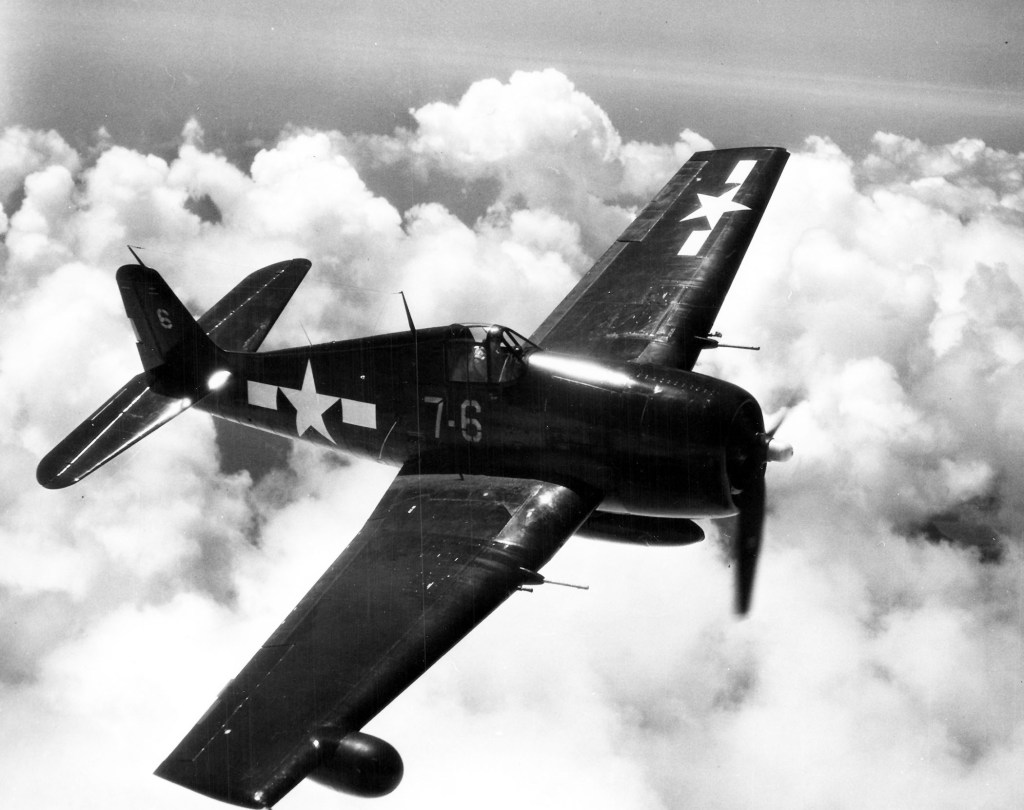
The Grumman F6F Hellcat was a World War II-era fighter plane utilized by the U.S. Navy.
Intended to be a replacement for Grumman’s F4F Wildcat, the Hellcat was specifically designed to accommodate the long distances and flight speeds necessary to participate in the Pacific War.
Originally carrying the 1,700-horsepower Wright R-2600-10 engine, the Hellcat was later fitted with the 2,000-horsepower Pratt & Whitney R-2800-10 engine – boosting its performance greatly.
Engine improvements helped later versions of the Hellcat were to reach maximum speeds of over 390 miles per hour and a range of 945 miles.
Equipped with either six .50-caliber Browning machine guns, or two 20 mm cannons and four .50-caliber machine guns, the F6F was a powerful weapon of war, taking down 3,518 Japanese planes (against a loss of 160 Hellcats) in the last year of the war alone.
With this performance, the plane has been nicknamed and referred to as an “Aluminum Tank”, the “Wildcat’s Big Brother”, and an “Ace Maker”.
Technological Background

The F6F Hellcat was the result of work by Grumman Aircraft Engineering Corporation, an aircraft production company based in Bethpage, Long Island, New York. It was intended as a replacement for the company’s F4F Wildcat fighter, one already in use by the United States Navy in the early 1940s.
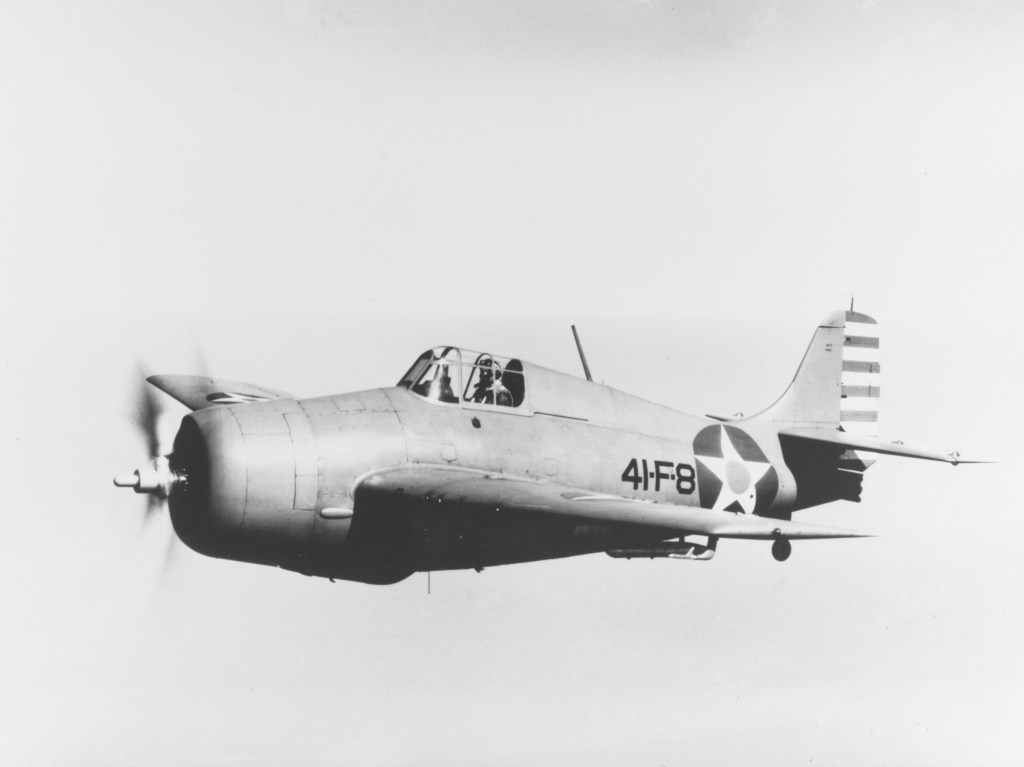
Grumman had worked on the replacement design since at least 1938, but it was on June 30th, 1941 that the Navy ordered a prototype model called the XF6F-1.
Engineers like Jake Swirbul, William Schwendler, and company founder Leroy Grumman himself worked on the XF6F-1, which required a larger engine, a larger propeller, and larger wing and tail surface areas than its predecessor.

Though it was essentially similar in design to the Wildcat, the XF6F-1 did have a few differences.
Firstly, it had a hydraulic landing gear system, which replaced a system that raised and lowered the landing gear manually.
Secondly, because of the new landing gear, the wing was located lower on the body than the Wildcat – it no longer jutted out from the middle.
Finally, the XF6F-1 had a much more powerful engine, the Wright R-2600-10 engine, which operated with 1,700 horsepower.
Performance-wise, the XF6F-1 did not meet speed and climbing expectations – so a new engine had to be used. In this case, Grumman replaced the Wright engine with the Pratt & Whitney R-2800-8 Double Wasp engine, which operated at 2,000 horsepower.
The Double Wasp was an 18-cylinder radial engine common in medium bombers of the era, such as the Douglas A-26 Invader or the Martin B-26 Marauder. The Double Wasp was also used in the Vought F4U Corsair or the Republic P-47 Thunderbolt, themselves fighter aircraft.
At any rate, Grumman had chosen this engine for their prototype and re-named their aircraft the XF6F-3.
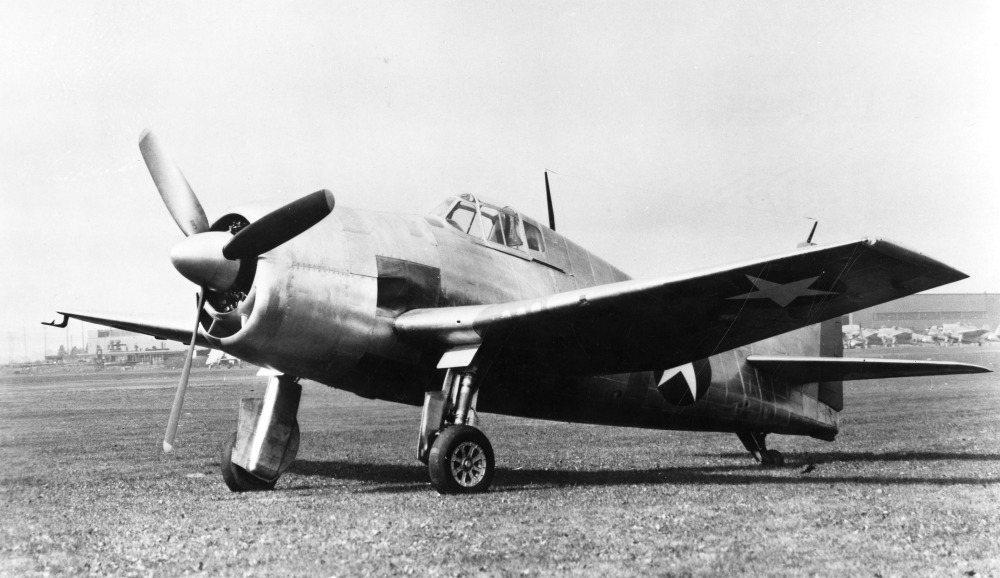
The first production version of the XF6F-3, the F6F-3, flew on October 3rd, 1942. By January 1943, the U.S. Navy was accepting their first F6F-3s.
A key difference between the XF6F-3 and the F6F-3 was that the latter housed the later-model 2,000-horsepower Pratt & Whitney R-2800-10 engine (as opposed to the R-2800-8).
Over time (until the end of the war) Grumman produced several variants of the Hellcat, including versions equipped with radar and cameras – for night-fighting and reconnaissance purposes, respectively.
Generally, the F6F Hellcat was a fairly large fighter, at a length of 33 feet, 7 inches, and a wingspan of 42 feet, 10 inches. Its maximum weight capacity was well over 10,000 pounds, but could reach speeds over 390 miles an hour.
With a service ceiling of 37,300 feet, the Hellcat was able to operate considerably well at high altitudes.
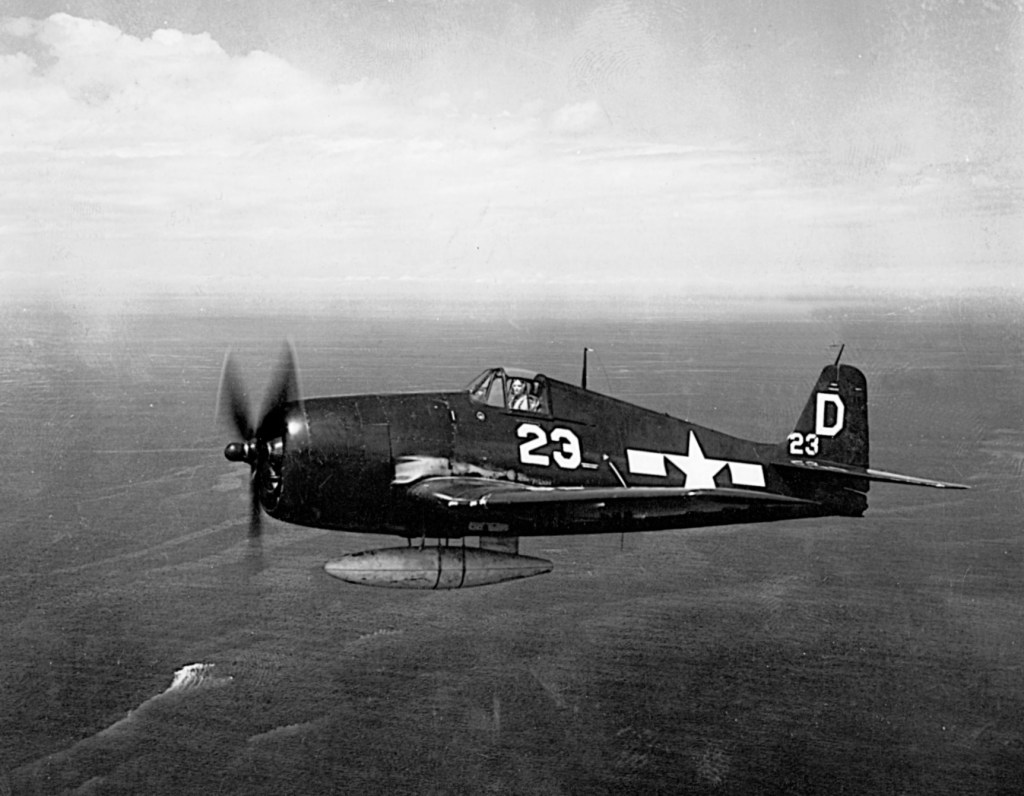
The plane was also usually equipped with six .50-caliber machine guns or two 20-millimeter cannons and four .50 caliber machine guns in the wings.
Later versions had an ability to carry up to 4,000 pounds of bombs, with combinations of 1,000, 500, and 250-pound bombs available under the wings, and the ability to carry a 2,000-pound bomb directly under the fuselage.
The later Hellcat’s wings were also able to accommodate High Velocity Aircraft Rockets (HVAR) rockets, “Tiny Tim” rockets, and up to three external “drop” fuel tanks.
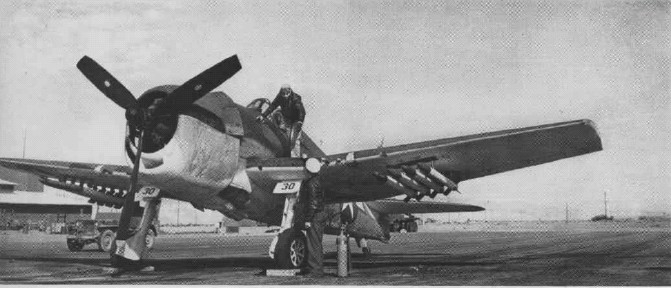
The Hellcat had several advantages over the Mitsubishi M6 Zero, the Imperial Japanese Navy’s main fighter aircraft – including a faster top speed, a heavier, more durable body, and a slightly higher climbing rate at altitudes over 14,000 feet.
Although the Hellcat was vulnerable in its comparatively lower turning rate, it proved to be an effective fighter against the Zero in many battles.
In Service

The F6F-3 Hellcat saw its first combat mission on August 31st, 1943 when launched from the USS Yorktown (CV-10) in an air raid against a Japanese garrison stationed at Marcus Island (Minami-Tori-shima) in the Western Pacific.
This was only one part of a large air-to-ground attack on the island featuring American bombers, fighters, and torpedo bombers; the Naval unit flying the F6F-3 was VF-5.

Early air victories for the F6F-3 included the shooting of a Kawanishi H8K “Emily” flying boat near Marcus Island on September 1st, 1943 (by a Hellcat launched from the USS Independence[CVL-22]) and the shooting down of a Mitsubishi A6M Type 0 fighter near Rabaul, New Britain on November 11th, 1943.
The latter of these air victories was at the hands of pilot Commander Eugene A. Valencia Jr., the third-highest Navy Ace in World War II. Valencia operated off of the USS Essex (CV-9) with Naval air fighter unit VF-9.

Hellcats participated in the Battle of Tarawa, in the Gilbert Islands on November 20th to 23rd, 1943. In this invasion of a Japanese-held atoll, the F6F did remarkably well. One account mentions the loss of only one Hellcat against an enemy loss of 30 Japanese Zeroes.
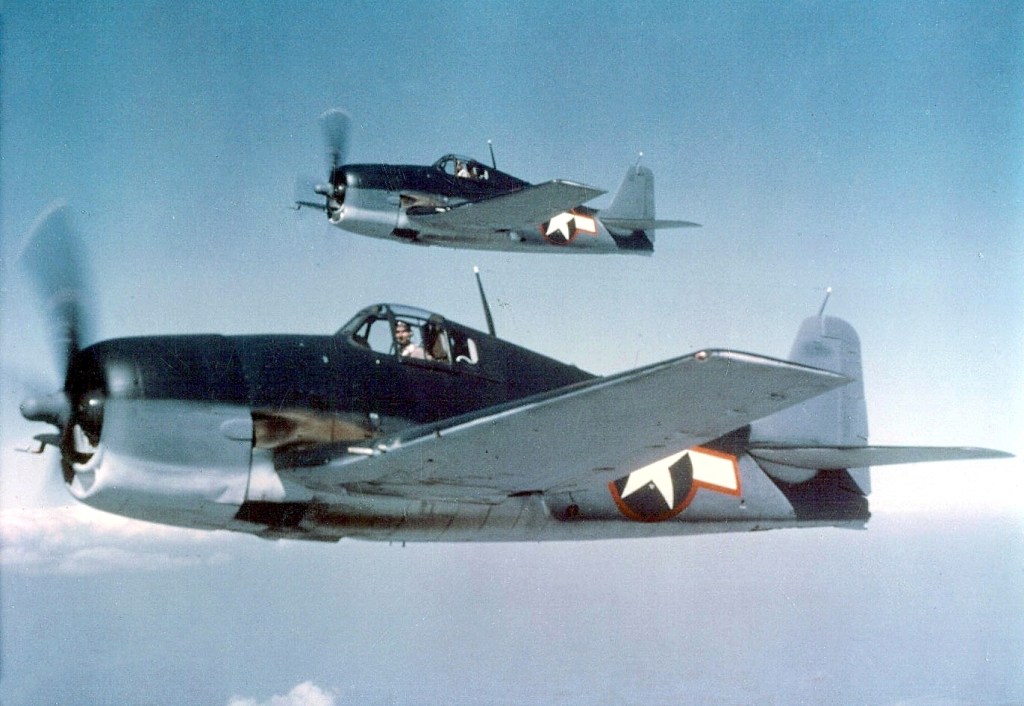
Hellcats were the first planes to land at the airstrip at Tarawa as part of the United States’ garrison air force there; with F6F-3s of the Navy’s VF-1 from the USS Barnes (CVE 20) and USS Nassau (CVE 16) landing on November 25th, 1943.

Night-fighter versions of the F6F-3 Hellcat were used on February 17th, 1944 to attack Japanese ships moored at Turk Lagoon in the Caroline Islands. This attack was part of Operation Hailstone, an effort to free the Marshall Islands from Japanese naval control.
The planes in Operation Hailstone were operating off of five U.S. Navy aircraft carriers and were part of the naval VF-101 and VF-76 units. They also took occasional defensive positions against Japanese night raiders during the two-day attack.
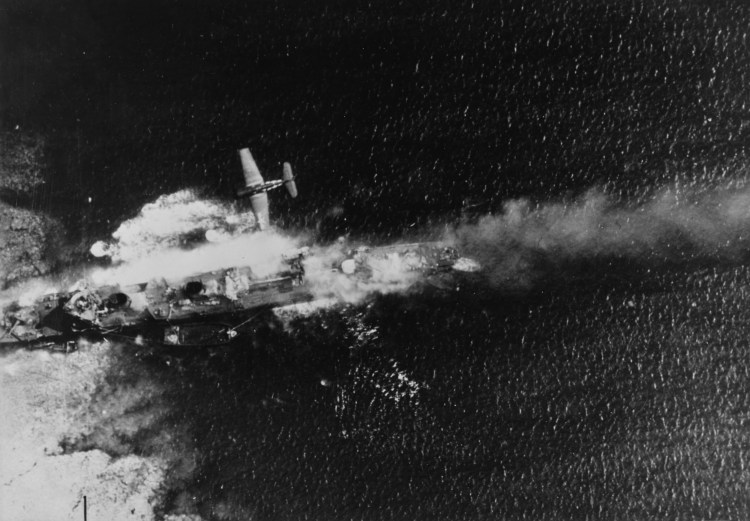
F6F-3 Hellcats were involved in attacks on Japanese ships off of Sabang, Sumatra – of the former Netherlands East Indies (which is now Indonesia) – Soerabaja, Java, and the Mariana Islands on April 19th , May 17th , and June 11th (respectively) 1944. For the attacks against Java and Sabang, American F6F-3 units (from the Navy’s VF-12) joined forces with British naval air units.

In the Mariana Islands, F6F-3s were a part of the U.S. Navy’s Task Force 58 (the main naval striking force in the Pacific), defeating enemy air fighters as well as strafing ground and sea targets.
From June 19th to June 20th 1944, the Battle of the Philippine Sea was underway. American forces had already landed at Saipan in the Mariana Islands on June 15th, prompting a Japanese counterattack. This was to be an aircraft carrier-based counterattack and also a decisive battle for the Japanese.
The Japanese naval counterattack was coming from the Philippines, west of the remaining Japanese-held Mariana Islands, but had aroused the attention of American forces.
At the time, there was some disagreement as to whether to send Task Force 58 west to combat the Japanese fleet. It was decided that Task Force 58 would remain in place. This was ostensibly to remain and protect the main U.S. landing force in the Mariana Islands.
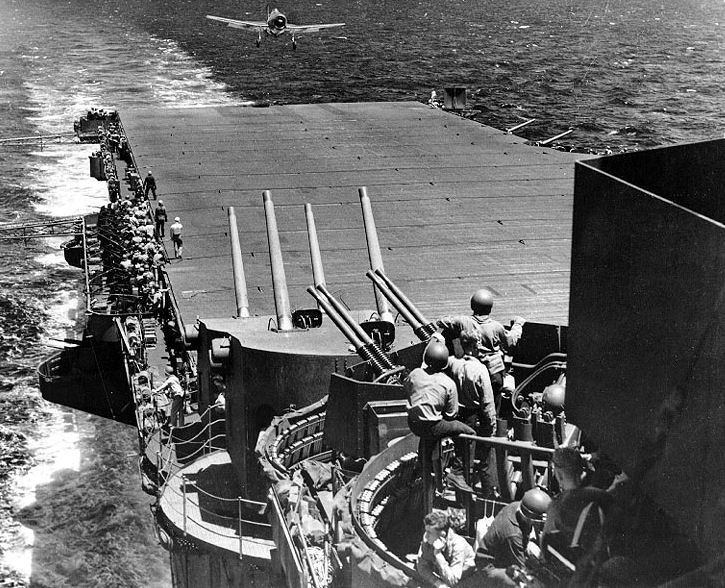
Still, Task Force 58 moved slightly west to maneuver better in preparation for the oncoming naval attack. The U.S. Force sent out an air patrol, as well as did the approaching Japanese forces.
The Japanese found Task Force 58 on the afternoon of June 18th, but delayed their attack against them. This was because the Japanese thought they would not be able to land at Guam during the night of the 18th.
The Japanese eventually started their attack on June 19th and sent out three waves of fighters, fighter-bombers, and torpedo bombers, a total of 373 aircraft. Task Force 58’s Hellcats and other aircraft were sent out, and only 130 Japanese aircraft returned to their carriers.
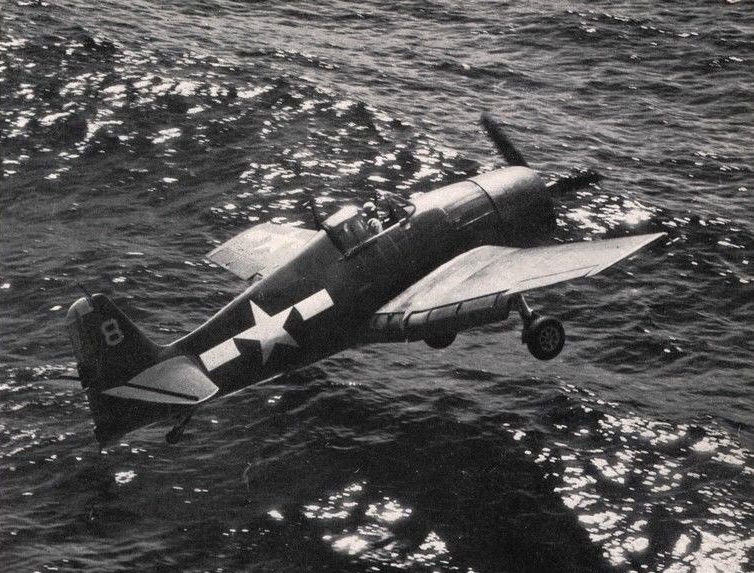
The F6F-3 Hellcat had been used in defense of the American fleet, and total American aircraft losses amounted to 23 in battle, 6 for other reasons. The Japanese had also lost 2 fleet carriers (the Taiho and the Shokaku) on June 19th.
Because of the staggering difference in losses in favor of the Americans, the air component of the Battle of the Philippine Sea eventually became known as the “Great Marianas Turkey Shoot”.
In the afternoon of June 20th 1944, the American forces found and launched an attack on the Japanese fleet. 85 fighters (including F6F Hellcats), 77 dive-bombers, and 54 torpedo bombers were launched at 4:25 pm and reached the Japanese ships slightly before 7pm.

In the ensuing attack, 65 Japanese planes were lost. Two Japanese tankers and one more aircraft carrier (the Hiyo) were sunk by American dive bombers and torpedo bombers. American air casualties were low, with only 14 of the total 216 aircraft being lost in combat.
Since the American aircraft had to return to their carriers in a night landing, some 80 more planes were lost in the attempt – meaning only 122 planes made it safely back to American carriers. Still, the Battle of the Philippine Sea was a decisive naval victory for the Americans, the F6F Hellcat taking a leading role in defeating Japanese Navy Air Forces.
In the Mediterranean, the Navy also used the F6F-3N and F6F-5, launching the planes off the escort aircraft carriers (CVEs) USS Kasaan Bay (CVE-69) and USS Tulagi (CVE-72). From August 15th 1944, to August 29th, 1944, the carriers launched over 1,500 sorties, aiding the Allied invasion into southern France (Operation Dragoon).

The Mediterranean Hellcats were involved in strafing enemy positions, providing air defense for shipping lines, attacking enemy communications, providing air support for invading Allied troops, and spotting enemy gun positions. The Hellcats from the Kasaan Bay engaged in air-to-air combat, shooting down two enemy planes over the invasion beach; while Hellcats from the Tulagi shot down a total of three Junkers Ju-52s.
The Allied invasion of Iwo Jima was assisted by US Marine Corps F6F Hellcats. A total of 24 Hellcats (and 24 Marine Corsairs) strafed, rocketed, bombed, and napalmed the island on February 19th, 1945 under the leadership of Marine. Lt. Col. William A. Millington.

In the last year of the war (1944-1945) the Hellcat proved devastating to Japanese fighters, warships, and naval shipping, particularly in the Battle of Leyte Gulf (October 23rd – 26th , 1944). With 1,046 Japanese planes and 300,000 tons of enemy shipping lost, after this battle, the Japanese surface fleet was largely considered defeated.
The British also used the Hellcat as the Hellcat F Mk. I (the F6F-3), the Hellcat F Mk. II (the F6F-5) and the Hellcat NF Mk. II (the F6F-5N). These were flown off of Royal Navy carriers off of Norway, in the Mediterranean, and in the Pacific.
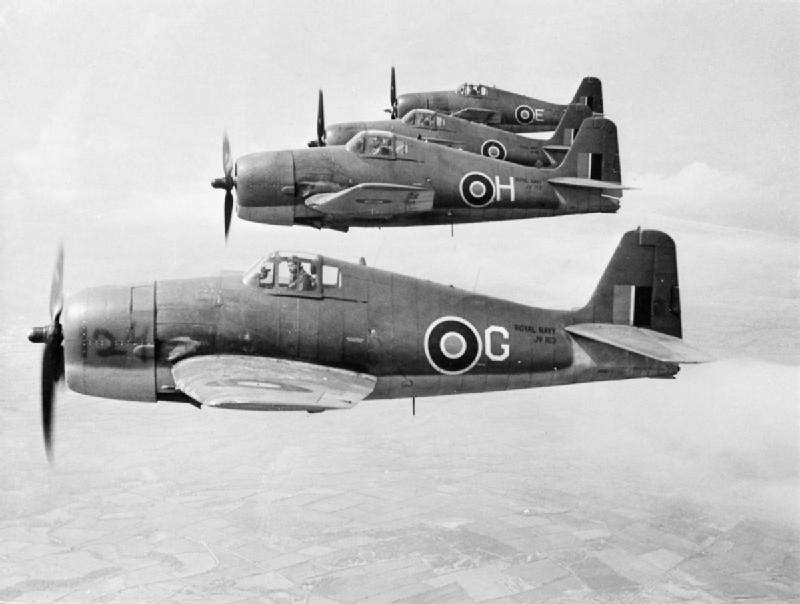
After World War II, the Hellcat was used as an American training aircraft and as a radio-controlled “drone” in the Korean War, loaded with bombs and used to destroy targets such as bridges. It was used by French forces and used in the Indochina Wars of the early 1950s. The Hellcat was also used by the Uruguayan Navy throughout the 1950s.
The F6F Hellcat In Flight
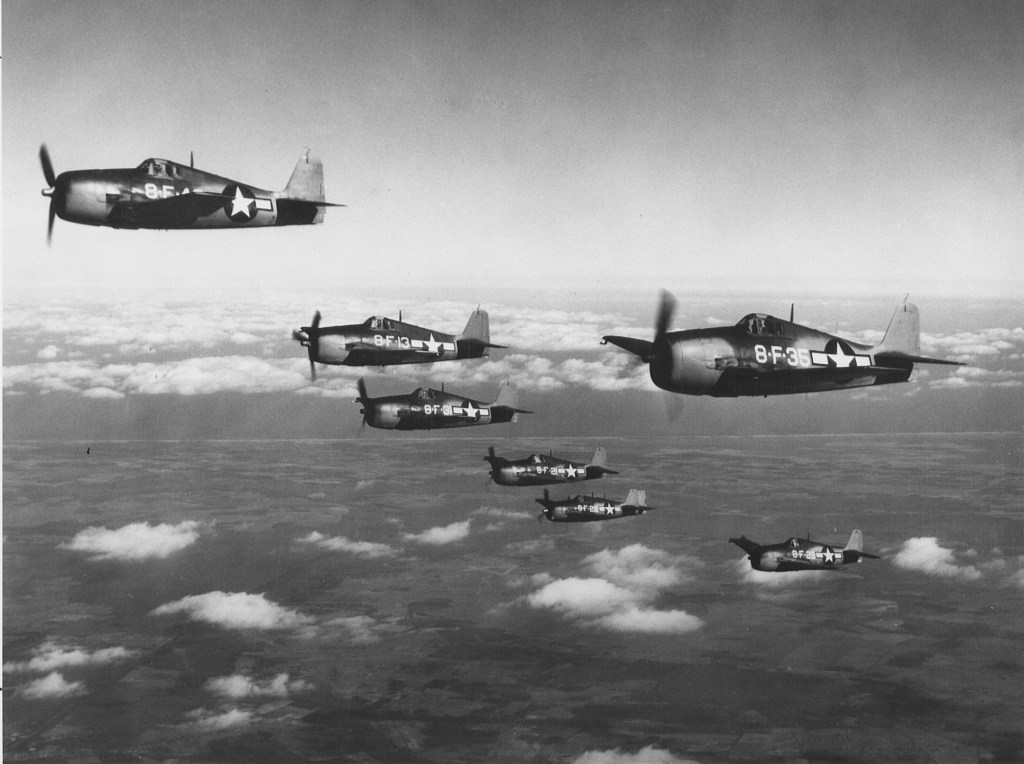
Hellcat pilots knew that the F6F could roll faster at speeds about 235 miles per hour, and could climb at a higher rate above 14,000 feet than the Japanese A6M5 Type 0 Model 52 (the “Zero”). The Hellcat, was, however, outclassed in some respects when it came to turning and climbing below 14,000 feet.
For this reason, Hellcat pilots were encouraged not to engage in dogfights with Zeros but to use the F6F’s higher power and speed to attack at opportune times.


Captain David McCampbell (1910 – 1996) of the United States Navy was a Hellcat fighter ace who flew the F6F-3 and the F6F-5. During World War II, McCampbell had a career total of 34 kills. On June 19th, 1944 alone – during the Battle of the Philippine Sea – he shot down four Japanese Yokosuka D4Ys, and later, two Mitsubishi A6M5 Zeros.
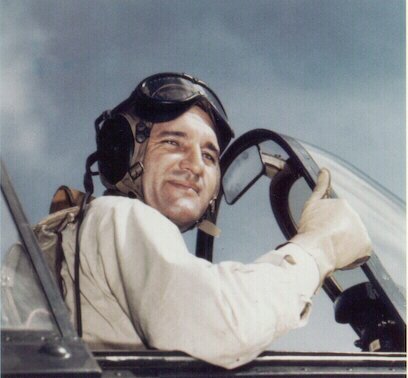
In a 1987 interview with the U.S. Naval Institute, McCampbell recounted the Battle of Leyte Gulf (October 24th, 1944), flying the F6F above Japanese opposition fighters with wingman Ensign Roy Rushing: “I’d pick out my plane and he’d pick out his…we’d make an attack, pull up, keep altitude advantage, speed, and go down again. And we repeated this over and over.” McCampbell made a total of 9 kills that day.
Model Variations
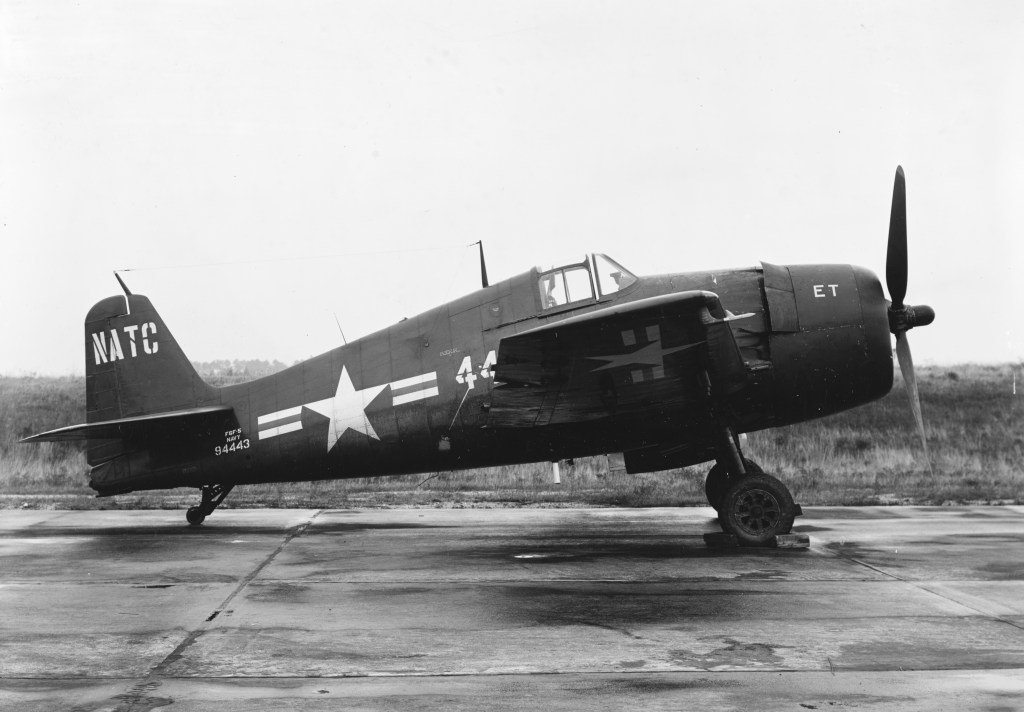
The Grumman F6F Hellcat had a number of different variants, including the:
XF6F-1 – The first Hellcat prototype, equipped with a 14 cylinder Wright Twin Cyclone R-2600-10 engine. The engine operated at 1,700 horsepower at takeoff.
XF6F-3 – The second Hellcat prototype (the XF6F-2 was the XF6F-1 fitted with a later version Wright engine). The XF6F-3 was equipped with a 2,000-horsepower Pratt & Whitney R-2800-10 Double Wasp radial engine.
F6F-3 – The first production Hellcat, which operated with the 2,000-horsepower Pratt & Whitney R-2800-10 Double Wasp engine, which operated at 1,550 horsepower at 22,500 feet. This plane had six Browning AN-M2 machine guns, three in each wing. It could fly 384 miles and hour at 18,000 feet, and 321 miles per hour at sea level. A total of 4,402 F6F-3s were built (including E and N variants).
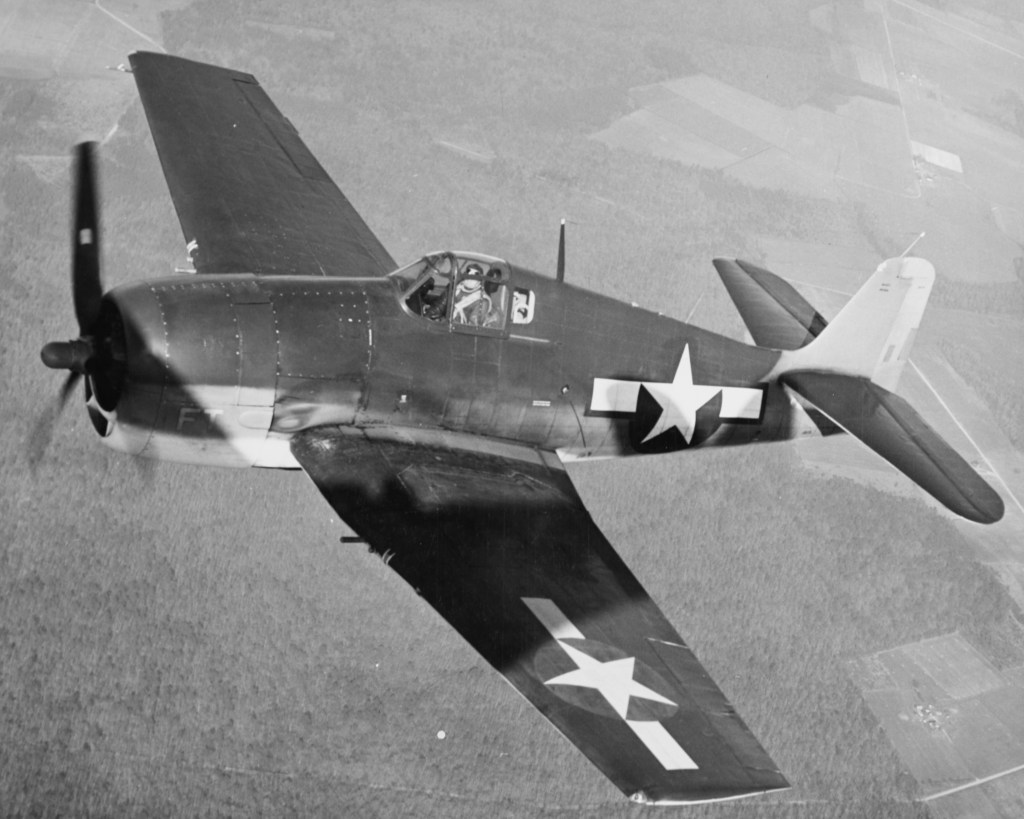
F6F-3E – A variant of the F6F-3. This version was equipped with the AN/APS-4 Radar, which was located in a pond beneath the right wing. The radar operated at 10 GHz and had operating controls and the radar scope in the middle of the cockpit’s instrument panel. Only 18 of these were built.
F6F-3N – A more developed night-fighter version of F6F-3, this version had a AN/APS-6 Radar, whose main unit was contained in the fuselage, and antenna in a radome on the forward part of the right wing. About 200 of the F6F-3N were built.
F6F-5 – A version that eventually replaced the F6F-3; this version primarily had six racks under the wings to carry 5-inch rockets, and pylons under the fuselage to carry up to two 1000-pound bombs. Other changes included a slightly redesigned cowling, a slightly faster top speed, later version R-2800-10 engines, and the ability to add a variant wing with a 20-millimeter cannon on the each of the guns closest to the fuselage (normally the wings housed a total of six .50-caliber machine guns, three on each wing). The F6F-5s produced in total numbered 7,870.

F6F-5E – A night-fighter version of the F6F-5. It was equipped with a AN/APS-4 Radar, located in a radome on the front-right wing.
F6F-5N – An improved night-fighter version of the F6F-5.This version had a AN-APS-6 Radar, whose antennae was in the same right-wing radome as the F6F-5E. The F6F-5N often had the cannon/machine gun configuration.
F6F-5P – A combat-ready, photo reconnaissance version of the normal F6F-5. It had a camera on the lower left area of the fuselage.
F6F-5K – A remote radio-controlled drone. Usually converted from the F6F-5 and F6F-5N, and used as a unmanned flying bomb in the Korean War.
Military Unit Designation Guide
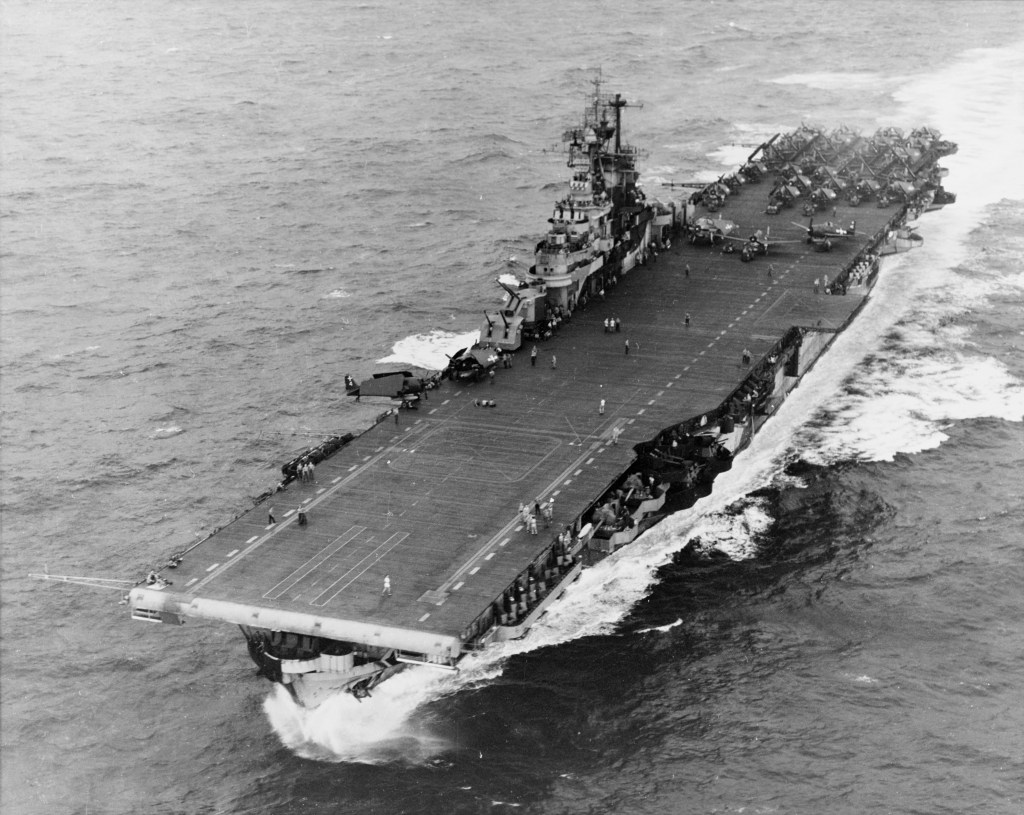
CV – Heavier-than-air (V) Aircraft Carrier (“C” is for “Carrier”)
CVE – Escort (E) Aircraft (V) Carrier (“C” being for “Carrier”)
CVL – Heavier-than-air (V) Light Aircraft Carrier (CL)
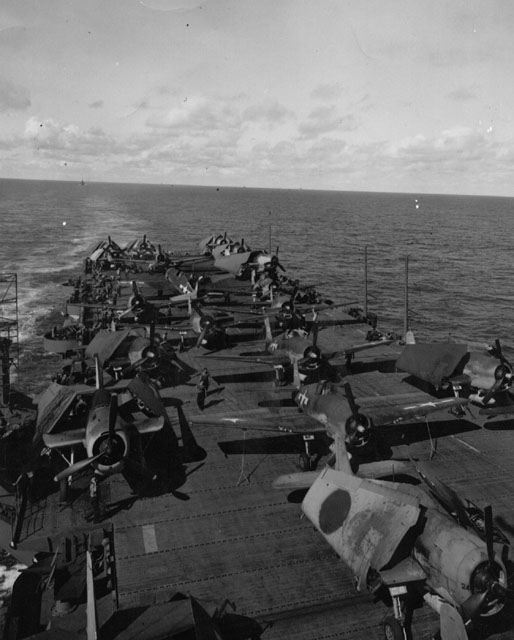
VF (Navy) = V(Heavier-than-air aircraft) Fighting Plane Squadron or Fighter Squadron
VT (Navy) = V(Heavier-than-air aircraft) Torpedo Squadron
VMFA = V(Heavier-than-air aircraft) Marine Strike Fighter Squadron
VMF = V(Heavier-than-air aircraft) Marine Fighter Squadron
TF = Task Force (Navy)
 Waves To Jets