
The Higgins Boat

By WavesToJets
The Landing Craft, Vehicle, Personnel (LCVP) was a World War II-era amphibious landing craft. It was used in several key landing operations during the war – with use in the European, Pacific, African, and Mediterranean Theatres.
Featured prominently in popular culture depictions of Second World War, the LCVP is frequently associated with the D-Day landings at Normandy, France on June 6th, 1944. However, the watercraft was also used for several other operations in other battles, fronts, and wars. The following are five more facts about the LCVP.
1. The LCVP was also known as the Higgins Boat.

The LCVP was designed by Andrew Higgins (1886 – 1952), boatbuilder and owner the New Orleans-based Higgins Industries. In the 1920s, Higgins was responsible for developing boats for timber, trapping, and oil drilling purposes.
Higgins developed what became known as the company’s “Eureka” boat in that decade. The Eureka boat was a light, long, and shallow boat that could be used for trapping (among other) purposes.

The Eureka boat’s design was filed for patent in December 1937. The design was finally patented in 1939 – and was developed into the U.S. Navy’s Landing Craft Personnel, Large (LCPL) watercraft, a 36-foot, 8-inch long, 10-foot 10-inch wide boat.
Though the U.S. Marines and Royal Navy used the Eureka boat-based LCPL in operations during World War II, the craft had troop deployment issues. For example, troops had to climb over the sides of the craft shortly after landing, making for a timely and cumbersome disembarkment.

There was a way to remedy this: a ramp – one that could fold downwards and outwards – built into the bow of the landing craft. This is what would become one of the key features of the newer LCVP.
Higgins drew inspiration from the Japanese-made Daihatsu-class military boat. The Japanese had used this craft in landings during the Second Sino-Japanese War, particularly in the Battle of Shanghai (August to November 1937).
A U.S. Marine and military observer based in Shanghai at the time – Victor H. Krulak – witnessed and documented the Japanese use of the Daihatsu-class boats. Krulak would later bring these craft to the attention of Andrew Higgins.

Higgins noted these innovations, and developed his own bow-based ramp – with plans that could incorporate the ramp into Higgins Industry’s light landing craft models. He would patent this boat/ramp design, what would be used in the later LCVP, on December 8th, 1941. The boat/ramp patent was later issued on February 15th, 1944.
The LCVP first took form as the LCP (R) , or the Landing Craft, Personnel (Ramp). This version saw use in 1942-1943 in the North African landings, Salerno (Italy), and on the islands of Tarawa and Guadalcanal in the Pacific.
By 1944, the LCVP took its arguably most familiar form, a 36-foot, 3-inch long, 10-foot 10-inch wide craft that weighed 18,000 pounds. It could carry 36 troops, alternately, it could carry 12 troops and a vehicle. The LCVP was also a cargo-ready vessel, capable of carrying loads up to 8,100 pounds.
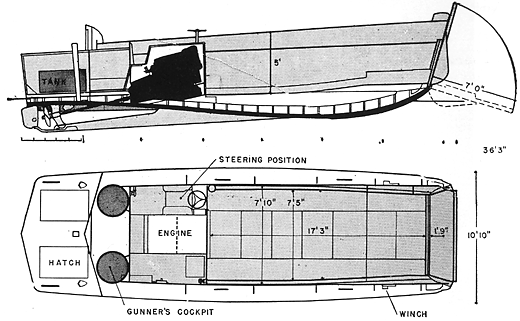
The LCVP carried a crew of four, and was equipped with two .30-caliber Browning machine guns. Its top speed was 12 knots, or 14 miles per hour. Over 23,350 instances of the LCVP were produced from 1942 to 1945.
The LCVP notably was the watercraft that first deployed American troops to the beaches of Normandy, France on June 6th, 1944. The Allied attack, known as the D-Day invasion, is remembered as the turning point of the Second World War, specifically in the European Theatre on the Western Front.
The term “Higgins Boat” became synonymous with the LCVP. Higgins Industries, however, had produced a large number of different watercraft for U.S. forces during the war – and the company’s other watercraft designs were also unofficially known among U.S. troops at the time as “Higgins Boats”.
2. The LCVP has its origins in the Louisiana bayou.

The LCVP came from a line of watercraft that were originally developed for use in swamps, marshes, and wetlands. Their shallow draw, somewhat wide beam, and relatively light construction matched the needs of those in the lumber, oil, and trapping industries.
Higgins Industries was based in New Orleans, Louisiana – and their watercrafts’ workings were specifically developed to operate in bayou environments.
For example, the propellers of several Higgins watercraft models were enclosed in a tunnel located in their hulls. These tunnels could offer the propeller protection against water-borne obstacles such as fallen branches, sand, grass, and logs.
3. The LCVP saw extensive use in the Second World War.

The LCVP was used in several Allied landings over the course of World War II. Among those in Western Europe and Africa were landings in Northern Africa (Operation Torch), Sicily (Operation Husky), and Italy (Operation Avalanche and Operation Shingle).

As mentioned before in regard to the D-Day Landings, the Allies used the LCVP in great effect in Northern France (Operation Overlord). The watercraft was also used in the August 15th, 1944 landings in Southern France (Operation Dragoon).
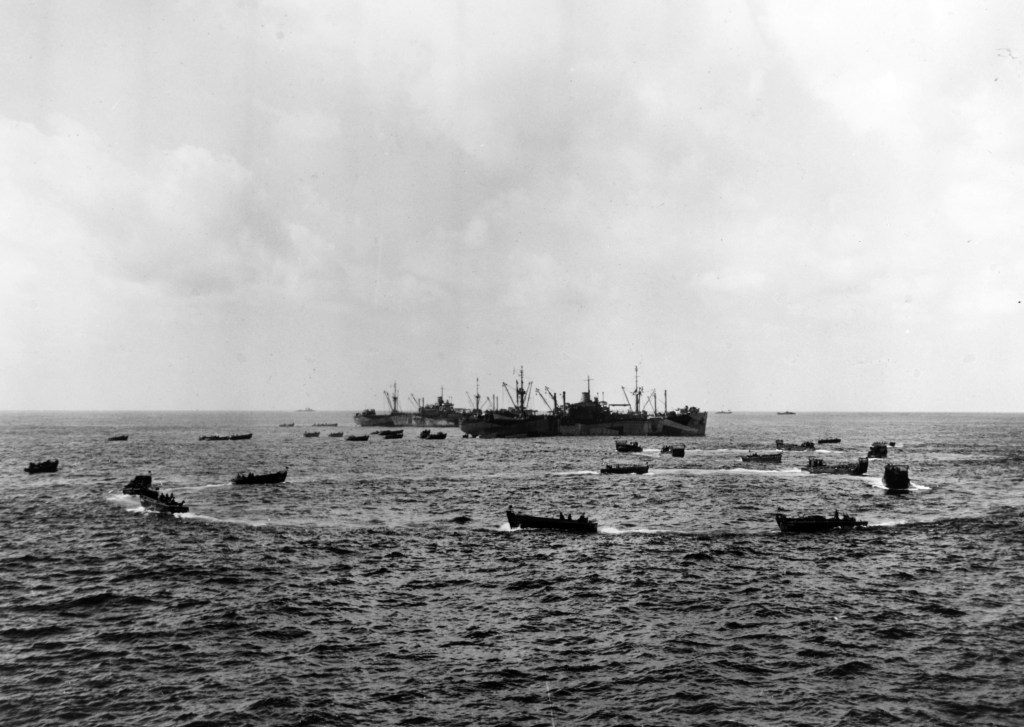
In the Pacific, the LCVP was used in Guadalcanal, Tarawa, the Philippines, Iwo Jima, and Okinawa. Finally, Allied forces used the LCVP to successfully cross the Rhine River near the town of Rees, in the district of Wesel, Germany, in late March 1945.
4. Dwight D. Eisenhower praised Higgins and the LCVP.

Because of the LCVP’s prominence (and success) in the Second World War, Supreme Allied Commander (and future U.S. President) Dwight D. Eisenhower praised the watercraft and its designer, Andrew Higgins.
In regard to the Allies, Eisenhower was quoted as saying that Higgins was “the man who won the war for us.” Eisenhower also elaborated on the strategic use of the watercraft, particularly in beach landings.

The General was also quoted as saying that “If Higgins had not designed and built those LCVPs, we never could have landed over an open beach. The whole strategy of the war would have been different.”
This statement makes clear Eisenhower’s high regard for the LCVP – and its influence on battle planning for the Allies.
5. The LCVP played a pivotal role in the Korean War.
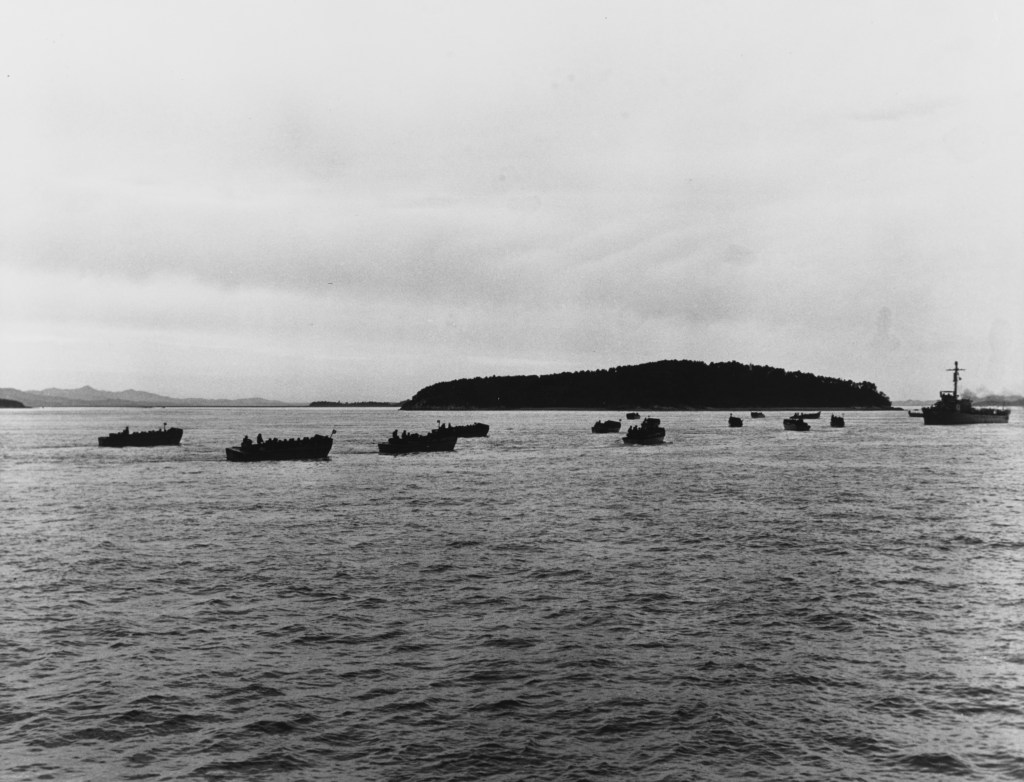
Although the LCVP is arguably most known for its use in the Second World War, the watercraft was also used in a pivotal role during the Korean War (1950 – 1953).
Following the North Korean invasion of the Republic of Korea (ROK) on June 25th, 1950, ROK and stationed U.S. forces were pushed south of the 38th Parallel (latitude) to a southeastern area of the Korean peninsula.
This area, incorporating the port city of what is now known as Busan, was held as a U.S. and ROK-controlled region surrounded by what was then called the Pusan Perimeter.
The Pusan Perimeter was a 140-mile long battlefront where U.S., ROK and North Korean forces had launched both attack and defense strategies.
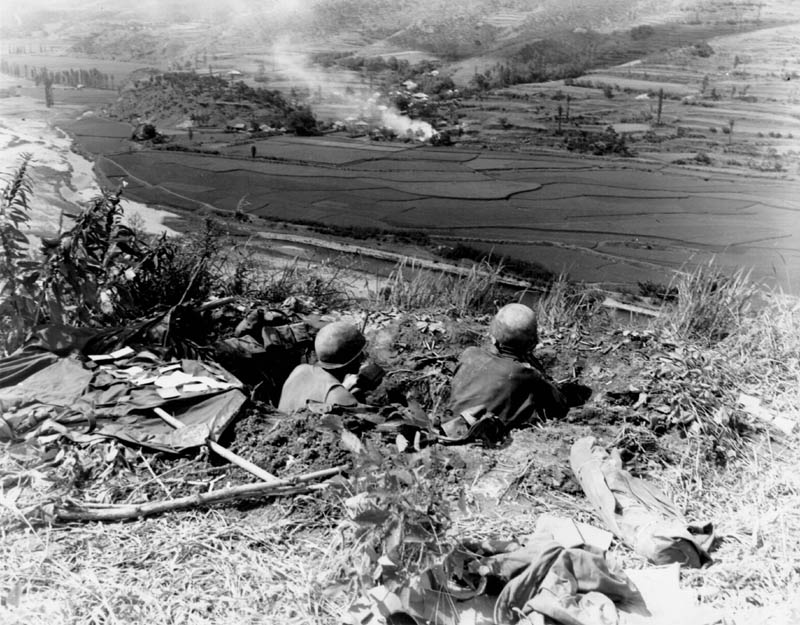
Throughout August of 1950, U.S., ROK, and United Nations (UN) forces held their ground against North Korean attacks, though a decisive push through the perimeter would be determined by the events of the next month.
On September 15th, 1950, UN and ROK forces landed at Incheon, a port city located on the western coast of the Korean peninsula near the 38th Parallel.
This area was quite far from the Pusan Perimeter – and purposefully so. The objective of the landings was to relieve the UN and ROK fighting forces at the Pusan Perimeter and, ideally, retake the ROK capital of Seoul, some 15 to 20 miles from Incheon.

The amphibious attack was conceived by U.S. General of the Army Douglas MacArthur. MacArthur was already well-known for his command in the Pacific Theatre in World War II – and believed in the strategic importance of amphibious landings.
To this end, LCVPs were first used to capture Incheon’s island of Wolmi-do. On the morning of September 15th, 1950, U.S. Marine Colonel Robert Taplett led the 3rd Battalion of the 5th Marine Regiment to the island, utilizing 17 LCVPs to carry troops, among other tank-carrying watercraft.
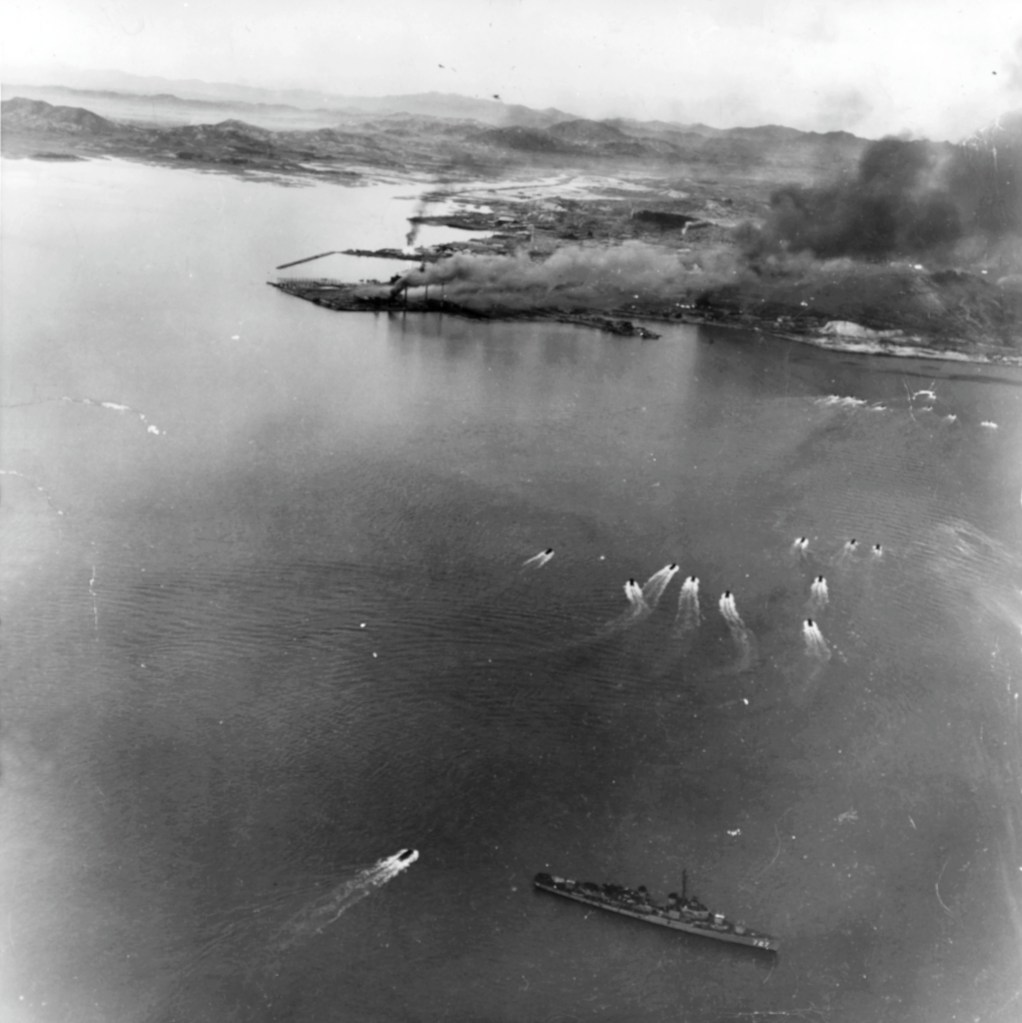
The attack was timed to coincide with the tide surrounding Wolmi-Do – and the morning tide was high enough for the first forces to land at the island’s shores (referred to as “Green Beach” to U.S. and ROK forces). The 3rd Battalion landed at Wolmi-do at 6:33 am (local time) and the island was taken by 7:50 am.
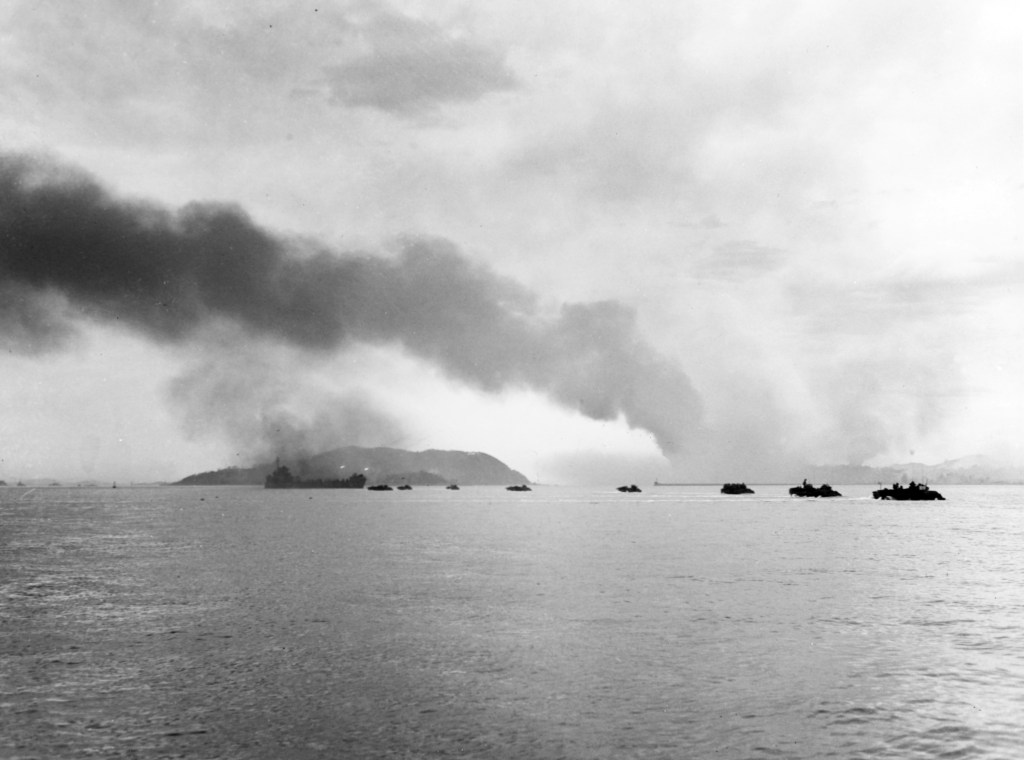
Casualties for the morning attack were 108 enemy killed and 17 Marines lost. Captured enemies numbered at 136. Because of the relatively low casualty rate and ground gained, the morning landings at Green Beach would be considered a success for U.S. and ROK forces.
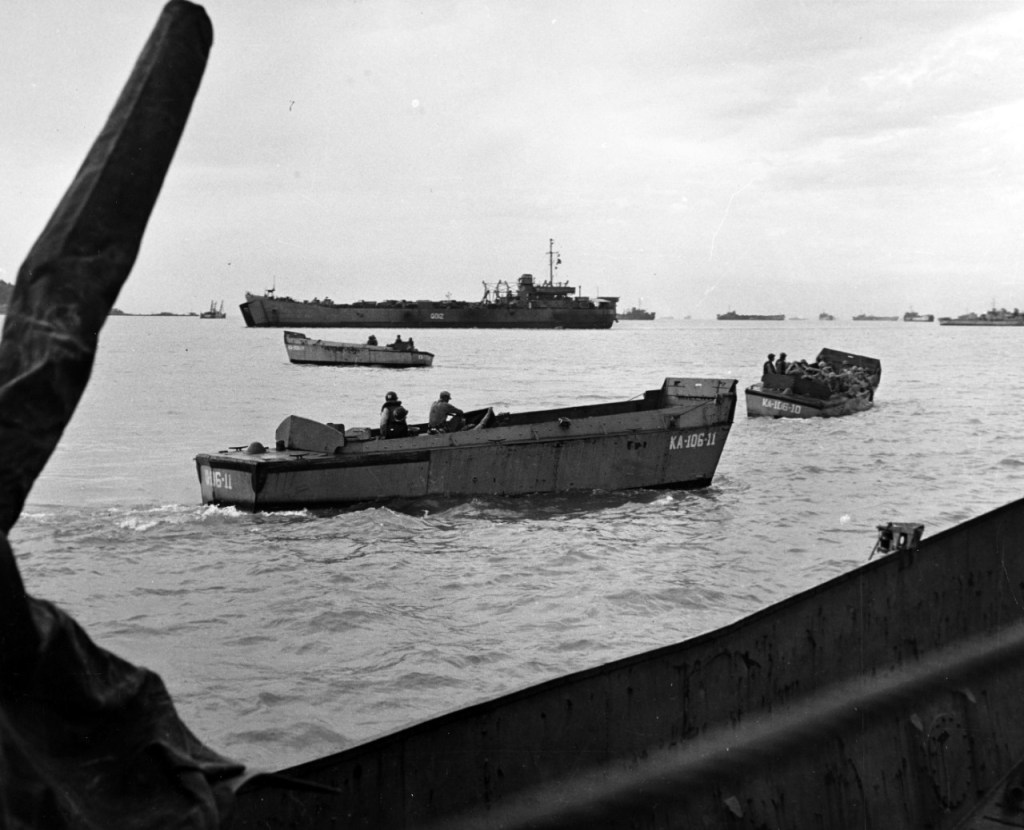
The next attack would occur in the afternoon. U.S. Marines of the 1st and 5th Regiments were to land at areas north (“Red Beach”) and south (“Blue Beach”) on the Incheon city peninsula.
Unlike at Wolmi-do, Marines disembarking from LCVPs in the afternoon landings had to use ladders to scale high seawalls, or otherwise navigate beaches near mud and salt flats.
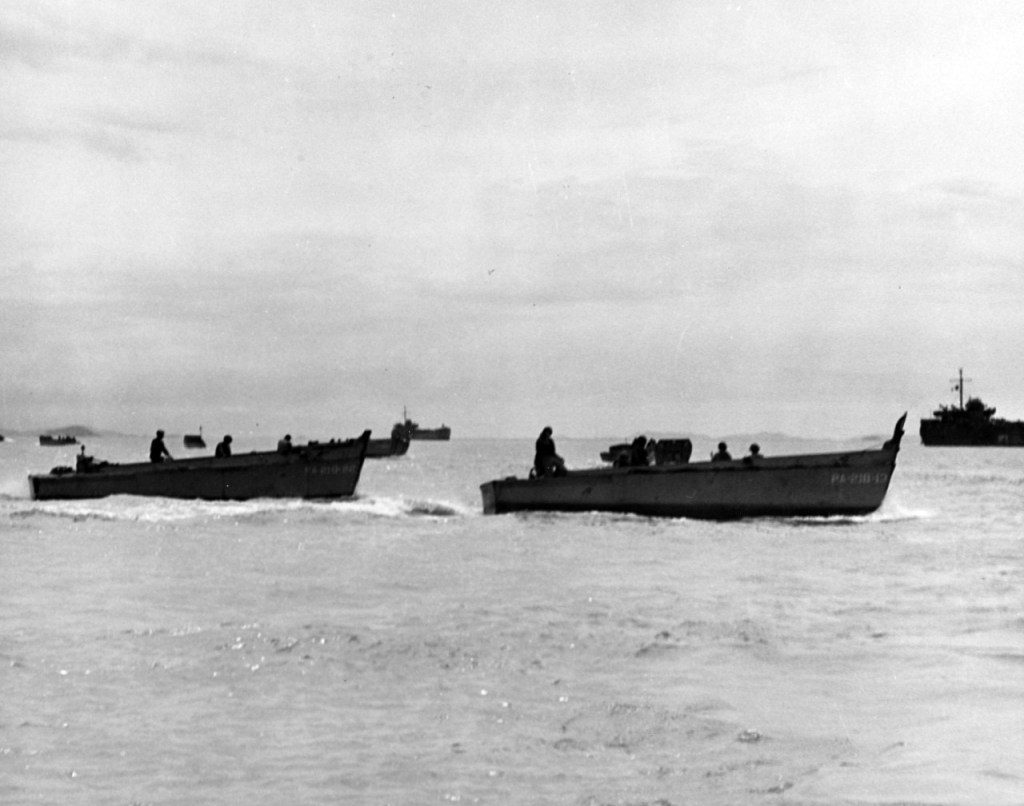
The northern and southern afternoon attacks occurred nearly simultaneously – with LCVPs arriving by 5:33 p.m. local time. In total, U.S. and ROK losses amounted to 224 compared to the North Korean losses of 1,350. By 1:30 am on the morning of September 16th, the initial landing objectives were considered complete.
In a few short days, the Incheon landings produced a U.S. Navy presence of over 25,000 people, over 4,500 vehicles, and over 14,000 tons of cargo. The landings at Incheon were considered a critical success for UN and ROK forces.
A pivotal event of the Korean War, the Battle of Incheon in September 1950 would eventually help UN and ROK forces break out of the Pusan Perimeter. Some of the landings’ earliest successes owe to the tireless work of the U.S. and ROK’s Marine and Naval forces, utilizing watercraft such as the LCVP.
 Waves To Jets