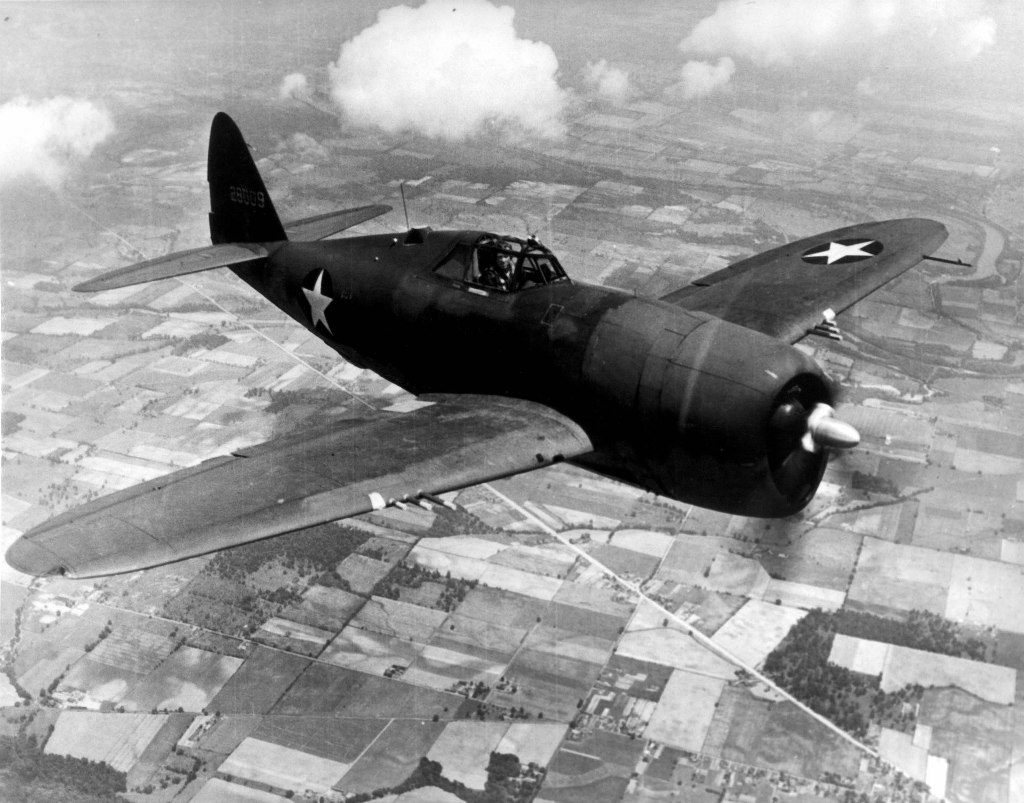
“The Jug”
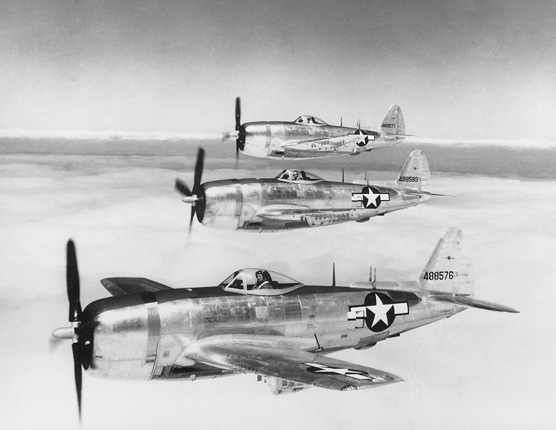
By WavesToJets
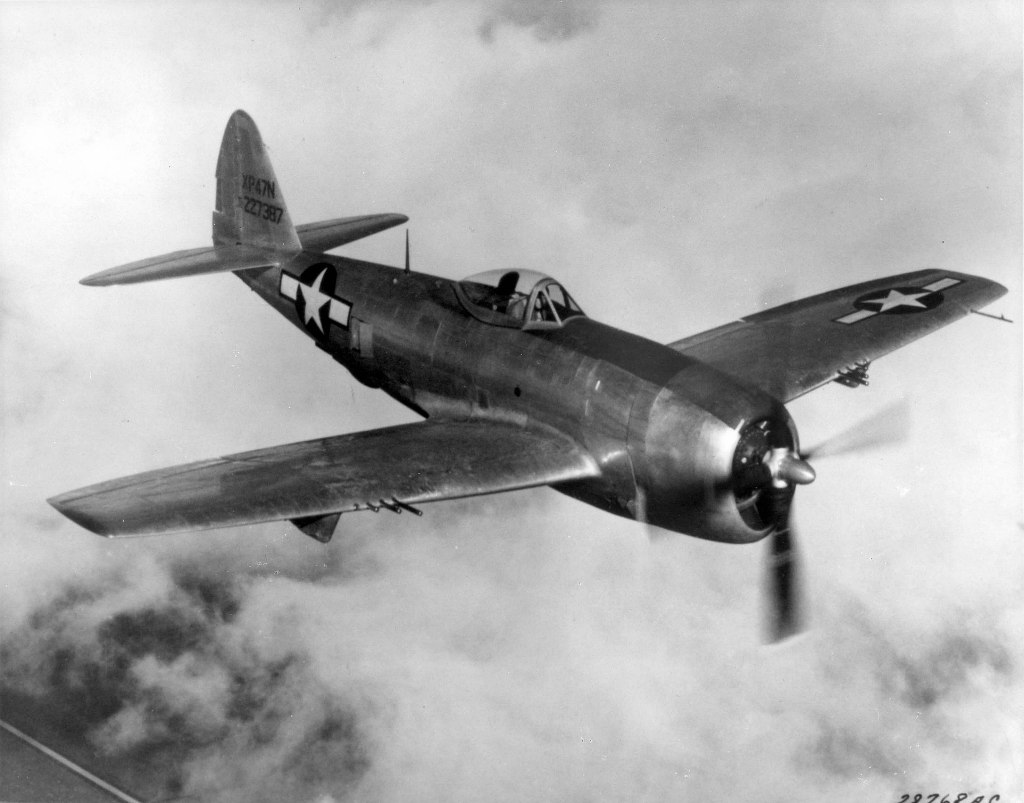
The Republic P-47 Thunderbolt was a World War II-era fighter-bomber produced by Republic Aviation.
Characterized by its large frame, powerful radial engine, and pressurized cockpit, the P-47 was effective both in the European and Pacific theaters of operation as a fighter, and later as a ground-attack aircraft.
Nicknamed “Jug”, the P-47 proved to be a durable airplane that could handle improved altitudes, speeds, and distances with each incarnation.
Though perhaps not as lightweight or aesthetically pleasing as the P-51 Mustang or the P-38 Lightning, the P-47 Thunderbolt was a well-built, robust plane produced in great numbers – 15,636 in total – owing much to its high-quality performance in combat.
Technological Background

The P-47 Lightning was the product of a long lineage of designs from the Seversky Aircraft Corporation (later known as Republic Aviation).
The company’s founder, Alexander N. P. de Seversky, was a Russian national (specifically from the city of Tiflis, what is now Tibilisi, Georgia) and veteran navy air pilot of the Russian Empire during World War I.
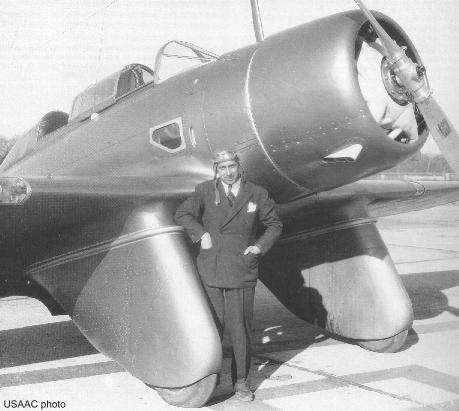
In 1918, Seversky went to the U.S. on a Russian Naval Aviation mission, serving as an assistant naval attache. Because of the recent 1917 Russian Revolution (and the potential dangers for those in the ranks of the former Russian Empire), instead of returning to Russia, Seversky decided to stay in the United States.
In the early 1920s, Seversky developed several patents in the field of aviation, selling some of his inventions to the U.S. Government. With the money made from his patents he founded the Seversky Aero Corporation in 1923.

During this time, Seversky also joined the United States Army Air Corps (USAAC) Reserve and earned the rank of a Major in 1928. His company, however, took a hit during the 1929 stock market crash and was unable to recover.
But this was not the end of Seversky’s enterprises in aviation engineering. With the help of several investors, he reinstated his company as the Seversky Aircraft Corporation in 1931.
Taking on engineers like Alexander Kartveli and Michael Gregor – themselves of Georgian origin – Seversky and Seversky Aircraft Corporation developed racing, military, and experimental airplanes.
An early company plane model – one on which Seversky’s later military planes would be based – was the amphibious Seversky SEV-3. The Seversky Aircraft Corporation continued to make aircraft innovations throughout the 1930s, operating out of factories and airfields in Farmingdale and Amityville, Long Island.

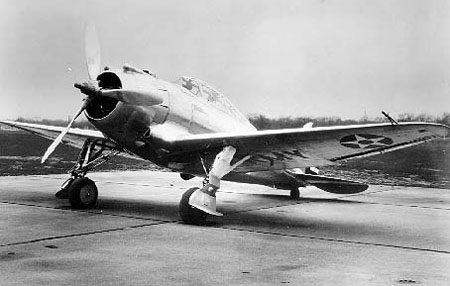
During this period, the forerunners of the P-47 were developed, such as the Seversky P-35, the experimental XP-41, and the AP-4.
The Seversky P-35 was a production military plane sold to the USAAC. Though it had innovations such as an all-metal construction, retractable landing gear, and a powerful 1,050 horsepower Pratt & Whitney R-1830-45 Twin Wasp radial engine, the plane was delivered slowly, to the point of being deemed obsolete on arrival.
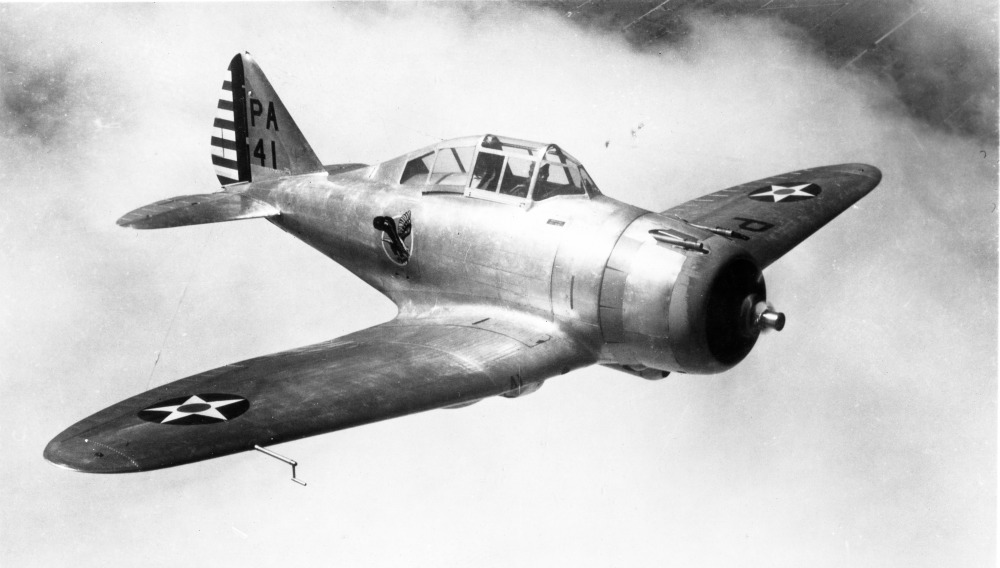
The latter two planes (the XP-41 and the AP-4) were variants of the P-35, with the XP-41 featuring a single-stage mechanical supercharger and the AP-4 featuring a 1,200 horsepower turbo-supercharger engine. As the AP-4 outperformed the XP-41, it was eventually developed into a production military aircraft.
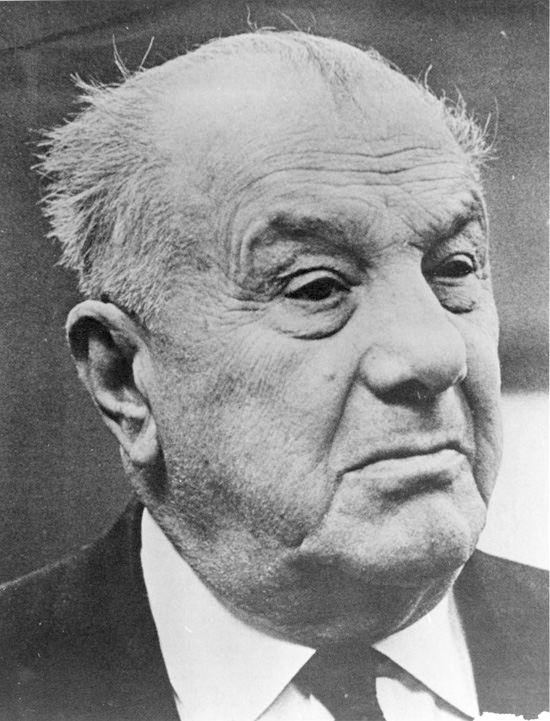
Seversky Aircraft Corporation had lost a sizable amount of money by the late 1930s, and Seversky himself was forced to leave under pressure from his investors. The company was re-branded the Republic Aviation Corporation – and though a long dispute with the company board followed, Seversky remained ousted as president as of October 13th, 1939. A managing director, Wallace Kellett, took over as president, and Alexander Kartveli remained as an engineer (Michael Gregor had moved on to other ventures by then).
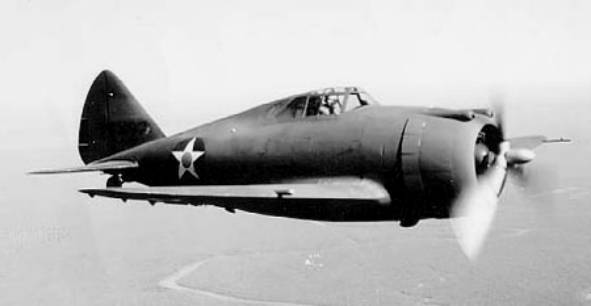
The AP-4 was developed into the Republic P-43 Lancer, a fighter used by the Army Air Forces and the Republic of China against the Japanese.
At around the same time of the development of the P-43, Alexander Kartveli was working on a project under the company designation the AP-10, submitted to the USAAC on August 1st, 1939. It was intended to be a lightweight interceptor plane capable of operating at high altitudes.
The AP-10 was based around a 1,150 horsepower Allison V-1710-39 engine, and two examples, the U.S. government-designated XP-47 and XP-47A – were ordered by the USAAC in early 1940. As the air war progressed in Europe, however, the proposed performance of the existing AP-10 and its XP-47 designs were deemed unsuitable for combat.
This prompted the USAAC to update its performance requirements for new potential new fighters. A high-altitude fighter now was required to reach speeds of 400 miles per hour at 25,000 feet, have armor plating in the cockpit, have six or eight .50-caliber machine guns, have a minimum 315-gallon fuel capacity, and self-sealing fuel tanks.
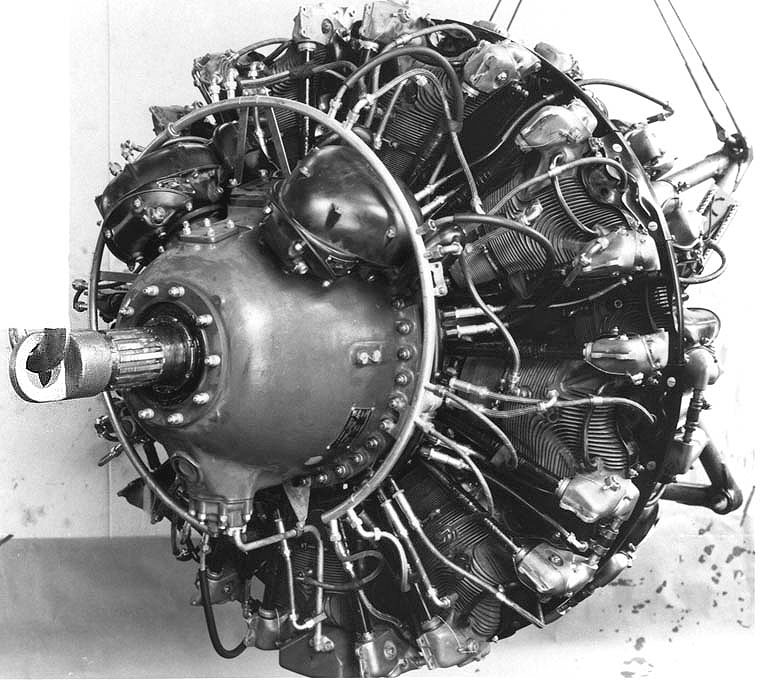
Kartveli revised the AP-10 designs to match these new standards, with the 2,000 horsepower, 18-cylinder Pratt & Whitney R-2800-21 Twin Wasp radial engine at the core of the newly fashioned air frame.
A turbo-supercharger was installed in the rear fuselage, allowing air entering the front air intake to re-circulate – once compressed in the turbo-supercharger – back to the engine’s combustion chamber. This allowed more compressed air and fuel to be present inside the engine, increasing the engine’s output.

The airplane’s exhaust left the craft in two areas: the first through two small pipes alongside and slightly behind the engine, and the second through an aft exhaust port behind the cockpit. This was to disperse engine exhaust and turbocharger exhaust, respectively.
The design incorporated eight .50-caliber machine guns, four in each wing. The proposed plane was anticipated to weigh 11,500 pounds and reach speeds of 400 miles per hour at 25,000 feet (and 340 miles per hour at 5,000 feet). This made the renewed AP-10 design heavier than all other American fighter aircraft at the time, with maximum and climbing speeds approaching all-time highs for piston fighters of the era.
Kartveli submitted the revised design proposal to the USAAC on June 12th 1940. On September 6th, 1940, the USAAC ordered a prototype of the craft under the working name XP-47B. The USAAC ordered production versions of the planes on September 13th, 1940. A total of 773 production planes were ordered, with 171 as P-47Bs and 602 as P-47Cs. In practice, these two early variants were largely similar except for an expanded rear fuselage on the P-47C.
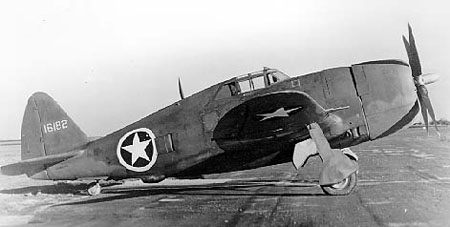
On May 6th, 1941, pilot Lowry L. Brabham flew the XP-47B prototype for the first time. This craft weighed 9,189 pounds before loading and 12,086 pounds when fully loaded. It could reach a maximum speed of 412 miles per hour at 25,800 feet, and could climb to 15,000 feet in five minutes. The plane was simply heavier than all fighters at the time – but its engine gave it a performance that more than made up for its perceived bulkiness.
Republic Aviation’s Director of Military Contracts, C. Hart Miller, came up with the name “Thunderbolt” for this new plane – and government officials adopted it for their aircraft. As time progressed, many variants of the P-47 Thunderbolt were produced. The main adaptations made to the craft were changes in the engine model; the early P-47s had the Pratt & Whitney R-2800-21 engine, while later models used the R-2800-63, -59, -57, -73, -77, and -81 engine types. This allowed engines to have a base output ranging from 2,300 to 2,800 horsepower.
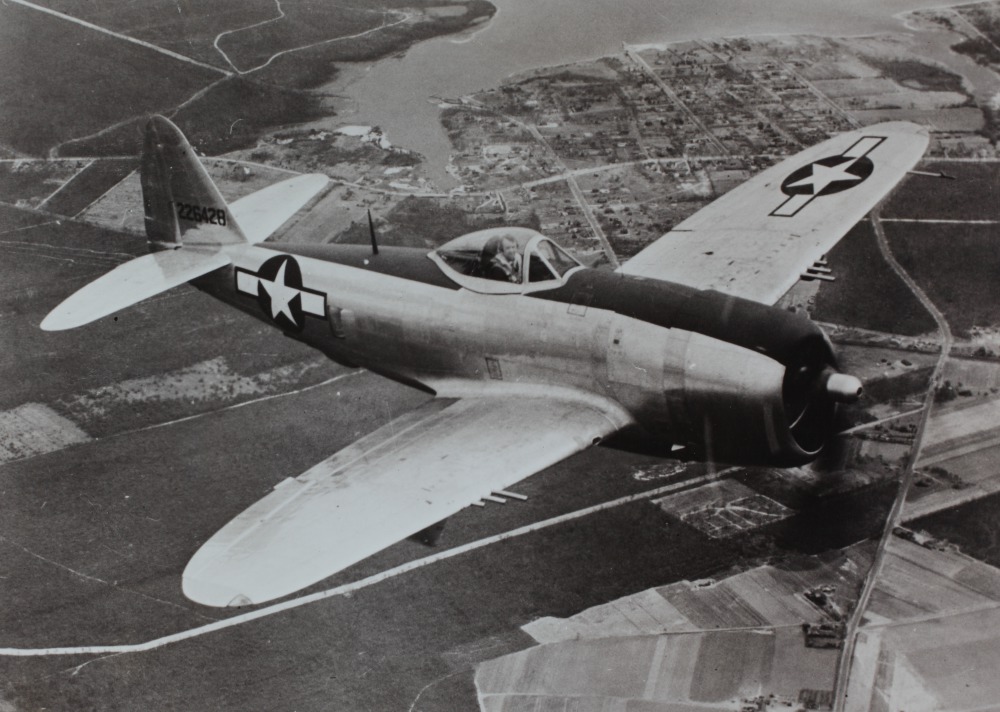
Other significant changes over the P-47’s variants included increased fuel capacities, radio and antennae additions, added wing pylons, engine water-injection capabilities, pressurized cabins, modified wings, and bubble canopies.
A total of 15,636 models of the P-47 were produced between 1941 and 1945 – with the P-47D being the most mass-produced variant. A total of 12,558 P-47Ds were made.
The P-47D was 36 feet, 1.75 inches long, 14 feet, 8.0625 inches in height, and had a wingspan of 40 feet, 9.3125 inches. It could reach a maximum speed of 426 miles per hour at 30,000 feet, had a range of 1,030 miles, and could reach altitudes of 42,000 feet. It had eight .50-caliber guns and the ability to handle 2,500 pounds of bombs or ten 5-inch rockets.
In Service

The P-47C Thunderbolt was shipped overseas to England, arriving to the European Theater of Operations (ETO) on December 24th, 1942. Because of VHF radio and engine issues, however, it would not not see combat until the spring of the following year. The Fourth Fighter Group of the England-based U.S. Eighth Air Force would be the first fighter unit equipped with the P-47 on January 14th, 1943.
On March 10th, 1943, P-47s of the Eighth Air Force conducted a fighter sweep/reconnaissance mission over occupied France. This mission proved air-to-air communications among the fighters had to be improved, as their VHF radios still experienced problems.
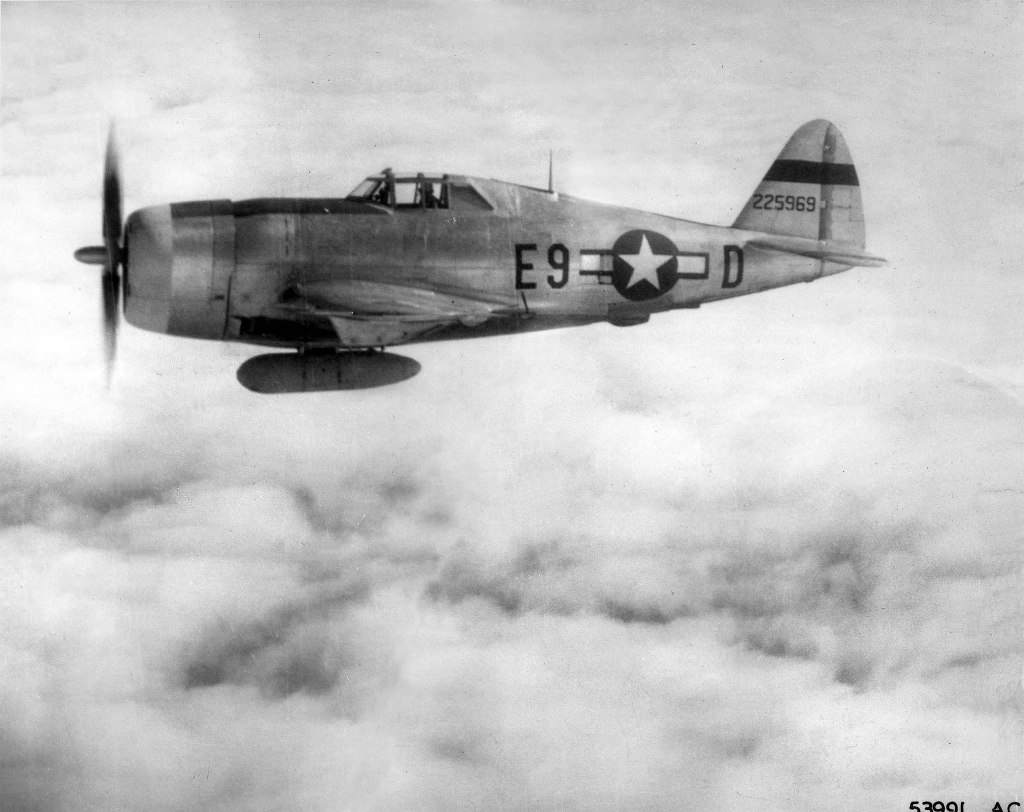
On April 4th, 1943, the Eighth Air Force’s P-47s provided an air escort to 65 heavy bombers (namely B-17s and B-24s) on an attack on General Motors and Ford plants in Antwerp, Belgium. The P-47s provided cover for a range of 175 miles.
On July 28th, 1943, 105 P-47s of the Eighth Air Force escorted B-17 bombers into Germany – with some P-47s moving deeper into enemy territory to escort bombers on an earlier run return home. This was accomplished by using drop tanks which could be jettisoned, a first for the P-47 in combat. The P-47s did encounter some 60 German fighters in resistance on this day, with 9 enemy planes shot down and one P-47 lost.
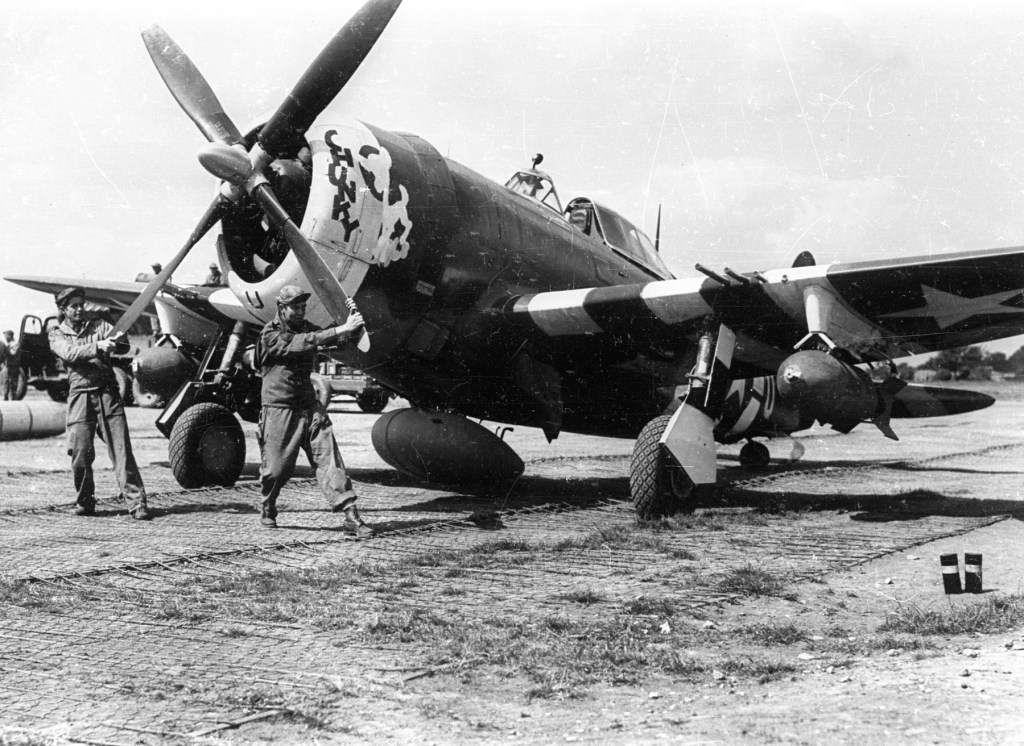
The Eighth Air Force’s P-47s would continue to be employed in bomber escort and reconnaissance duties over Europe early in 1943. On November 25th, 1943, P-47s of the Eighth Air Force’s VIII Fighter Command bombed the Saint-Omer air field in northern France. This was notable as being the first bombing run made by P-47s in Europe.
The P-47 would first be used in the South West Pacific Theater on August 16th, 1943 by the U.S. Fifth Air Force. A Japanese force of 25 fighter aircraft was to attack transport planes that had landed at the American base at Tsili Tsili, in what is now Papua New Guinea. At least two enemy fighters were shot down (Japanese Nakajima Ki-43s), halting the attack, with no P-47s lost.

The Fifth Air Force would continue to use the P-47 for bomber escort duties and strafing runs. On November 26th, 1943, P-47s and P-40s attacked targets of opportunity around the villages of Madang, Alexishafen, and Nubia on Papua New Guinea. This was followed by P-47s shooting down of enemy fighters during bombing runs over Wewak, Papua New Guinea, on December 1st and 3rd, 1943.
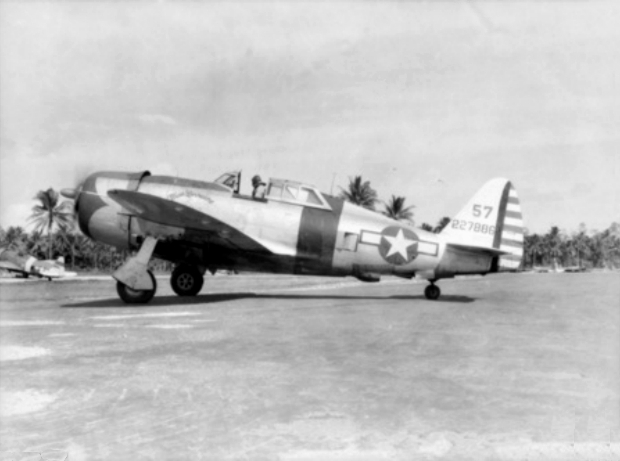
The P-47 would be adopted by the U.S. Twelfth and Fifteenth Air Forces in Europe in late 1943, conducting operations against targets in Italy and what is now Croatia.
The England-based Ninth Air Force used the P-47 as well. On May 2nd, 1944, the unit used 400 P-47s (along with P-51s) to bomb air fields and motor yards in the Low Countries and France. Attacks such as these were common in northwestern France and the surrounding area in the lead-up to D-Day.

More P-47s were used in the Marianas Islands as well as in the China-Burma-India (CBI) theater, namely by the U.S. Seventh and Fourteenth/Tenth Air Forces, respectively. As in northern and southern Europe, strafing, bombing, and bomber escort duties were all common.
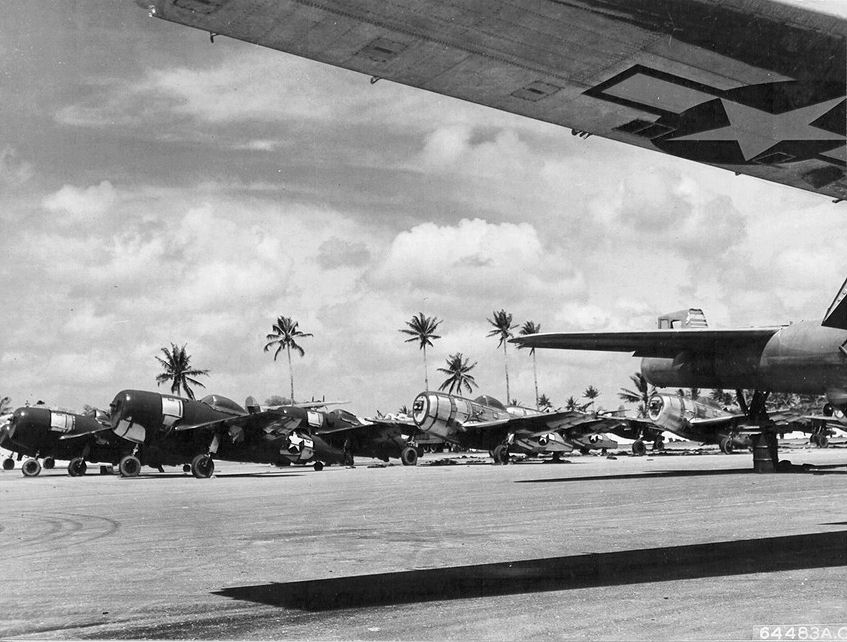
The P-47 participated in attacks on Germany and the Japanese home islands. Its last American military duties during World War II involved attacking shipping and enemy fighters over Japan on August 14th, 1945. The Americans did not deploy the P-47 to Korea during the Korean War – the P-51 Mustang took on the early air war role of that conflict.
The P-47 Thunderbolt was also used by the British Royal Air Force (RAF) as the Thunderbolt Mark I and Thunderbolt Mark II. It was only used in the southeast Asia by the British, attacking Japanese airfields, communications, and infantry lines in Burma. The plane’s ability to carry rockets and two 500-pound bombs increased its effectiveness in ground-attack sorties.

Other wartime operators included Mexico, Brazil, the Soviet Union (mostly in training exercises), and captured planes in Germany. In the postwar period, the P-47 was used by the French in the Algerian War for Independence, by the Dutch in colonial conflicts, and by both sides during the Chinese Civil War.
The P-47 Thunderbolt In Flight


The P-47 Thunderbolt was a heavy plane that was comparatively not as maneuverable as other fighters of the World War II era. It initially had a slow climb rate, making it vulnerable to enemy fighters if not at altitudes of 20,000 feet or more.
However, these seemingly inescapable drawbacks were countered by the P-47’s very high speeds at its ideal performance altitude – around 30,000 feet – where it could easily top 400 miles an hour. Here, P-47s could effectively escort high-altitude bombers, even if for a limited range.
In Europe, this was exactly the case, with P-47s performing escort duties for bombers from mid-1943 and throughout much of 1944. In some cases, P-47 pilots would fly at distances above (with some sources saying as much as 4,000 feet) friendly bomber formations to dive in on attacking enemy planes.
The P-47 had an incredible diving speed of upwards of 500 miles an hour, making it a good diving fighter – that could pull up to escape retaliation to make another attacking pass.

Eventually, the P-47 would be slowly replaced by the longer-ranging P-51 Mustang fighter in its bomber escort duties in Europe.
But this was only the start of the P-47’s use as a ground-attack aircraft, using its dive speed to strafe and bomb ground enemy targets effectively. In the lead-up to D-Day, the plane had a near-relentless role strafing and bombing airfields, gun positions, bridges, supply dumps, roads, and other targets of opportunity.
The P-47 would also be used in Asia and the Pacific as an attack aircraft – but it was here that it proved to be as an effective fighter, perhaps even more so than in Europe.
For example, the top-scoring P-47 fighter ace in the Pacific, Colonel Neel E. Kearby, was able to down 22 craft, including six Japanese planes over Wewak, New Guinea, on October 11th, 1943. Flying at an altitude of 26,000 feet, Kearby was able to surprise lower-flying Japanese Ki-43 and Ki-61 fighters with repeating swooping dive and pursuit attacks.
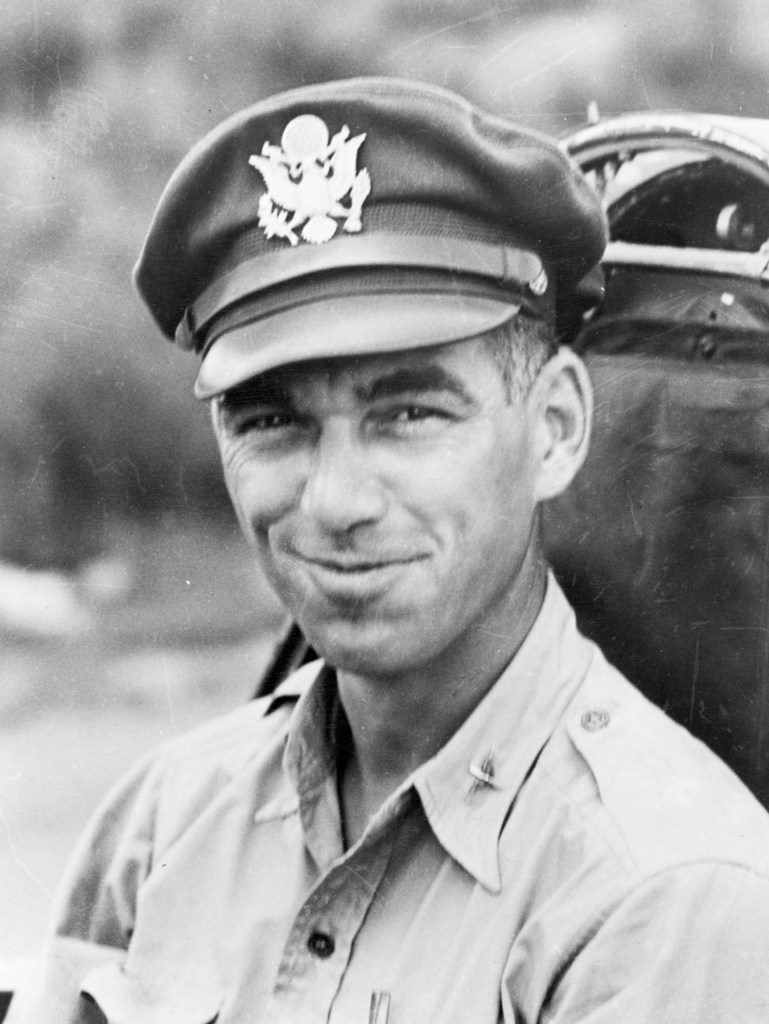
The P-47 would actually produce several ace pilots, among them Col. Neel E. Kearby, Lt. Col. Robert S. Johnson, Lt. Col. Ray Wetmore, Lt. Col Fred J. Christensen, Col. W. M. “Bud” Mahurin, Col. Francis S. “Gabby” Gabreski, and Col. David C. Schilling – all whose careers generally yielded 20 (or more) confirmed aerial victories.
Model Variations
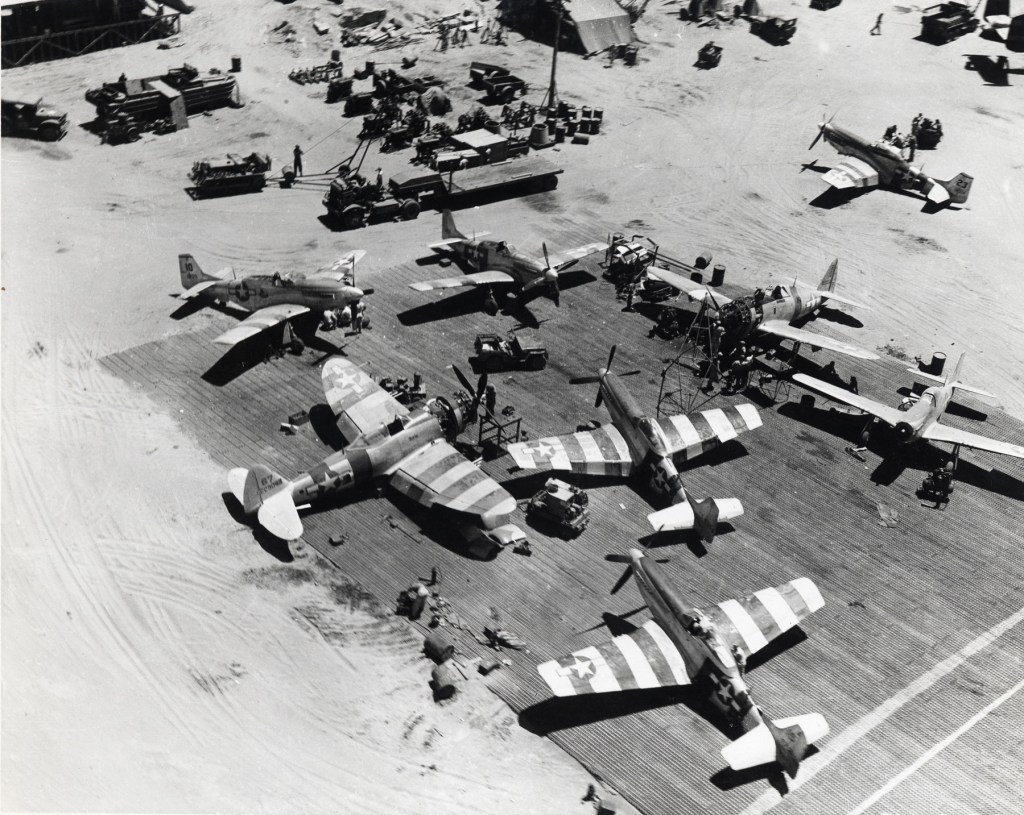
With 15,636 instances of the Republic P-47 Thunderbolt made, there were many variants of the craft constructed. Some of these variants were produced closely together chronologically – resulting in slight changes in components such as on-board instruments, air frame design, and wing configuration. For this reason, only a very general outline of the major P-47 variants will be examined here.
XP-47 – An Allison-engined prototype of Republic’s AP-10 series plane. The USAAC had order one instance of the XP-47, but work with the craft was canceled after its performance was deemed unsuitable for combat.
XP-47A – Another Allison-engined prototype, made without armament. Like the XP-47, government work with the XP-47A was also canceled.
XP-47B – A renewed AP-10 design centered around a Pratt & Whitney R-2800-21 engine.
P-47B – The first production version of the P-47, it had a Pratt & Whitney R-2800-21 engine. 171 were made.
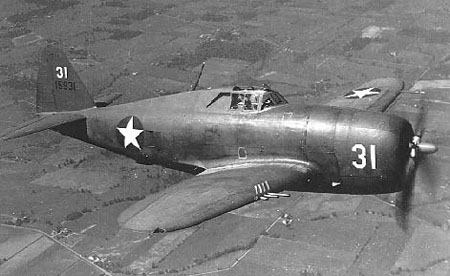
P-47C – Essentially the same as the P-47B, but with improved interior instruments, bomb shackles underneath the fuselage, and a slightly longer fuselage altogether. 602 were made.
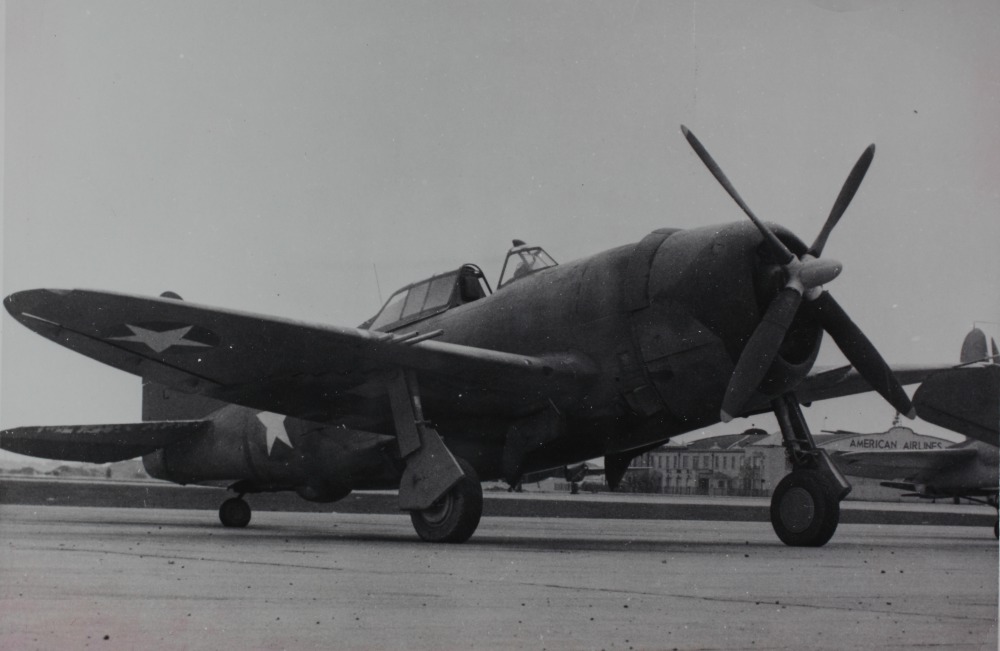
P-47D – The most mass-produced version of the Thunderbolt. This version saw improved wing pylons, a new water-injection in the engine, R-2800-63 then R-2800-59 engines, and eventually a bubble canopy for improved visibility. Constructed in Farmingdale, Long Island, New York, and Evansville, Indiana. 12,558 were made in total.
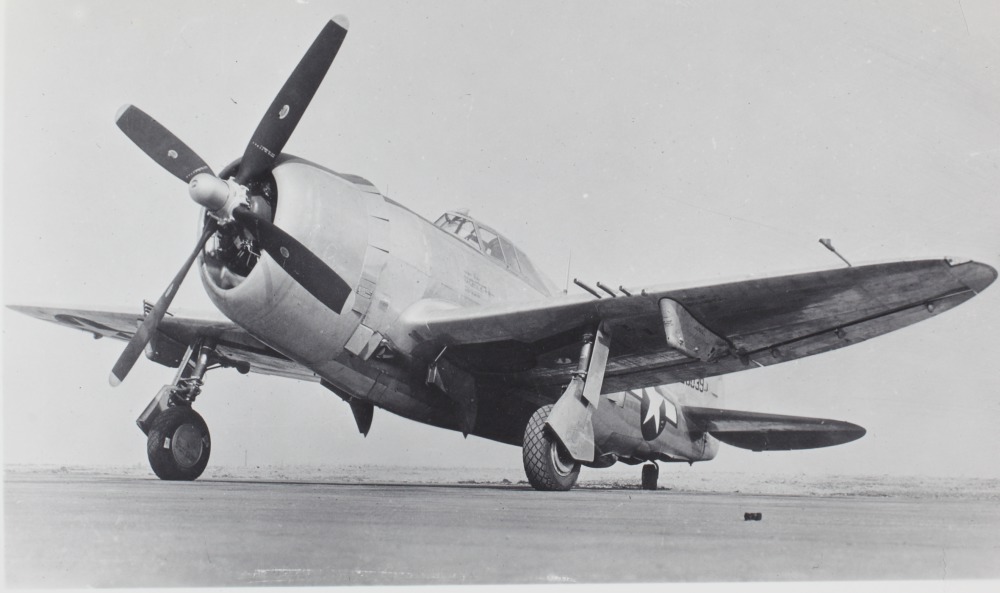
P-47G – A version produced for United States-based training purposes only. Mostly identical P-47C and P-47D. 354 were made.
XP-47J – A singular experimental P-47 prototype with a reduced weapons arrangement and lighter build. Only one made.
P-47M – A high-speed P-47 version intended to combat Luftwaffe jet fighters. It was equipped with a Pratt & Whitney R-2800-57(C) engine that allowed wartime emergency power of 2,800 horsepower at 32,500 feet. It had a maximum speed of 470 miles per hour at 30,000 feet, and had added dive brakes. 130 were made.
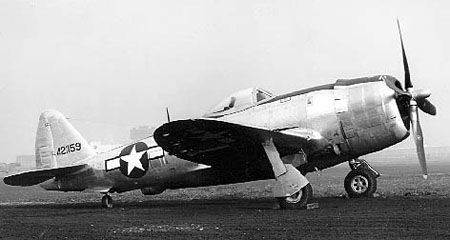
P-47N – The last produced version of the P-47; a type developed specifically for long-range missions in the Pacific. This version saw improved wings, a larger fuel capacity, and more automated internal systems.
This version was slightly larger than previous versions – with a wingspan of 42 feet 7 inches, instead of around 40 feet, 9 inches, for example – and was fitted with either Pratt & Whitney R-2800-73 or R-2800-77 engines. A total of 1,816 P-47Ns were made.
 Waves To Jets