
The World War II Fighter
By WavesToJets
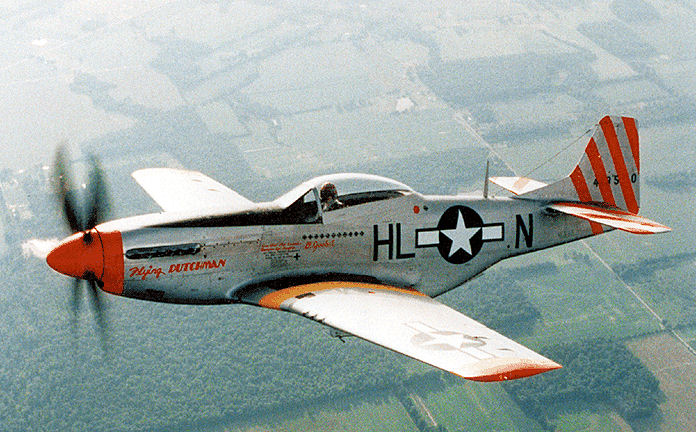
The P-51 Mustang was a World War II-era fighter plane manufactured by North American Aviation. Used by the United States Army Air Forces (USAAF), the P-51 operated in the European, North African, Mediterranean, Pacific, and China-Burma-India (CBI) theaters during the war.
The plane’s primary use was as an air-to-air fighter, but it was also used as an escort and ground-attack aircraft. The UK’s Royal Air Force (RAF) also flew the Mustang – to a lesser degree – and after the war the Mustang was employed by several other armed air forces.
The P-51 Mustang is noted for its sleek design and powerful combat capabilities; to this day it is one of the most well-known fighter planes of World War II.
Technological Background
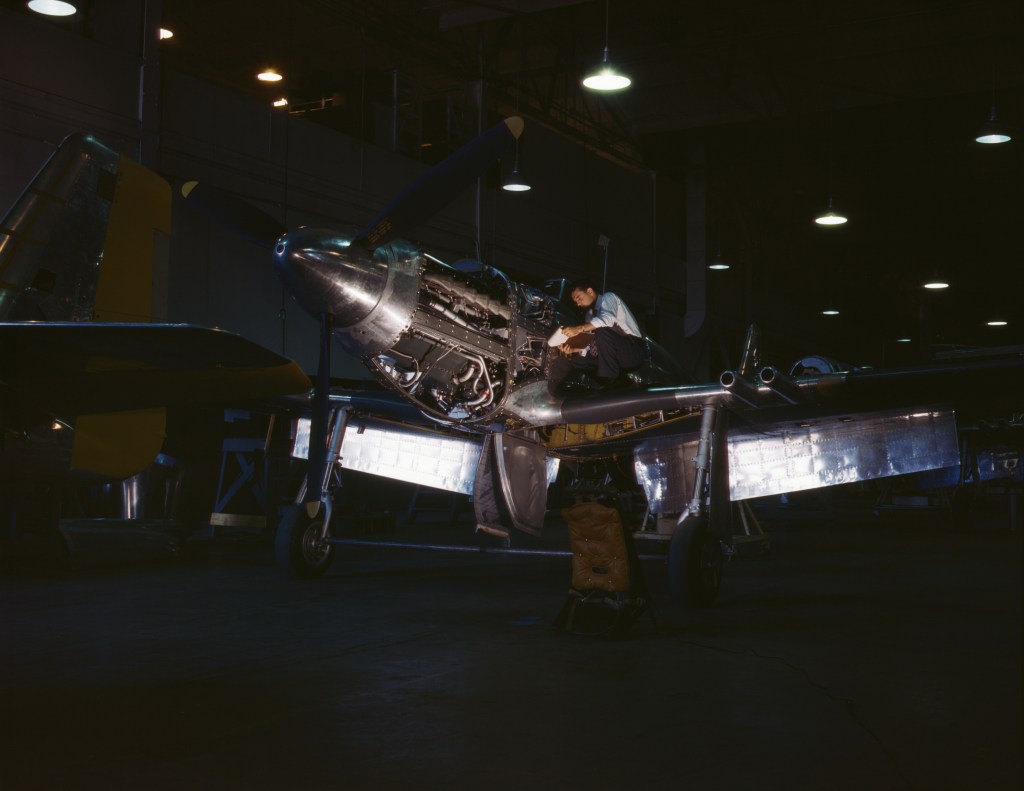
The Mustang, which was produced by North American Aviation (NAA), was the work of engineers like Edgar Schmued, John Leland Atwood, Edward Horkey, and Raymond Rice – and may have been based on the design of Curtiss-Wright’s XP-46 prototype fighter.
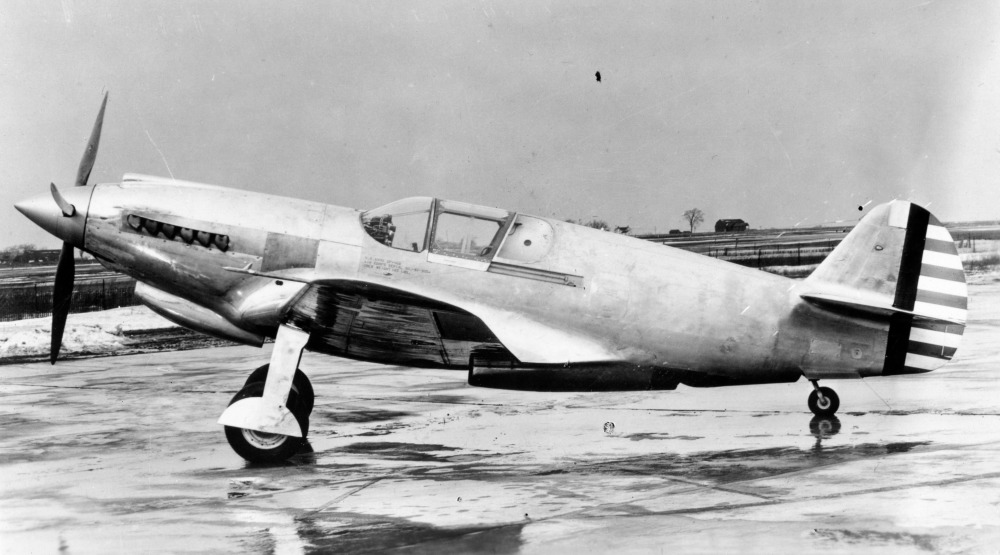
NAA was originally asked by the British Purchasing Commission to manufacture Curtiss-Wright’s P-40 fighter under license in 1940. However, NAA company president James H. “Dutch” Kindelberger suggested that the company could develop a new fighter plane in less time.
On May 4th, 1940, the British Purchasing Commission signed a contract with NAA to commence the project, and ordered 320 of the production planes later that month.
The production planes were to be delivered to the Royal Air Force (RAF) in 1941. In September 1940, NAA rolled out the first Mustang: an engine-less prototype named the NA-73X.
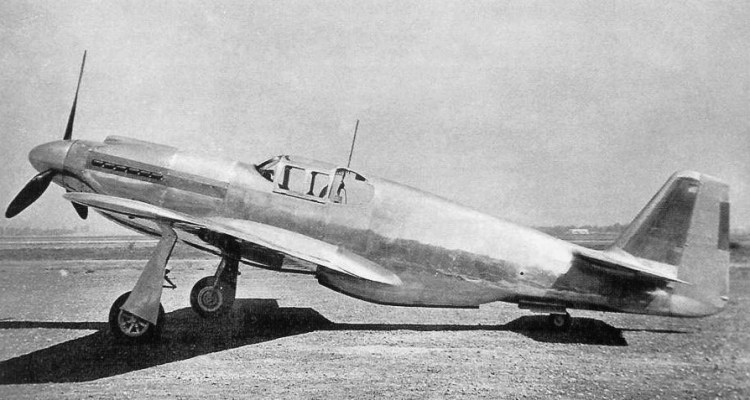
For the NA-73X, NAA decided to use the same 12-cylinder, 1,000-horsepower engine (the Allison V-1710-39) as Curtiss-Wright had used on its P-40. A prototype equipped with this engine was first flown by Vance Breese on October 26th, 1940.
The United States Army Air Corps (USAAC) retained two models of NA-73X, while the production versions of the plane first flew in April 1941. On October 24th, 1941, the first production models reached Speke, Liverpool.
In the UK, these planes were designated the Mustang Mk. I and put to use in trial runs. The initial planes did not have high-altitude capabilities – their performance would drop at altitudes above 15,000 feet – and they would be used by the British as tactical photo reconnaissance craft early on.
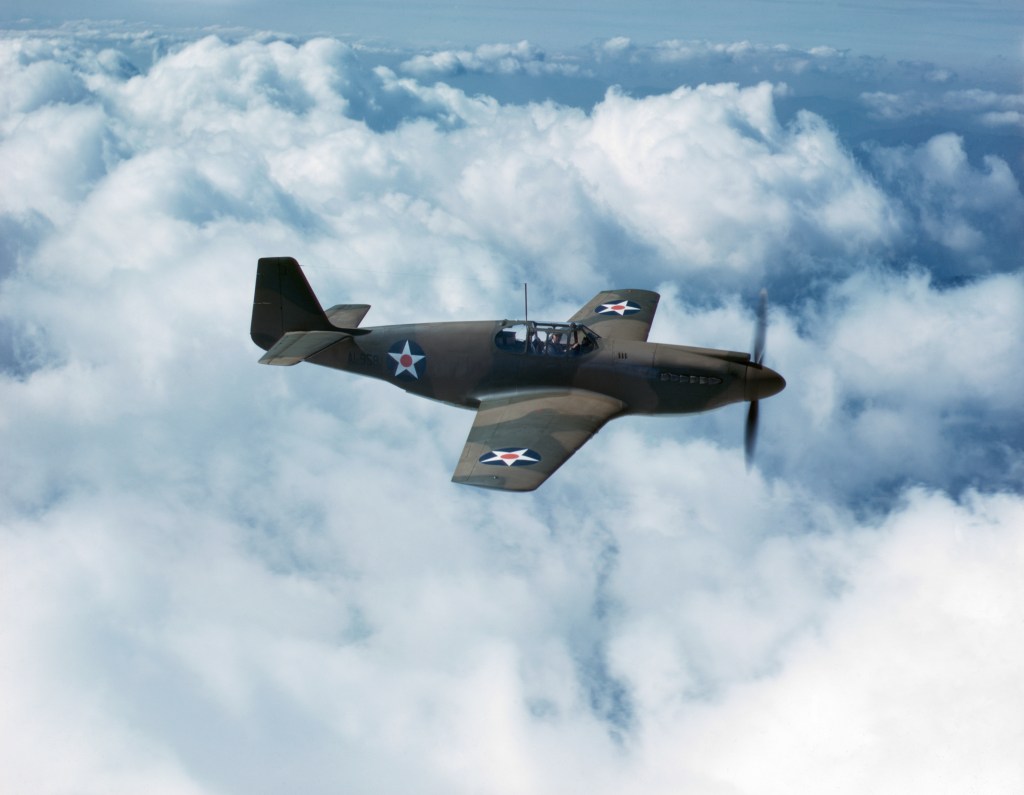
By June 1941, the USAAC was re-designated the United States Army Air Forces (USAAF) with Major General Henry H. “Hap” Arnold as Chief of the Army Air Forces. It was under Arnold – with a suggestion by NAA president “Dutch” Kindelberger – that the Mustang be continued in production for USAAF use.
With the passing of the 1941 Lend-Lease Act, the UK would purchase military arms from United States government moving forward, instead of directly from companies (like NAA) as before.
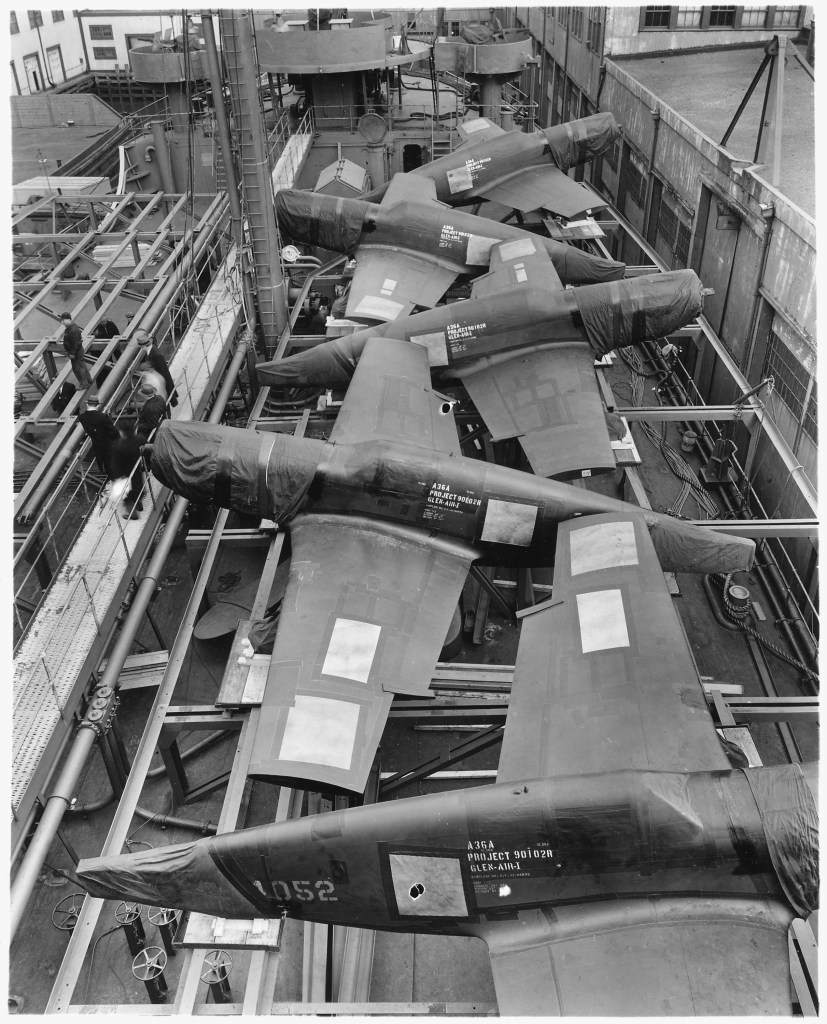
Because of this, the American government could repossess already-ordered aircraft should the need arise, as the USAAC did following the December 7th, 1941 attacks on Pearl Harbor.
This was the case with the 150 new airplanes the British ordered and designated the Mustang Mk. IA – a four 20mm Hispano-cannoned airplane with an L-shaped pitot, 10-foot, 9-inch propellers, and other improved features.
The USAAC withheld 57 of these planes and designated them the P-51 (also known in service as the F-6A, a photo reconnaissance plane). Two of these American-held planes were used to test Merlin engines – an emblematic feature of later Mustang models. The 93 planes that did not remain in the United States’ possession went to the RAF.
In 1942, Kindelberger suggested to Arnold that the P-51 could be used as a dive-bomber. Though the army had some experience with dive-bombers before (in the form of the A-24 Banshee), this type of aircraft was considered too dangerous to use.
Kindelberger, however, proposed to add dive brakes and six .50-caliber machine guns to this new P-51 model, making it suitable as a ground-attack aircraft.
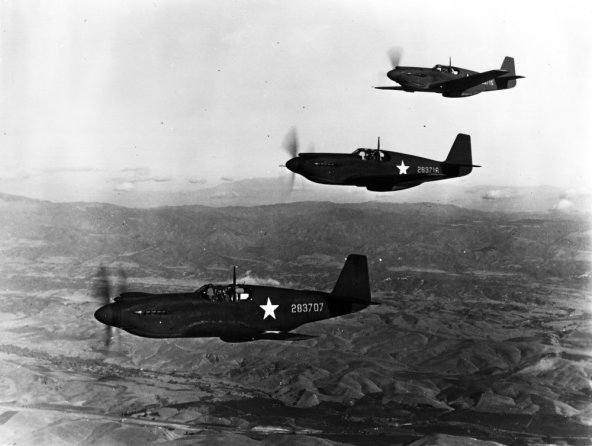
Major General Arnold was eventually convinced of this idea, and on April 16th 1942, the USAAF ordered 500 A-36A Apache dive bombers from NAA.
The plane, which was known to NAA as NA-97, had a 1325-horsepower Allison V-1710-87 engine, six machine guns (four in the wings, and two in the chin), two bomb racks (one under each wing, and could also carry fuel tanks), and four hydraulic dive brakes in the wings.
Though the A-36A was used in combat, it was prone to accidents and not an especially capable air-to-air fighter. This spurned the need to develop a true air-to-air capable Mustang.
North American Aviation’s P-51A was such a Mustang fighter, and on June 23rd , 1942, the USAAF ordered 1,200 of these planes.

The P-51A was of a similar make as the A-36A, with a new Allison V-1710-81 engine, four wing-located .50-caliber machine guns, and racks for bombs and drop tanks to increase its range. Its speed improved to 409 miles per hour at 10,000 feet.
The USAAC received 300 P-51As, and the RAF received 50 of them – which the British would refer to as the Mustang Mk. II. The rest of the 1,200-plane order would be fulfilled through the manufacture of the next types of Mustang, the P-51B and P-51C.
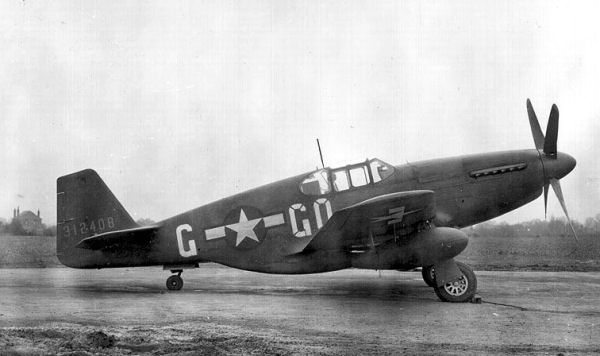
Improvements on the Mustang would initially take place in England. In 1942, the British developed the Mustang Mk. X – an experimental plane that replaced the Allison V-1710 engine in the Mustang frame with the more powerful Rolls-Royce Merlin 61.
This new engine configuration improved the Mustang’s performance at high altitudes. The Mustang Mk. X was able to reach speeds of 433 miles per hour at 22,000 feet. The plane was also fitted with a four-bladed propeller like the Supermarine Spitfire – a characteristic that would become a mainstay of later P-51 designs.
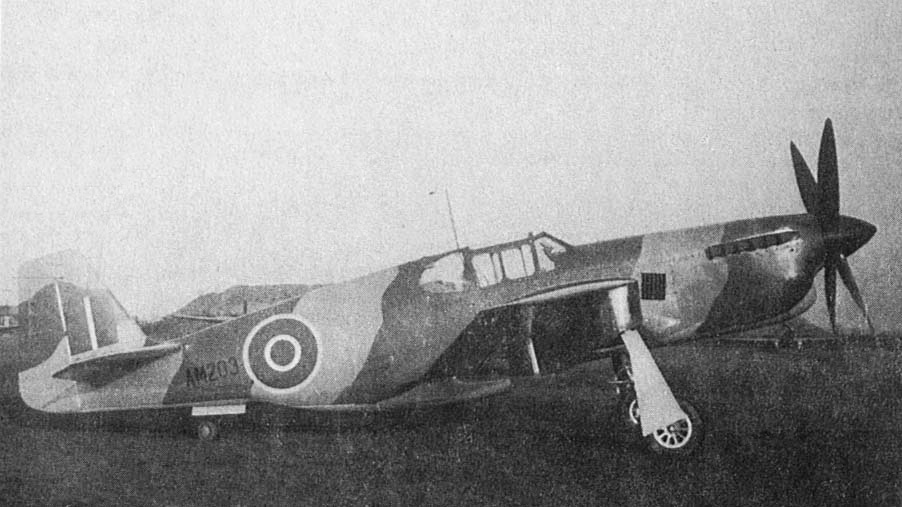
The Americans also tested new engines on Mustang body frames at roughly the same time. In 1942, the XP-78 – a prototype Mustang model – was fitted with a Rolls-Royce Packard V-1650-3 Merlin engine.
This 12-cylinder, 1,380-horsepower engine allowed for production models of the plane to reach speeds of 441 miles per hour at 25,000 feet.
The production versions of this experimental aircraft were known as the P-51B and P-51C. The P-51B was constructed at the NAA plant in Inglewood, California, while the P-51C was constructed at the NAA factory in Dallas, Texas.
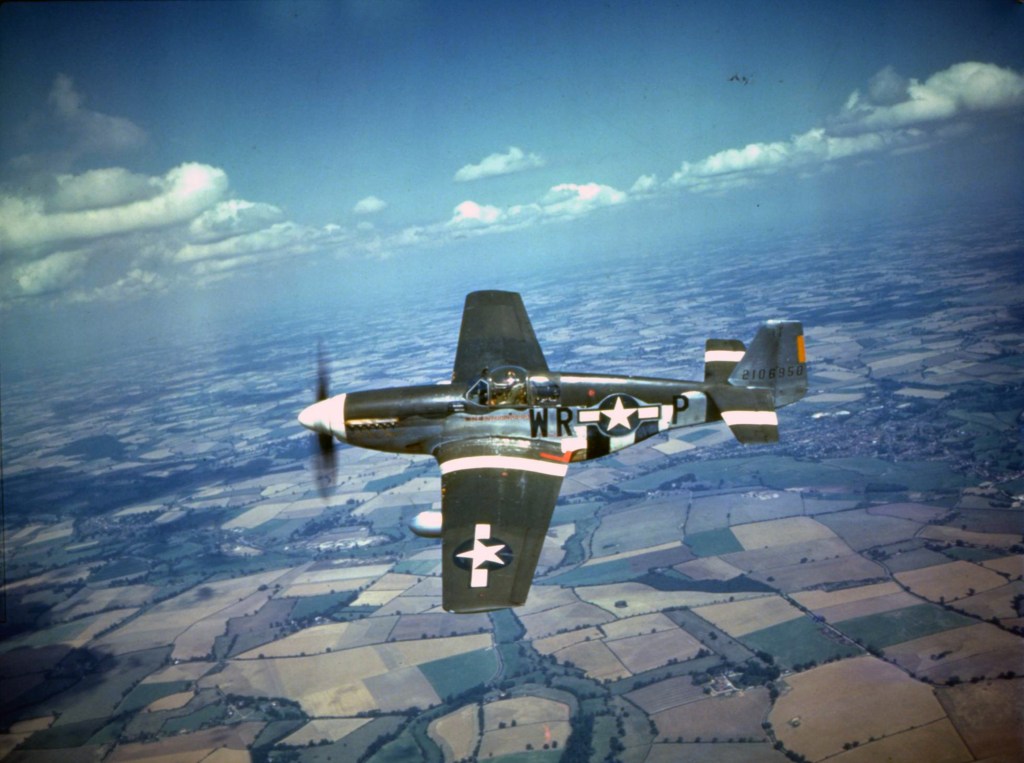
Other than their names, the P-51B and P-51C were, for the most part, structurally identical. They had a ventral (underside) carburetor, instead of an intake on top of the nose.
The planes also had four-bladed 11-foot, 2-inch diameter Hamilton Standard propellers. They were equipped with four .50-inch machine guns and two wing pylons that could carry 500-pound bombs or 75-gallon drop tanks each.
Later, two-seated variants and variants fitted with the bubble-like “Malcolm Hood” would be produced. NAA manufactured a total of 1,988 P-51Bs and 1,750 P-51Cs. In England, the RAF referred to the P-51B/C as the Mustang Mk. III.
The P-51D was a Mustang variant that was characterized by its bubble canopy, improved armaments, widened wings, and a dorsal fillet (a fin-like construction just before the tail, adding stability).
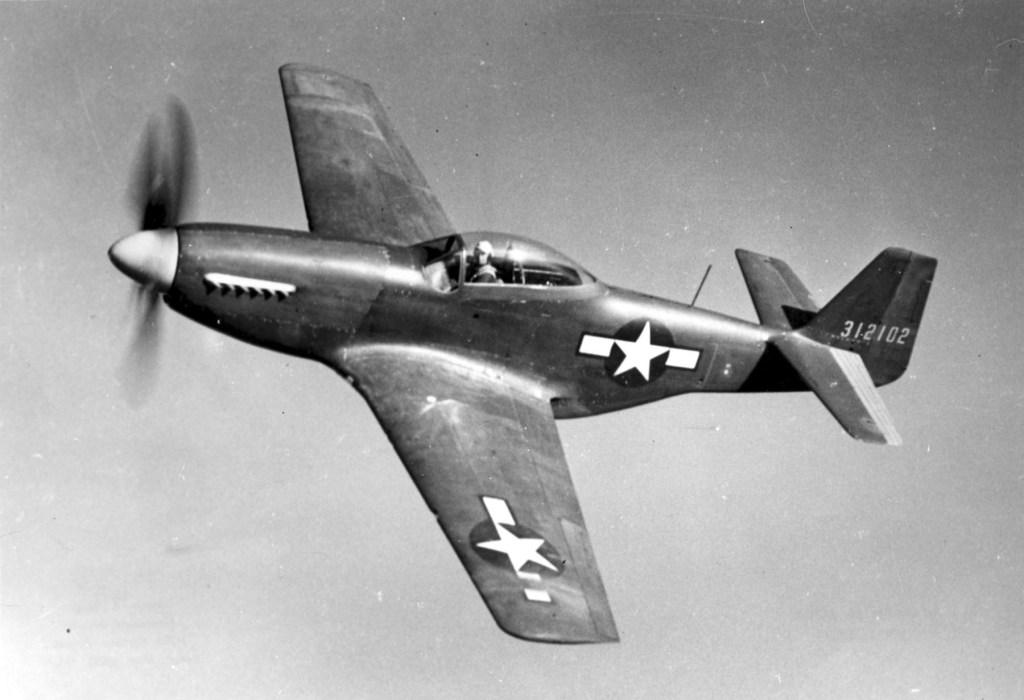
The P-51D used a license-produced Rolls-Royce Merlin V-1650-7 engine, allowing it 1,590 horsepower at 8,500 feet. It had a maximum speed of 440 miles per hour and a cruise speed of 362 miles per hour.
Pylons on the wings allowed for bombs and drop tank loads – and six .50-caliber machine guns were place in the wings (three on each side).
A total of 8,102 P-51Ds were built, and the RAF referred to the craft as the Mustang Mk. IV.

The P-51K was a Dallas-built variant of the P-51D, its main differences were propellers from another manufacturer (not Hamilton Standard).
Also, the canopy had a rear that was raised in appearance. This peculiarity of the P-51K was not by design; rather it was through variance in manufacturing.
A total of 1,500 P-51Ks were built, the RAF referred to this plane as the Mustang Mk. IVA.
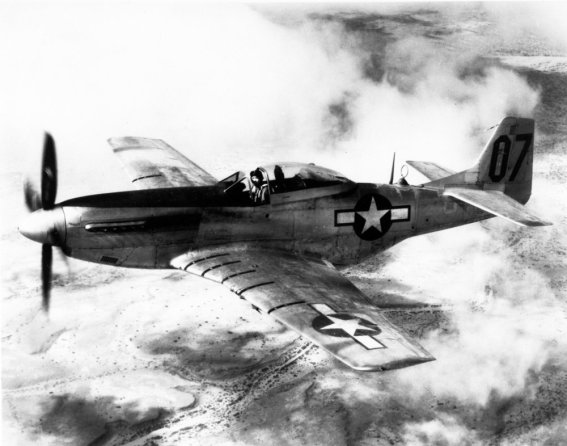
The P-51H was the final wartime production variant of the Mustang. After several experimental trials with lighter-weight Mustangs (named the XP-51F, the XP-51G, and the XP-51J) NAA came to develop a Mustang powered by a 1,380-horsepower Rolls-Royce Packard V-1650-9 Merlin engine.
The eventual plane developed, the P-51H, could reach speeds of 472 miles per hour at 21,200 feet. In addition to this, the plane had a slimmer body, completely trapezoidal wings, and a weight at least 1,500 pounds lighter than the P-51D.
The P-51H finally had smaller wheels, a smaller ventral intake, more compact fuselage tanks, and an increased tail height.
A total of 555 P-51Hs were produced, only one model was given to the RAF. The plane was not used in combat during World War II.

After the war, development of the Mustang all but stopped. Contracts for production-version Mustangs were canceled.
Some of the only new developments in the Mustang line were the F-82 Twin Mustang, a twin-bodied, two-pilot Mustang variant designed for long-range use, and the Cavalier Mustang, which was a civilian-modified aircraft intended for conflicts in post-colonial countries.
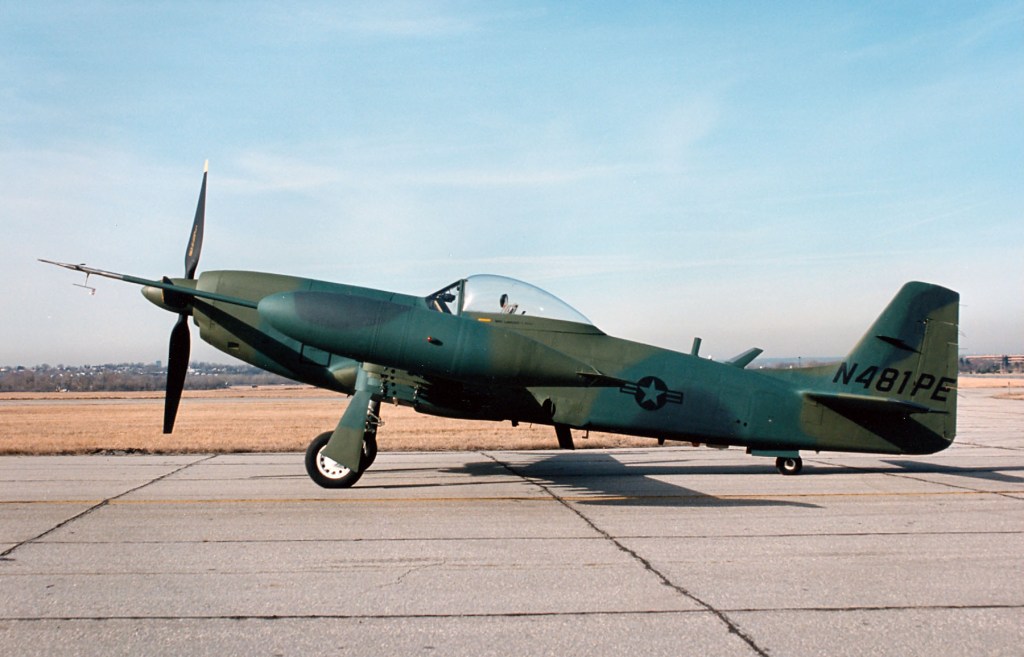
The Piper PA-48 Enforcer was built by Piper Aircraft as a modified Cavalier Mustang, but only a handful of these types of craft were produced.
The Mustang, especially the P-51D, was sold to civilians in large numbers after the war. These types of aircraft were modified for demonstrational, recreational, air show, and racing purposes.
Civilians and amateur pilots have also independently made fully functional, smaller scale-replicas of Mustangs for recreational flying.
In Service

The P-51 Mustang was first used in regular military operations by the Royal Air Force (RAF) as the Mustang Mk. I, starting in January 1942.
The (now disbanded) No. 26 Squadron first operated the Mustang Mk. I out of RAF Lympne air station – near Kent, England. The No. 26 used the plane in tactical reconnaissance and low-level attack missions.
The same was true of other England-based RAF squadrons (such as the No. 168, No. 169, No. 231, and No. 170) using the Mustang Mk. I and Mk. IA.
These squadrons would participate in ground-attack defense missions over Southern England and tactical reconnaissance/ground attack missions over Northern France.
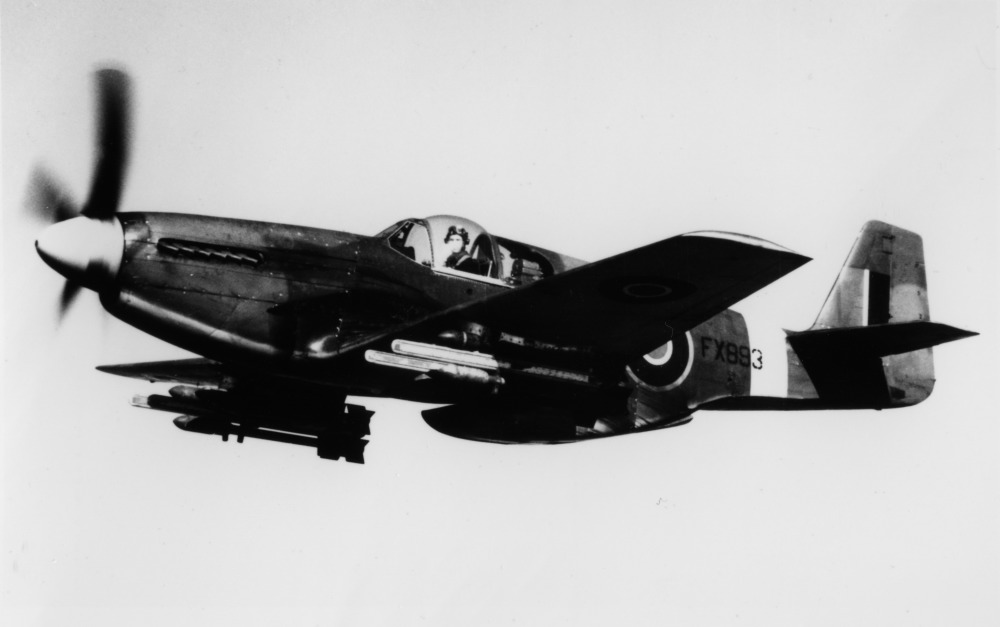
By late 1943, the RAF was starting to use Mustangs Mk. III and above – in air-to-air fighting and bomber escort duties.
The later RAF Mustangs were fast enough to chase and shoot down German V-1 flying bombs. However, the RAF still employed earlier models of the P-51 until the end of the war.
American use of the P-51 was limited at first. As the plane was first ordered by the RAF, these deliveries were made to the British, but the USAAC would occasionally “hold back” some production models for testing purposes.
This was even more common after the Lend-Lease Act and the attacks on Pearl Harbor – which, in this case, meant the planes were actually needed for field missions.
Operationally, the P-51 Mustang was first fitted with photographic cameras and designated the F-6A – and it flew with the 154th Observation Squadron (based in Tunisia) starting in April 1943.
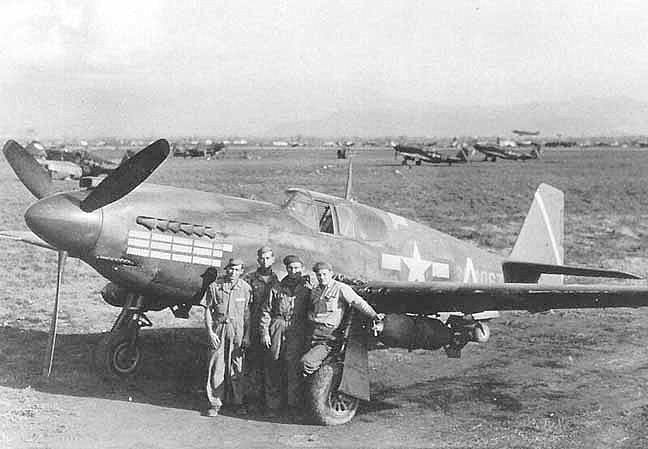
The initial reconnaissance-only use of the P-51 would not last long, as the Americans would use the A-36 Apache in ground-attack operations against the island of Pantelleria (off the coast of Sicily) a mere two months later on June 6th, 1943.
The dive-bombing A-36 would continue to participate in the invasions of Sicily and Italy throughout the summer and fall of 1943.
The A-36, along with the P-51A, would also be used in the China-Burma-India (CBI) theater.
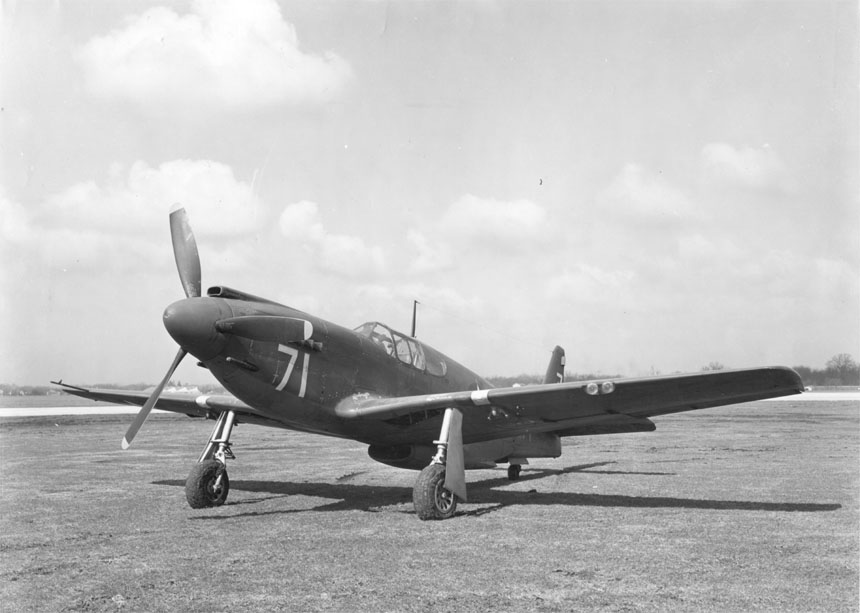
Some sources state that the Americans first used P-51 Mustangs in combat on December 1st, 1943 – with members of the 354th Fighter Group (of the U.S. Ninth Air Force) flying P-51Bs over the coast of Belgium.
However, this may not be the case, as other sources mention earlier combat uses of the P-51.
On April 9th, 1943 Lt. Alfred C. Schwab of the 154th Observation Squadron flew the first combat mission with the P-51 in the Mediterranean (out of Sbeitla Landing Ground, Tunisia) as the F6-A, performing reconnaissance duties.
On November 23rd, 1943, members of the Fourteenth Air Force flying P-51s (likely P-51As) – along with B-25 bombers and P-40 fighters – attacked railroad yards and warehouses in Yoyang (Yueyang), China.
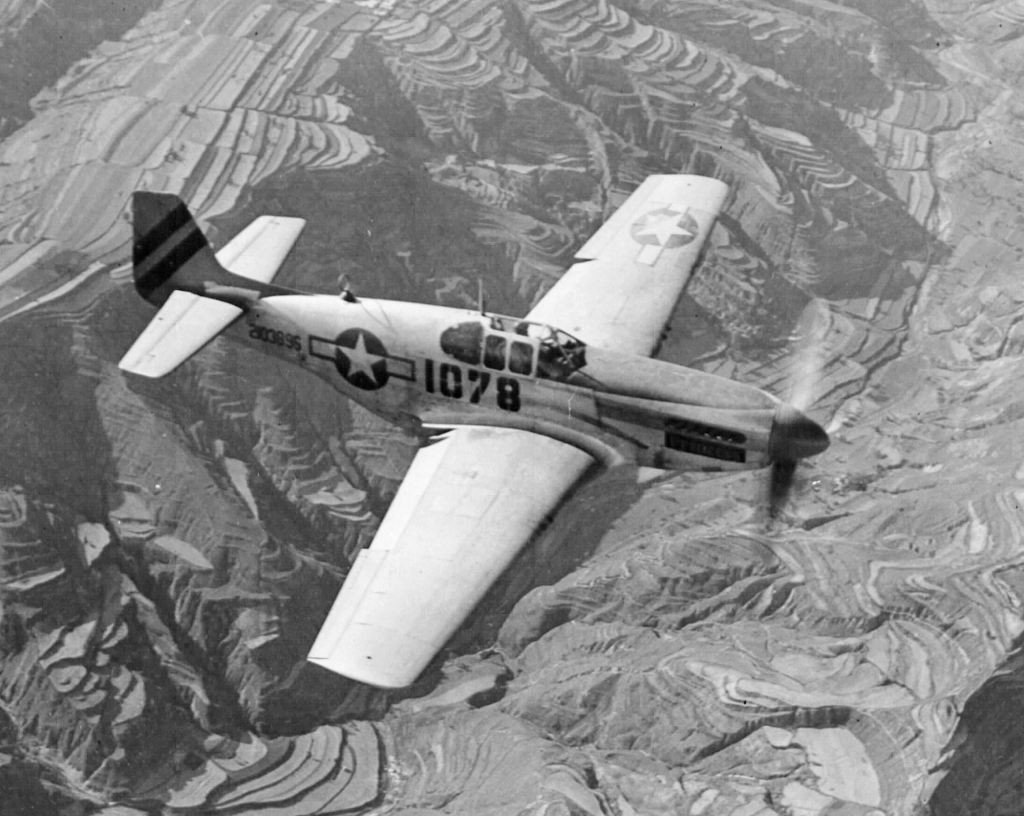
Two days later, on November 25th, 1943, members of the Tenth Air Force flew P-51s alongside B-25 bombers to attack the Japanese airfield at Mingaladon, Burma (north of what is now Yangon, Myanmar).
Japanese fighters came to intercept; two P-51s were lost with two Japanese planes claimed shot down.
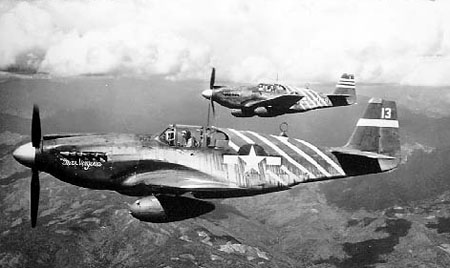

The Tenth and Fourteenth Air Forces would continue use of the P-51 in the CBI theater throughout late November 1943, at times engaging and downing Japanese fighter planes.
As these Air Forces had fighter squadrons equipped with A-36 Apaches and P-51As, it is likely that the first American use of an air-to-air P-51 in combat was in the CBI – and before that, the dive bomber version (the A-36) in the attack on Sicily and Italy.
The Tenth and Fourteenth Air Forces would continue to use P-51s (and later versions of the plane) until the end of the war.

This does not, and should not, diminish the importance of ground attack, escorting, reconnaissance, and air-to-air fighting duties of P-51s in Europe.
The December 1st, 1943 reconnaissance mission of the 354th Fighter Group over northwestern France was the first combat mission of the P-51B – and the first Mustang fighter mission of the Ninth Air Force.
Soon afterward, on December 5th 1943, the 354th flew an escort mission, assisting heavy bombers of the U.S. Eighth Air Force in a raid against targets near Amiens, France.
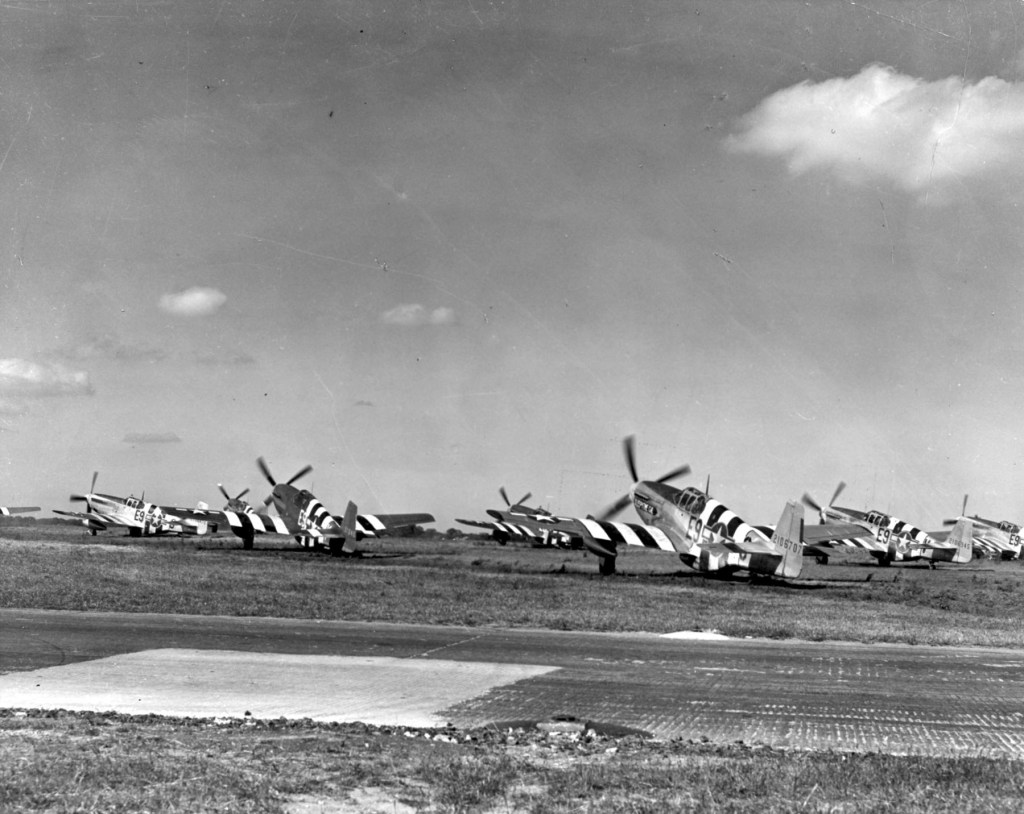
Bomber escort missions in Europe would continue for the next several months, with major ground attacks occurring as D-Day approached.
One such attack was one on a motor yard and military installations near Creil, France on March 26th , 1944. There, 40 P-47s and P-51s of the Ninth Air Force dive-bombed enemy facilities, the same day B-26 and A-20 bombers attacked a torpedo pen at IJmuiden in the Netherlands.
On June 4th, 1944, about 200 P-47s and P-51s of the Ninth Air Force attacked rail depots, bridges, and rail cars in northern France.
The Fifteenth Air Force, based in southern Italy, paralleled these actions against the enemy. P-51s (along with P-38s, P-47s, and medium and heavy bombers) attacked Porto Marghera, Italy (near Venice), southern Germany, and enemy positions in cities in Romania in the days following D-Day (June 6th) in 1944.
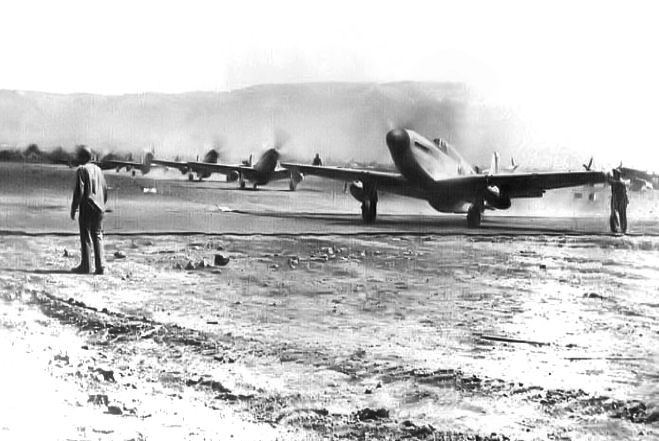
With its drop tanks equipped, later versions of the P-51 had a range of 1,650 miles (at least in the P-51D). This proved valuable to the Allies in bomber escort missions – ones that would fly over the Low Countries to attack Northern Germany.
Drop tanks also helped in long-range shuttle bombing operations. Shuttle bombing was the practice of taking off from one base, attacking a target, and then landing at a different friendly base.
The Eighth Air Force participated in such a shuttle bombing route on June 21st 1944. In part of what was called Operation Frantic, 57 P-51s (along with 72 P-38s and 38 P-47s) left the United Kingdom and accompanied over 145 B-17 bombers on a raid of a synthetic oil refinery in Ruhland, Germany.
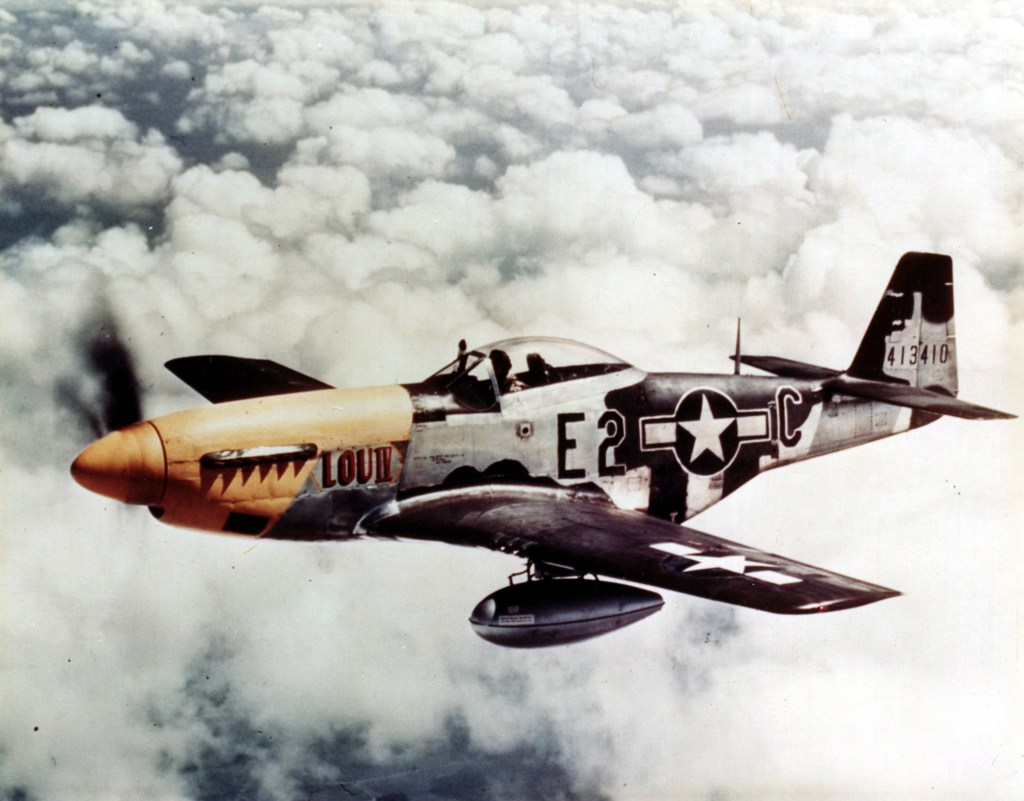
The bombing was for the most part on-target, and the bombers and escorting craft landed 50 miles southeast of Poznan, Poland.
From here 65 P-51’s replaced the original escort force; they were to accompany the heavy bombers to friendly bases in the USSR.
En route they encountered around 30 enemy fighters, one P-51 was lost, and six German planes were shot down. One B-17 was lost as well. The rest of the bombers landed at air bases in Mirgorod and Poltava in Soviet-held Ukraine, the P-51s landed at an air field in Pyriatyn, Ukraine.
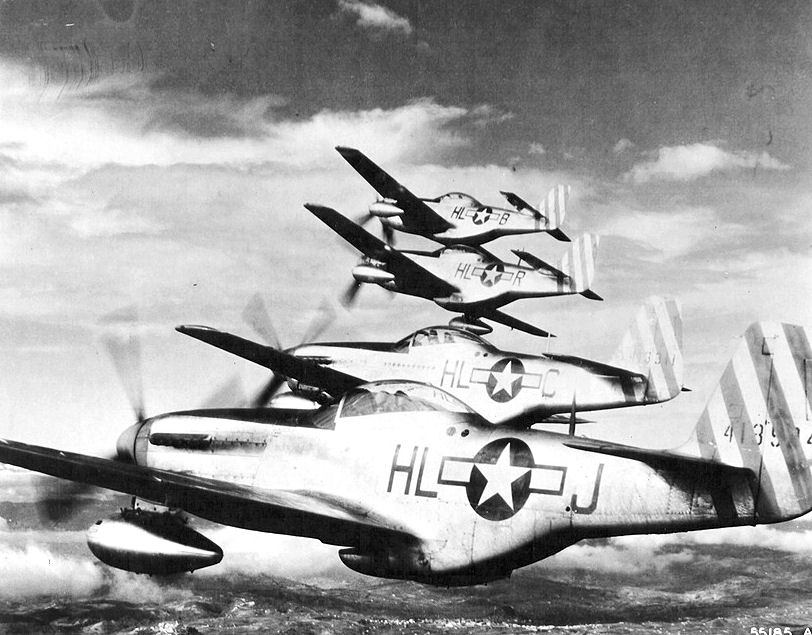
Another shuttle bombing route was conducted by the Fifteenth Air Force, starting from Allied bases in southern Italy to those Allied bases in the Soviet Union (mostly in what is now Ukraine).
P-51s would accompany other fighters or bombers and attack enemy airfields and other targets. This was the case on July 22nd , 1944 when 76 P-38s and 58 P-51s attacked Buzau and Zilistea Airfields in Romania, destroying 56 enemy aircraft on the ground. The force landed at a friendly base in the Soviet Union.
The P-51 was used widely in Europe, including use by the Fifteenth, Twelfth, Ninth, and Eighth Air Forces.
Many bombing runs by the Fifteenth Air Force (by B-24s and B-17s) were escorted by P-51s, as was the case on February 8, 1945 – when 500 B-24s and B-17s were escorted by over 270 P-51s and P-38s to bomb targets in Vienna, Austria.

The P-51s of the Eighth Air Force also engaged in escort missions, as well as strafing missions. An example of this was on February 11th 1945, when four P-51s strafed railroad yards in the eastern Netherlands and northwestern Germany.
In the Pacific, P-51s were used by the Seventh Air Force (later the Twentieth Air Force), based on Iwo Jima late in the war.

On April 20th 1945, 11 P-51s bombed the island Haha Jima, about 100 or so miles north east of Iwo Jima. Later P-51 versions were to be used in the planned invasion of Japan, but this never materialized.
The P-51 was notably piloted by members of the 332d Fighter Group in Europe – one part of a collection of aviation squadrons and fighter groups colloquially known as “The Tuskegee Airmen”.
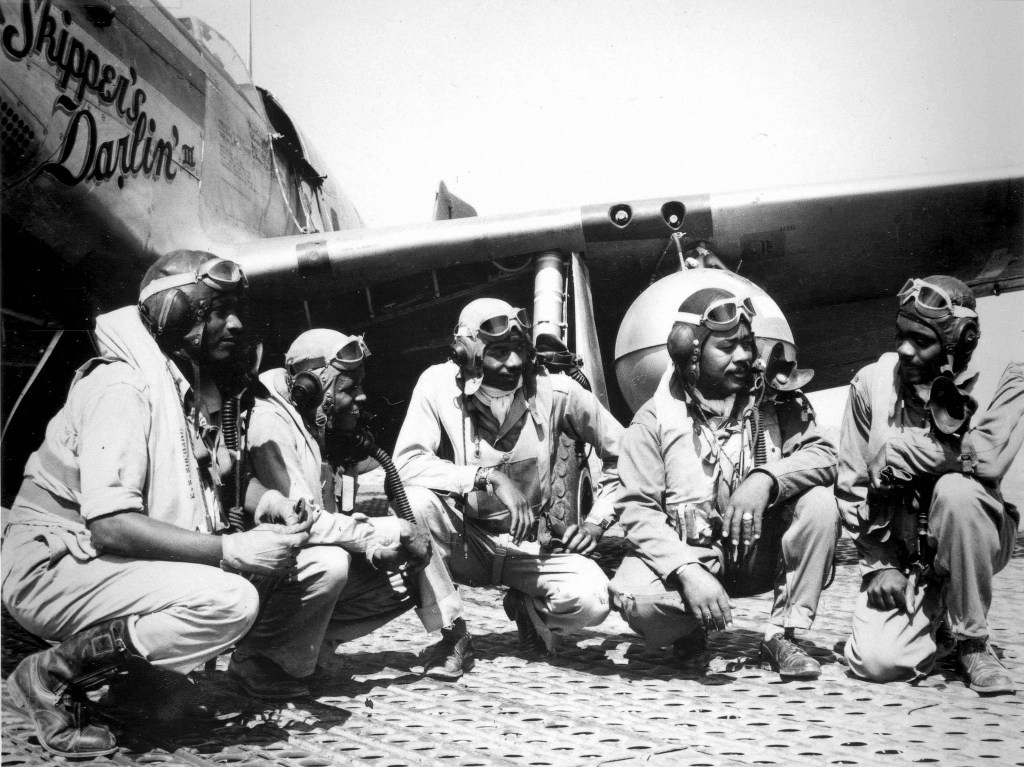
The Tuskegee Airmen performed escort support for heavy bombers of the Twelfth Air Force (among other U.S. Air Forces in Europe), in attack missions against targets in Italy, Germany, France, Romania, Greece, Austria, Poland, Hungary, Yugoslavia, Czechoslovakia, and Bulgaria.
Because of the red markings on the 332d’s P-51 rear dorsal fins, the group was known as the “Red-Tailed Angels”, or simply the “Red Tails”.
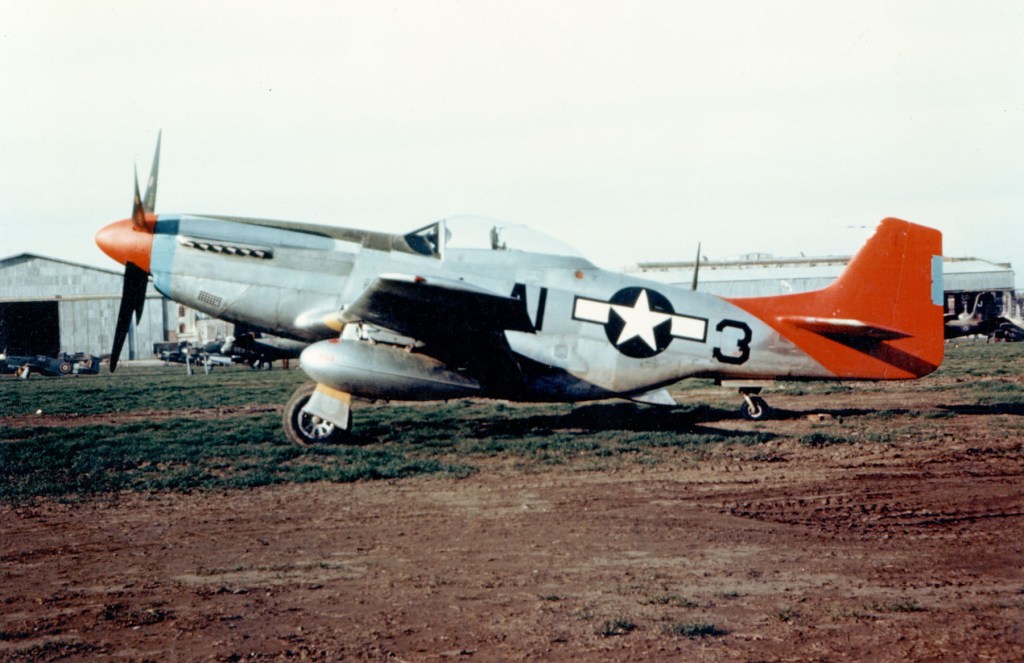
The P-51 produced many aces in the Second World War, including Major George Earl Preddy, Jr., General John C. Meyer, Lt. Colonel Ray S. Wetmore, Colonel John J. Voll, Major Dominic Salvatore Gentile, Lt. Michael T. Russo, Captain Lee Andrew Archer, Jr., Colonel Glenn E. Duncan, and Colonel Herschel Green.
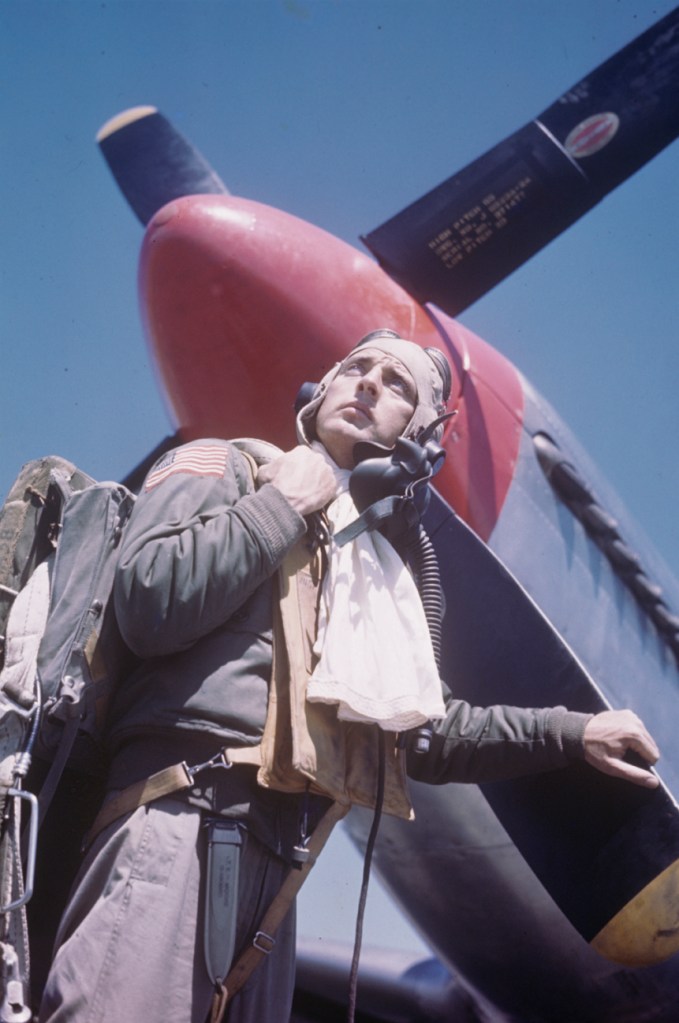
After World War II, the P-51 was used in the Korean War as the F-51, mostly as a ground-attack aircraft. Numerous other countries bought P-51s for use by their armed forces, sometimes in localized conflicts.
The P-51 In Flight
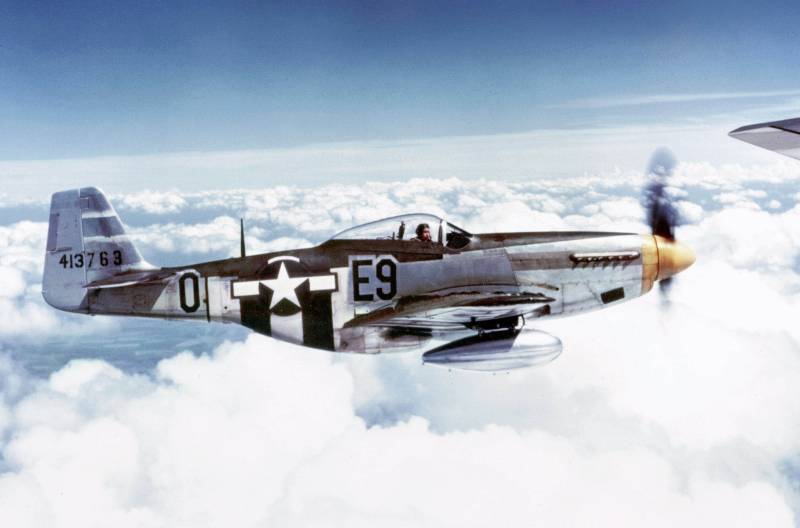
Pilots escorting bombers in the P-51 usually flew at high altitudes, looking out for either anti-aircraft fire or approaching enemy planes. If enemy fighters were approaching, pilots may have dived on enemy planes or rushed head-on into their ranks, shooting down diving opposing fighters on their first turn.
This has been described by First Lieutenant William Stanley Lyons of the 357th Squadron, 355th Fighter Group, U.S. Eighth Air Force (based in England). On November 25th, 1944, Lyons and his Fighter Group were escorting B-17 and B-24 bombers on an attack on an oil refinery in Misburg, (near Hanover) Germany.
About one hundred approaching German Me-109s approached Lyons and his wing – consisting of his captain Fred Haviland and two other group members Lts. Barney Barab and Charles Kelly, also flying P-51s. Lyons and Haviland flew head-on into the enemy planes, with Haviland downing at least one diving enemy plane on the first turn.

With the help of Barab and Kelly, Lyons and Haviland ended up shooting down three enemy planes altogether. However, this was at the cost of their two wing mates, who got involved in a mid-air collision with each other on their return.
The overall bombing raid, however, was largely successful. With over 1,000 medium and heavy bombers participating and 15 fighter groups acting as escorts – it was one of the largest bombing raids of the entire war.
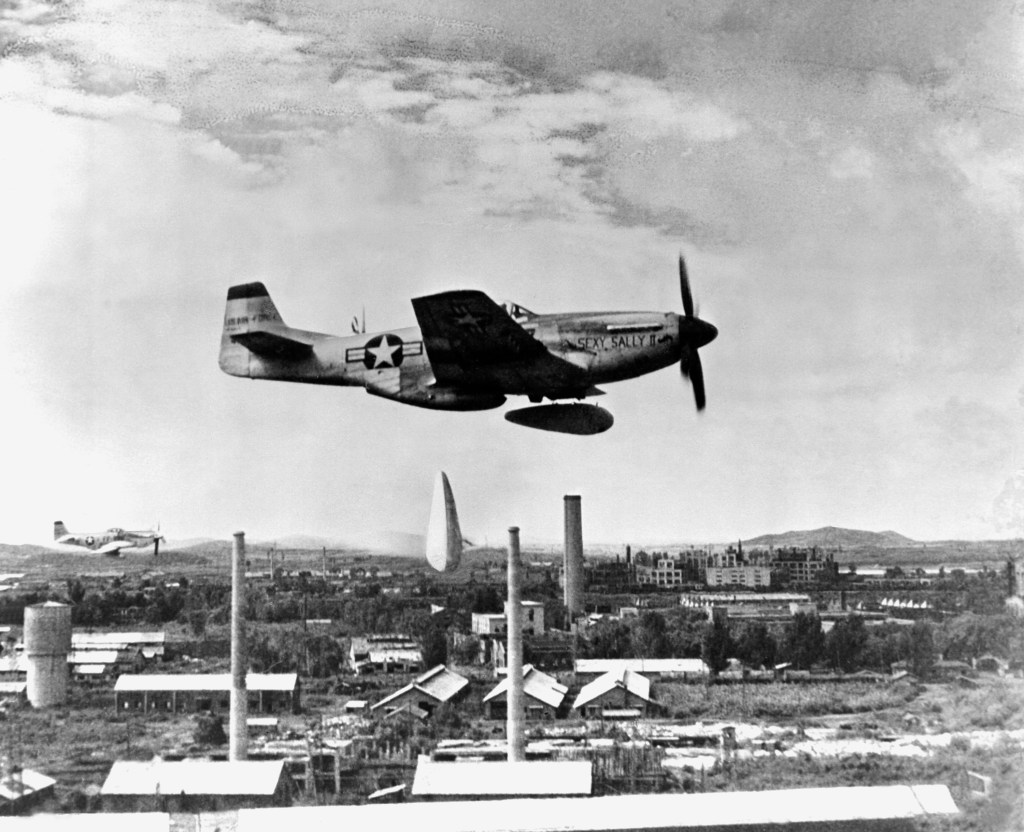
In the P-51, maintaining a high altitude over the enemy was always an advantage. Its supercharger added power at altitudes above 15,000 feet, bolstering this edge.
Still, the P-51 could be used as an effective strafing and bombing craft, as evidenced in Sicily, Italy, France, China, Southeast Asia, Germany, Korea, and the Pacific Islands.
Numerous low-altitude missions were conducted to attack air fields, roads, motor yards, railroad depots, barges, railways, active enemy lines, and other ground targets.
Model Variations

The P-51 Mustang had several incarnations. Some of the main variants included the:
NA-73X – North American Aviation’s prototype Mustang. First flown on October 26th, 1940.
Mustang Mk. I – The RAF’s designation for the first production Mustang. Used mainly for testing and reconnaissance by the RAF.
P-51 – A four 20-mm Hispano-cannoned version of the Allison-powered production Mustang. A total of 150 P-51s were produced, with 57 kept by the United States, and 93 sold to the British. Known by the RAF as the Mustang Mk. IA.

A-36A Apache– A dive-bomber version of the Mustang with four hydraulic air brakes, six .50-caliber machine guns, and pylons added to carry either bombs or drop tanks. 500 built, one model was given to the RAF.

P-51A – An air-to-air fighter Mustang with four .50-caliber machine guns in the wings. 310 were built, 50 were given to the RAF. In England, the P-51A was known as the Mustang Mk. II.
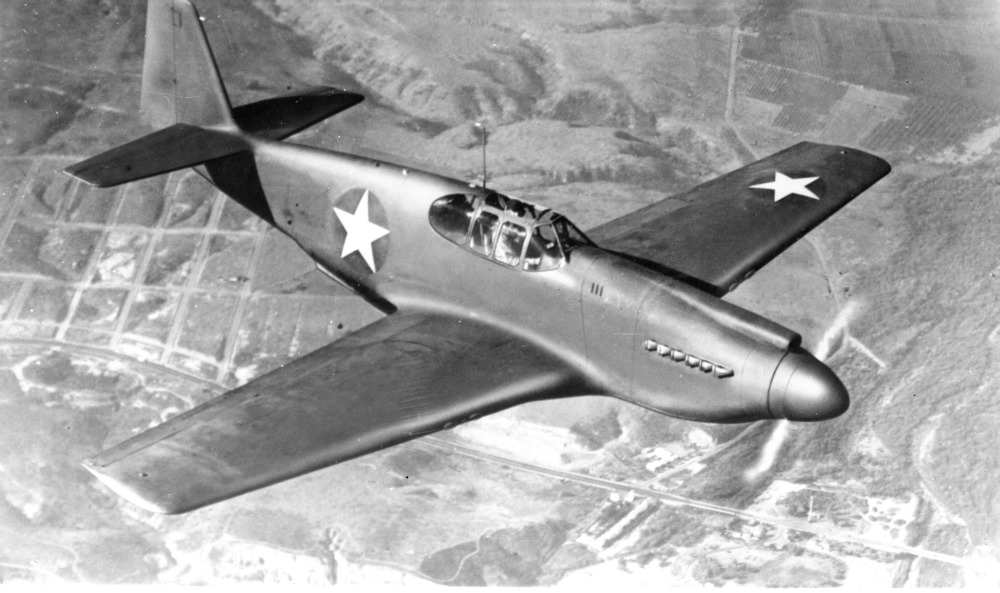
Mustang Mk. X – An experimental RAF version of the P-51 Mustang consisting of a Mustang frame fitted with a 1,280-horsepower Rolls-Royce Merlin 61 engine and a four-bladed propeller configuration. A predecessor of the later Merlin-engined Mustangs.
XP-78 – North American Aviation’s experimental version of the P-51 that used the Rolls-Royce Packard V-1650-3 Merlin engine. Production versions of this type would be known as the P-51B and the P-51C.
P-51B – A Merlin-engined P-51 that was constructed at the NAA plant in Inglewood, California. This version had four .50-caliber machine guns and two wing pylons for bombs or drop tanks. A total of 1,988 P-51Bs were built. Also known in England as the Mustang Mk. III.
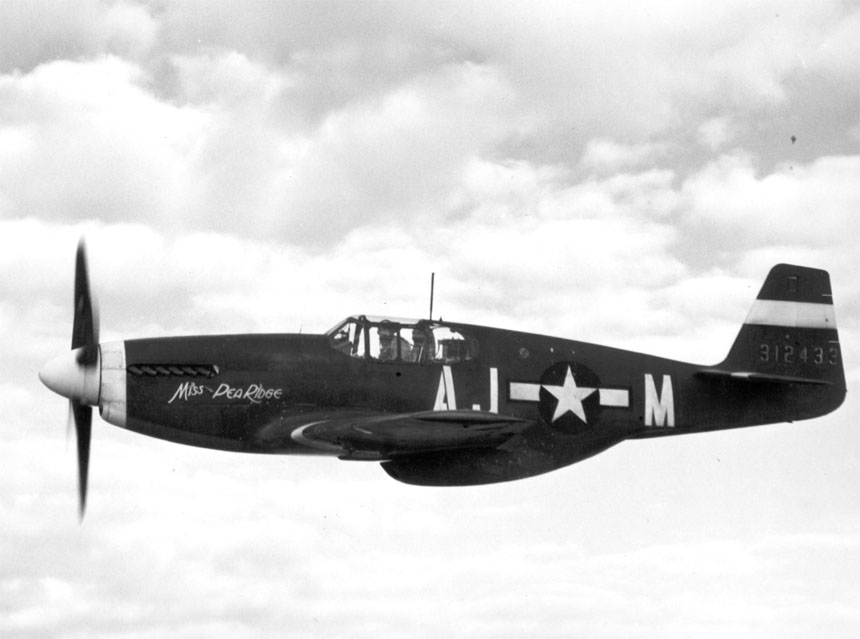
P-51C – A version nearly identical to the P-51B, built by NAA in Dallas, Texas. A total of 1,750 P-51Cs were built; also known as the Mustang Mk. III.
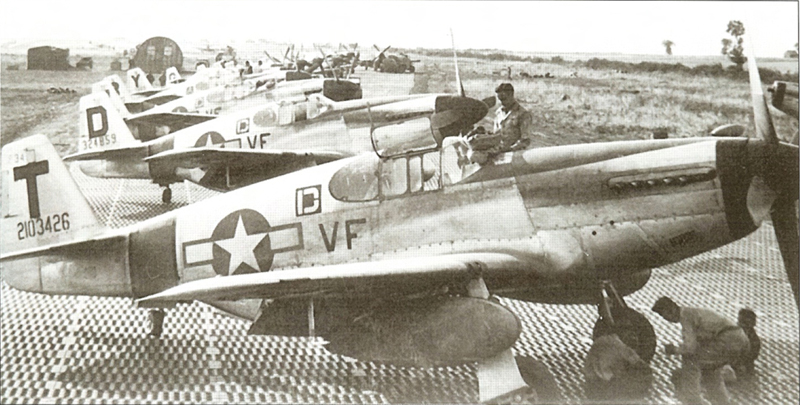
P-51D – The most-produced version of the P-51 Mustang. This version featured a high-powered Rolls-Royce Merlin V-1650-7 engine, bubble canopy, improved tail stabilization, and six .50-caliber machine guns in the wings. A total of 8,102 P-51Ds were produced. This version was known by the RAF as the Mustang Mk. IV.

P-51K – A slightly different variant of the P-51D plane constructed in Dallas, Texas. 1,500 were built; known by the RAF as the Mustang Mk. IVA.
P-51H – A late-war, light-weight version of the Mustang with a slimmer body, taller tail, improved ventral air scoops, and a higher horse-powered Packard V-1650-9 Merlin engine. 555 were built, none saw combat in World War II.
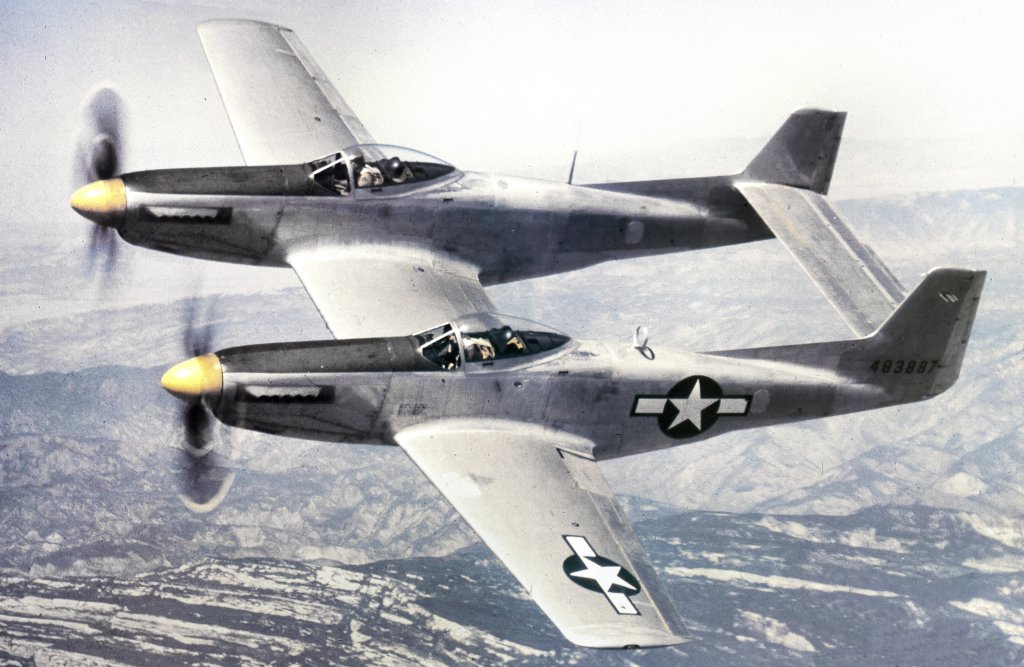
F-82 Twin Mustang – A long-range, dual pilot/propeller version of the P-51 Mustang. Intended to escort heavy bombers. Although 272 were built, none saw service in World War II.
Cavalier Mustang – A civilian-made aircraft originally designed for recreational use, the Cavalier Mustang was adopted by the U.S. Department of Defense and exported to countries involved in post-colonial conflicts. Over 25 of these craft were built.
Piper PA-48 Enforcer – A variant based off the second production version of the Cavalier Mustang (the Mustang II). Intended for localized small-scale conflicts, the Piper lobbied the U.S. Government to fund the PA-48 Enforcer in the late 1970s, but to no avail. A total of 4 of these craft were built.

 Waves To Jets