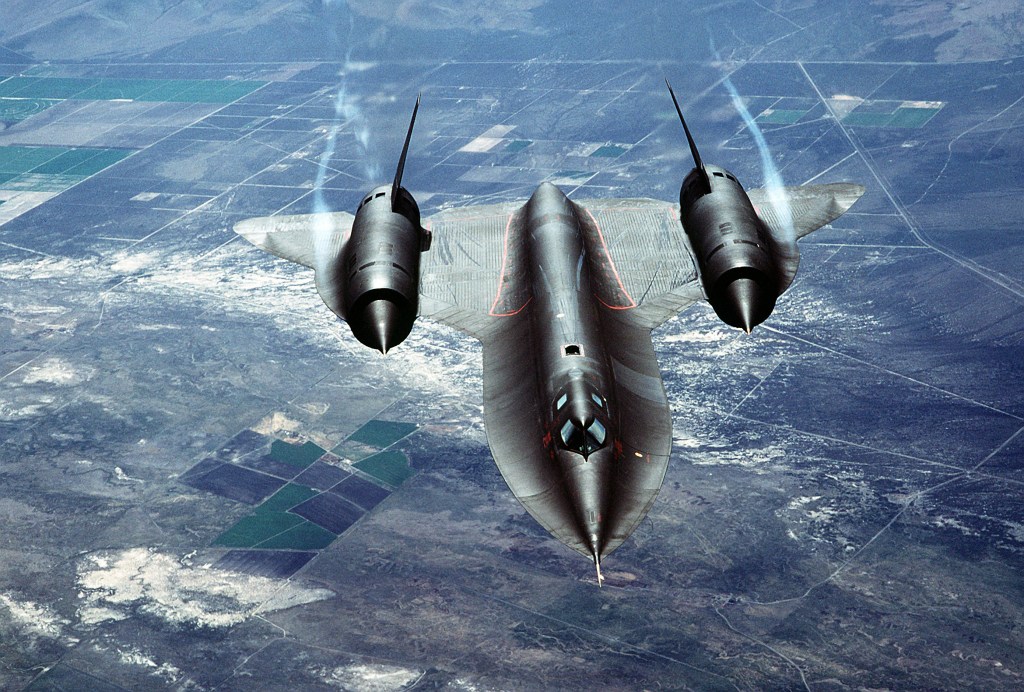
The “Blackbird”
By WavesToJets
The SR-71 “Blackbird” was a high-altitude, high-speed aircraft that pushed the limits of air travel in its time.
This record-setting airplane had high-powered jet engines, advanced computer navigation and operational systems, and had a fuselage made of materials that could withstand air temperatures of travel speeds well above the sound barrier.
But there is quite a lot more to know about this amazing airplane. Here are five facts about the SR-71 “Blackbird”.
1. The SR-71 was designed to be a spy craft.

The SR-71 “Blackbird” was developed by the Lockheed Corporation in the late 1950s and early 1960s, intially spurned by a Central Intelligence Agency (CIA) request to the company in 1957.
The request was to develop a spy plane that could not be detected. The leader of Lockheed’s innovative “Skunk Works” division, Clarence “Kelly” Johnson, was tasked with engineering such a plane.
Previously, the CIA had used the long-winged Lockheed U-2 for surveillance missions – but this craft was relatively slow (reaching a cruise speed of some 470 miles per hour).
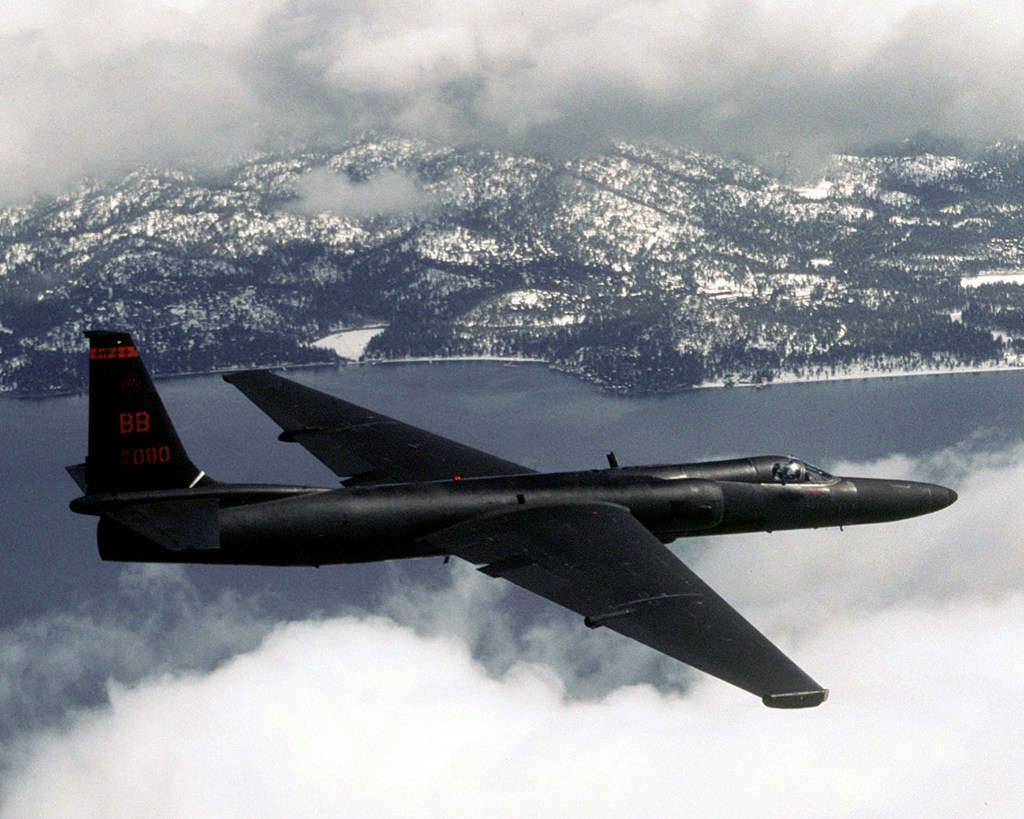
The U-2 was also increasingly susceptible to detection and attack. This was the case on May 1st, 1960, when CIA U-2 pilot Captain Francis Gary Powers was shot down by a surface-to-air missile (SAM) during a mission far inside (and over) Soviet Union territory.
Similarly, another U-2, piloted by U.S. Air Force (USAF) Major Ruolph Anderson Jr., was shot down over Cuba by a SAM on October 27th, 1962 during the Cuban Missile Crisis. These incidents solidified the CIA’s need for a faster, more capable spy plane.
Development of the new craft focused on reducing the radar cross-section, the degree to which an aircraft is detectable by radar. This, and an emphasis on using improved materials – namely titanium – to form an aircraft that would be durable at high altitudes and speeds.
Lockheed had been working on designs nicknamed “Archangel” with its initial designs labeled Archangel 1, and Archangel 2, and so forth. Subsequent designs became known by the shorthand version of these labels, such as the A-11 and A-12.
On April 25th, 1962, the SR-71’s forerunner – the Lockheed A-12 – took flight for the first time out of Groom Lake, Nevada, piloted by test aviator Louis Schalk.
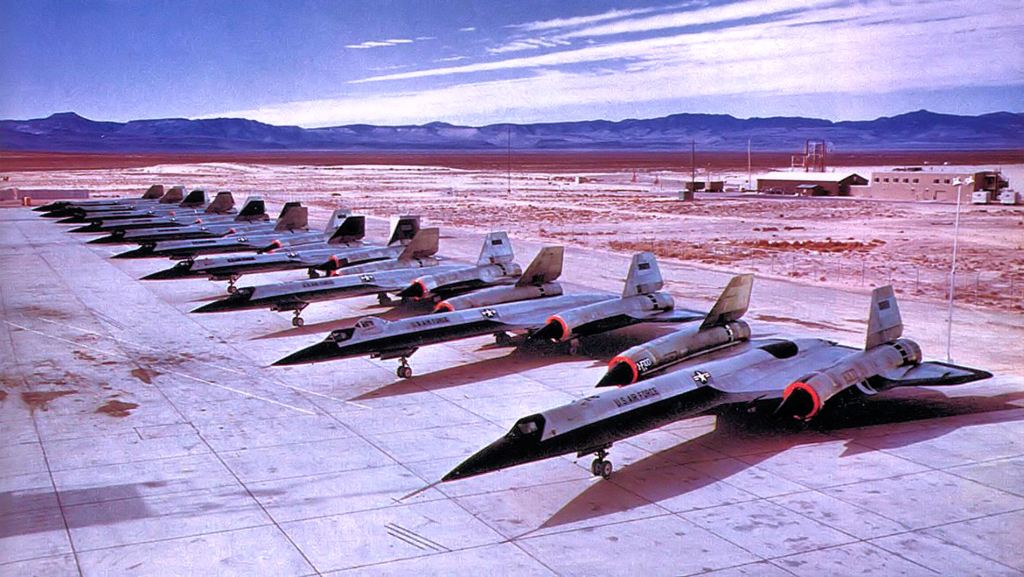
Declared operational in 1965, the single-seated A-12 (according to the CIA Museum) was able to reach speeds of Mach 3.29 at 90,000 feet. It was used in top-secret CIA missions over North Vietnam and North Korea.
The A-12 was 101 feet, 7 inches long, had a wingspan of 55 feet, 7 inches, had a 117,000-pound maximum takeoff weight, and was powered by the 25,500-lb thrust Pratt & Whitney J58 turbojet engine. In total, thirteen instances of the A-12 were made.
By the mid 1960s, Soviet airspace was deemed too dangerous for the A-12 – and since unmanned satellites could provide reconnaissance just as well at this point, the A-12 was retired in 1968.
The A-12’s development was roughly paralleled by the Lockheed YF-12A, a two-seated interceptor prototype armed with air-to-air missiles and equipped with fire-control radar (radar used for weapons targeting purposes).

The YF-12A’s first flight was on August 7th, 1963. The public was not aware of the YF-12A’s existence (with only three instances made) until February 24th, 1964 – when it was announced by President Lyndon B. Johnson. This announcement was intended to provide cover for the A-12’s existence, then still in active CIA operational use.
The YF-12A found itself retired in 1968 as well, with increasing production costs, the Vietnam War, and the lowered need for such high-speed planes with air defense (air-to-air) capabilities – being the reasons.
But this was only towards the beginning of the SR-71’s history – with the SR-71 first taking flight on December 22nd , 1964 – piloted by Bob Gilliland out of USAF Plant #42, near Palmdale, California.
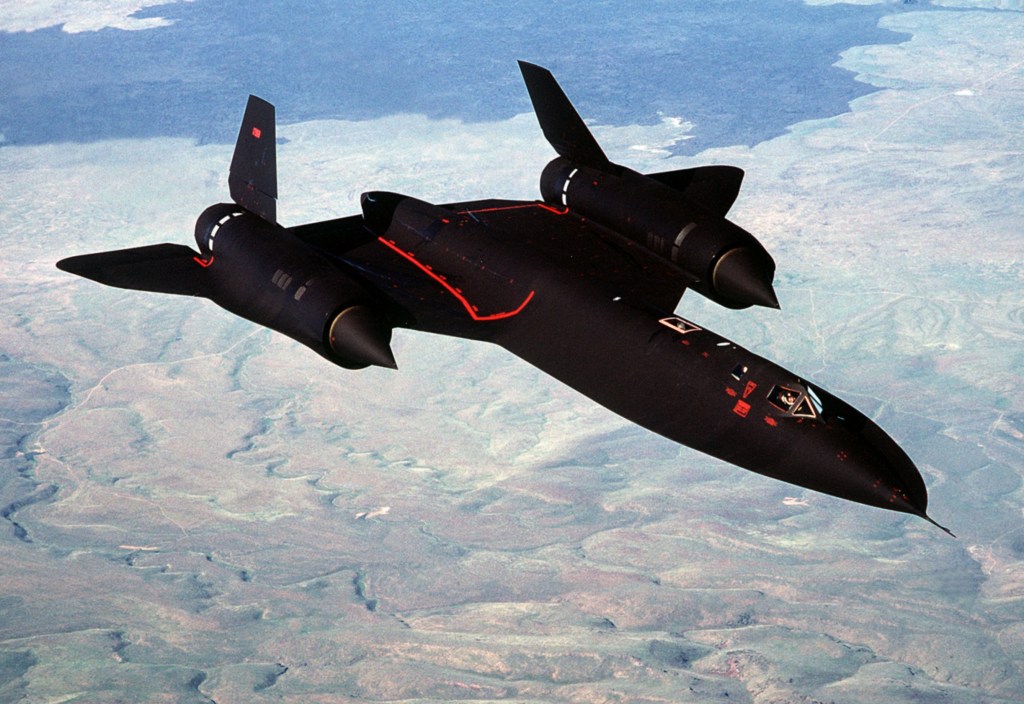
By March 8th, 1968, the SR-71A began to arrive at USAF Kadena Air Base, Okinawa, Japan. On March 21st, 1968, the first SR-71 mission took place out of Kadena, surveilling sites in North Vietnam.
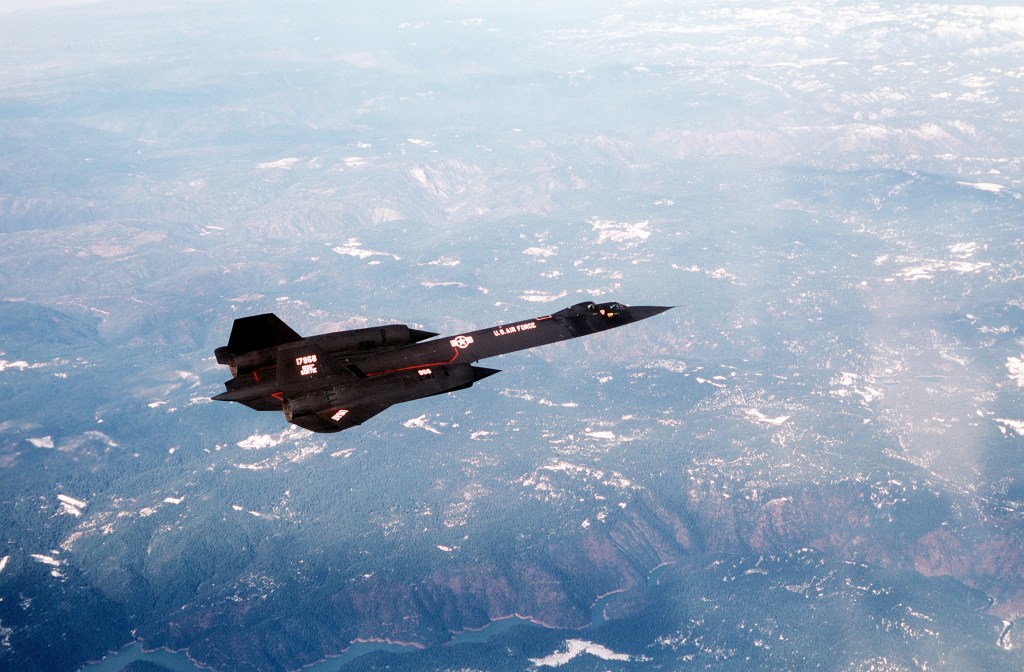
At a length of 107 feet, five inches, a wingspan of 55 feet, seven inches, and an empty weight of 67,500 pounds, the SR-71 was longer and larger than the A-12. Its dark color earned it the unofficial nicknames “Blackbird” and “Habu” (a type of snake).
With two 25,000-lb thrust J-58 afterburning turbojet engines, the SR-71 was able to reach speeds of Mach 3 or greater (it was designed to have a cruise speed of Mach 3.2).
The SR-71, at least according to some sources, was still not as fast as the A-12, however, with the SR-71’s highest documented top speed at 2,193 miles per hour and the A-12 at 2,208 miles per hour.
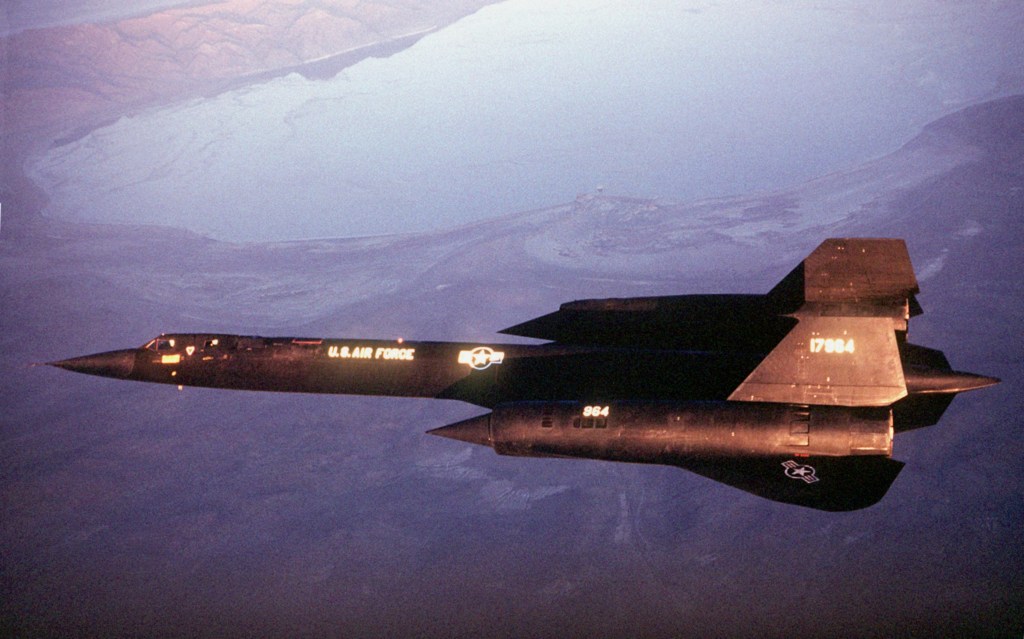
USAF use of the SR-71 included missions in Asia and Europe, the last standard USAF mission occurred in October 1989. The SR-71 had a revived USAF usage from 1995 to 1997; NASA used the aircraft until 1999.
The SR-71 was well-equipped for its reconnaissance and spying tasks. It had side-looking airborne radar (SLAR), conventional and infrared cameras, and an infrared terrain-mapping system.
Additional electronic features included a system for gathering electronic intelligence, a celestial navigation system, and equipment for jamming enemy signals. With this reconnaissance equipment, the SR-71 was indeed a true spy plane.
2. The SR-71 flew at record speeds.
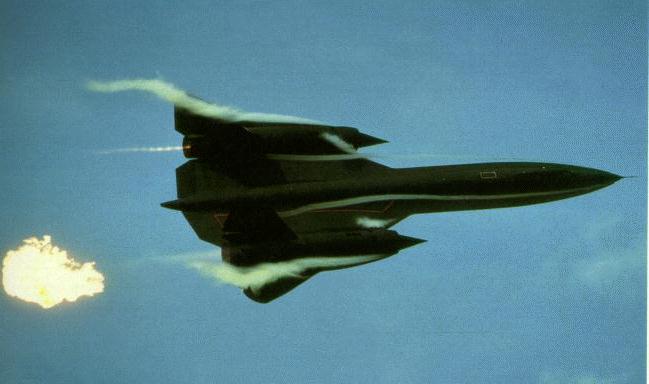
The SR-71 is known for being one of the fastest airplanes ever built. As a supersonic aircraft, it could travel regularly at speeds much greater than the speed of sound (Mach 1, or 767 miles per hour).
In fact, the SR-71 was designed to travel at speeds of Mach 3 or greater, putting it normally at speeds above 2,100 miles an hour. It was more fuel-efficient at these higher speeds by design.
This was because as the SR-71 traveled at supersonic speeds (around Mach 1.6), its two forward-facing inlet cones (located on the front of the plane’s two engines) would be retracted into the engine cowling.

This retraction caused the air shockwaves generated by the plane’s high velocity to be inside the engine itself – reducing overall air drag. This reduction in drag would allow the SR-71 to fly faster and more efficiently.
The air inside the engine, meanwhile, would slow down to subsonic speeds, those necessary for jet propulsion. The air would be mixed with fuel, burned, and released as exhaust in the engine’s aft.
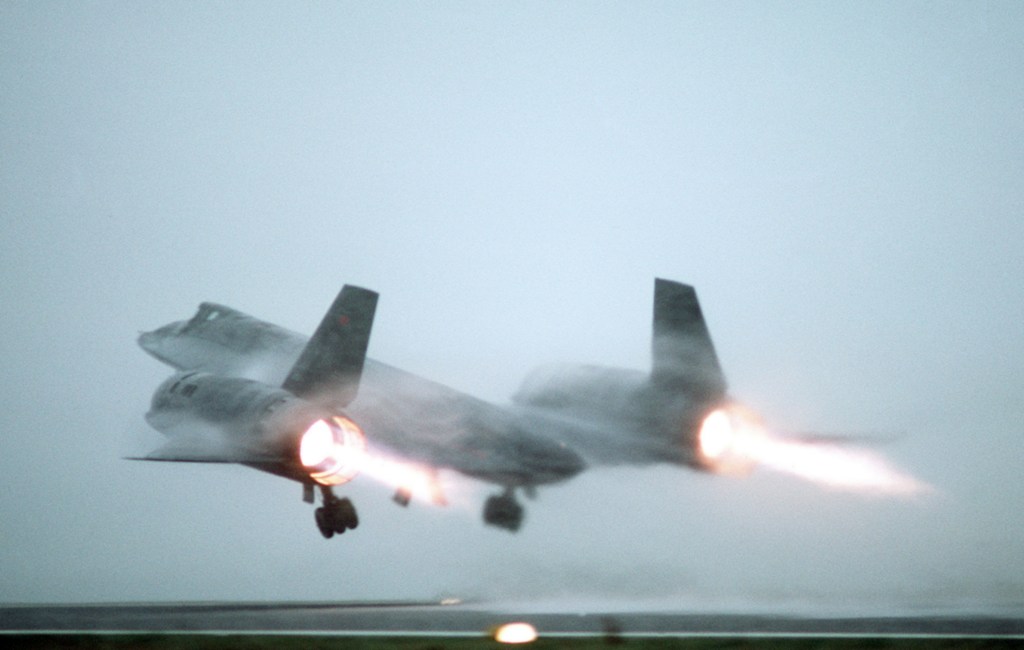
This design arrangement allowed the SR-71 to set a world speed record for the fastest manned jet aircraft – those with air-breathing engines.
The record was set on July 28th, 1976 with USAF then-Captain Eldon Wayne Joersz and then-Major George T. Morgan Jr. as pilots, operating out of Beale Air Force Base, California.
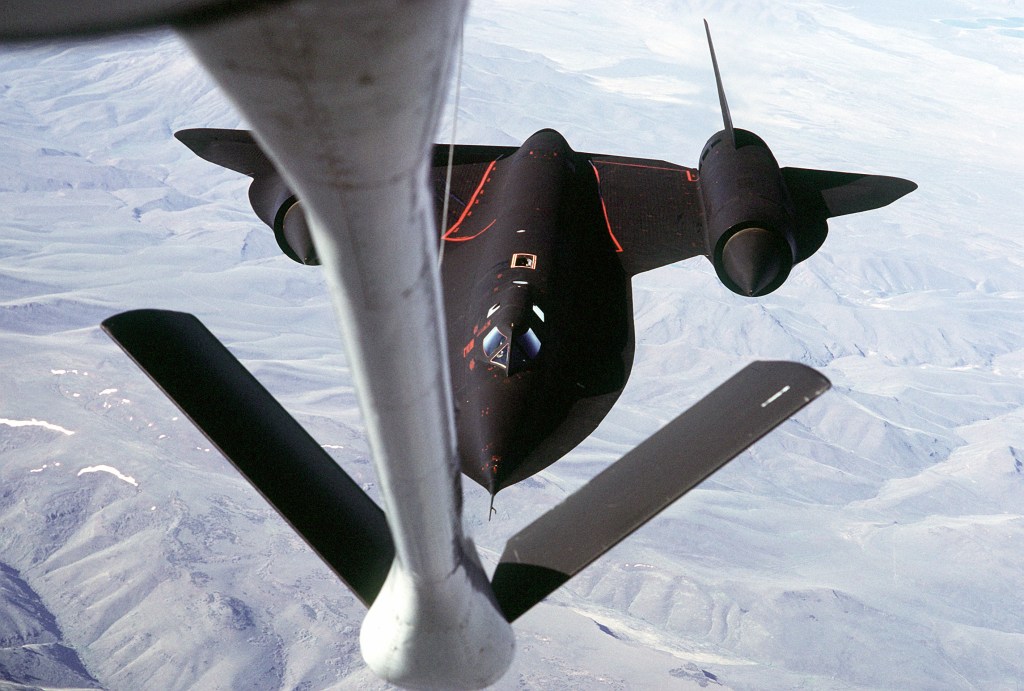
Joerz and Morgan piloted their SR-71 to a speed of 2,193.2 miles per hour – for manned air-breathing jet engined aircraft, a record that stands to this day.
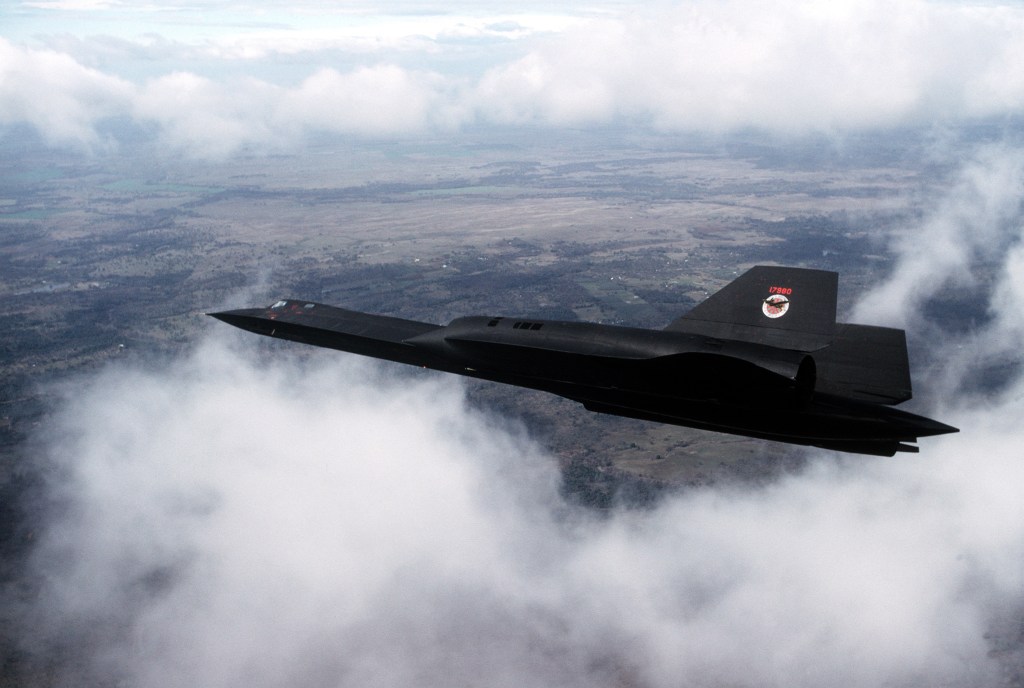
Normal SR-71 missions were similarly performed at high speeds. To get a sense of how fast the plane could go, some pilots reported being able to fly from California, up to Washington state, east to Montana, and then south through the plains states to Texas – and back to California – in an hour’s time.
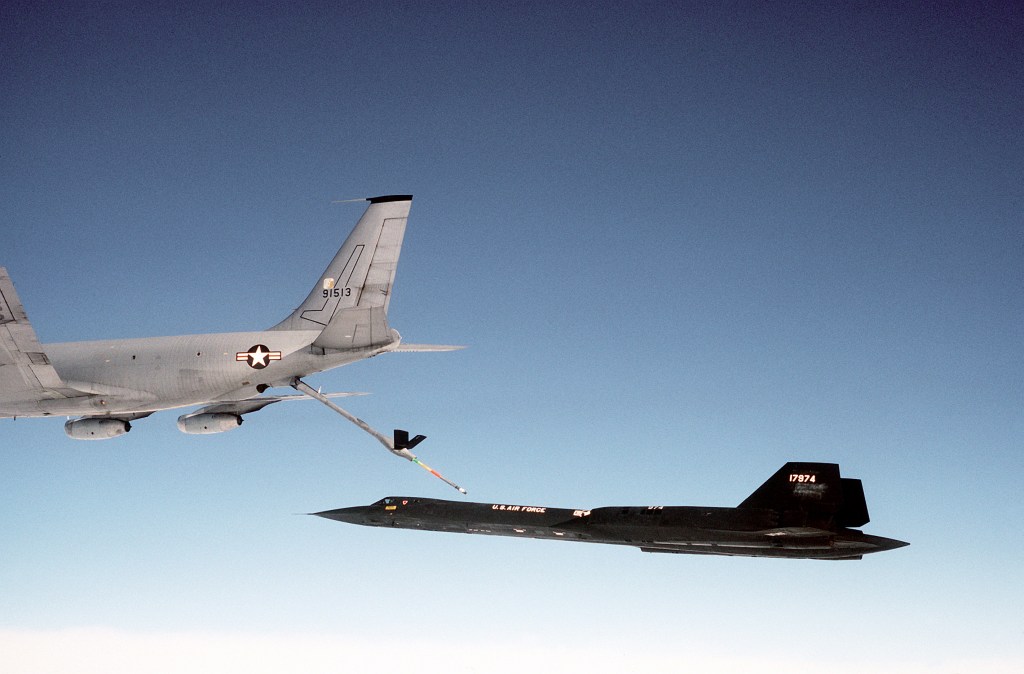
SR-71 pilots were also expected to maintain high altitudes – at times of 70,000 to 75,000 feet. Such high altitudes were to avoid the higher-than-normal air pressure effects of shockwaves on the ground, also known as overpressure.

But just because the SR-71 went fast, did not mean it flew without incident. None were ever shot down, but of the 32 SR-71s made, 12 were lost in accidents, with one pilot lost as well.
Still, the Blackbird was able to fly smoothly for many flights. Some pilots recounted traveling at speeds around Mach 3.2 (2,455 miles per hour), and reportedly not experiencing turbulence at all.
3. The Blackbird’s skin was extremely heat-resistant.

The SR-71 was designed to travel at high speeds – and because of this, its skin needed to be resistant to the high temperatures generated by such travel.
This was indeed the case, as temperatures could reach 570 to 600 degrees Farenheit outside the SR-71’s windscreen when in flight.
The airplane’s heat-resistant skin was composed of 85% titanium alloy (being made from a titanium-dioxide-based ore called rutile ore) with polymer composite materials making up the rest.
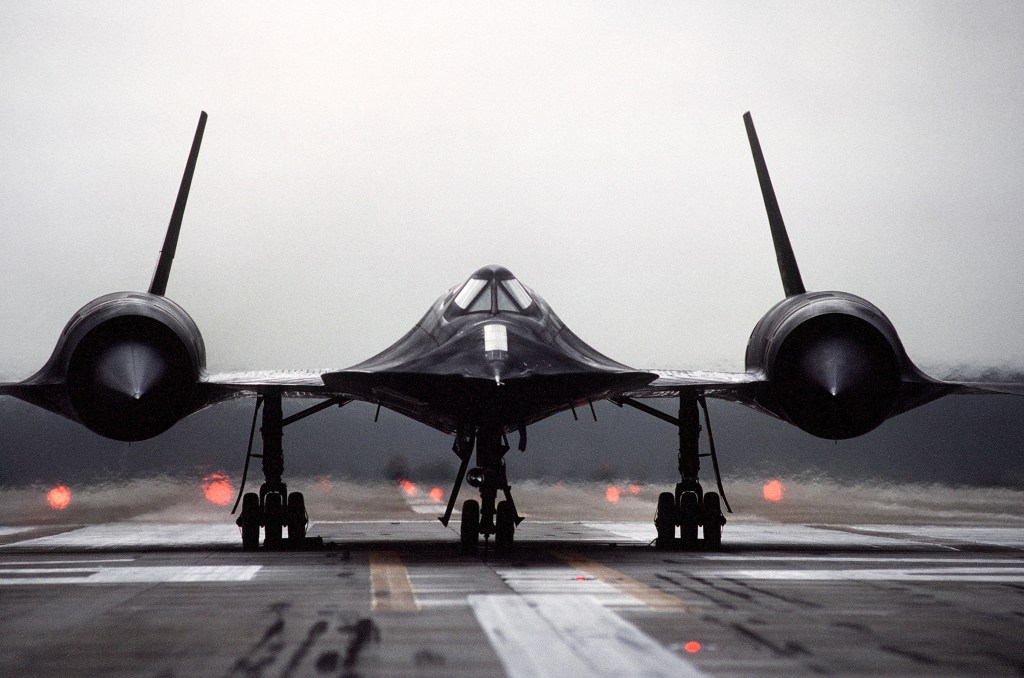
The canopy’s windscreen was made of heat-resistant quartz. The skin was painted black to easier absorb and release heat – thus the nickname “Blackbird” was adapted, unofficially, to the SR-71.
4. The SR-71 was designed to be undetectable to radar.
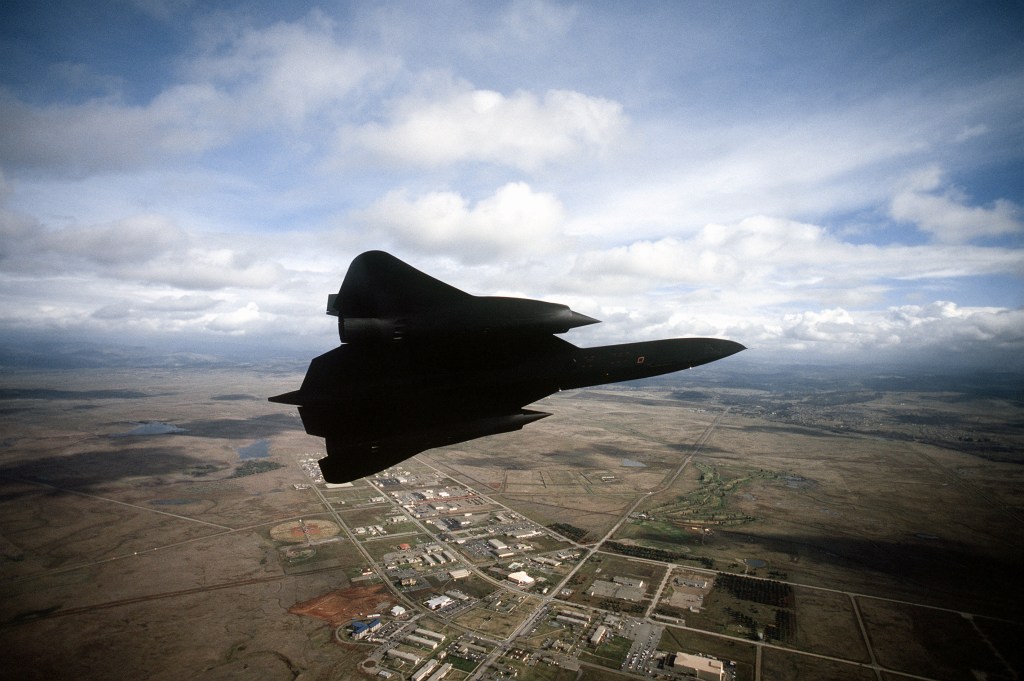
The Blackbird’s dark exterior also served another purpose: to make the airplane nearly invisible to the naked eye at night. This, however, was just the beginning of the airplane’s stealth abilities.
The SR-71’s paint had radar-absorbing, rather than radar-reflecting, ingredients, and the frame of the plane itself was designed in such a way to cut down on its radar cross-section – how much the plane could be detected by radar.
When Lockheed tested stealth abilities of the A-12/SR-71 line , it was found that the 100-foot plus plane would appear on enemy radar as smaller than a human (but incidentally, larger than a bird). With these radar-elusive features, the SR-71 was indeed ready for its intended missions as a spy plane.
5. The Blackbird once made an incredible cross-country flight.
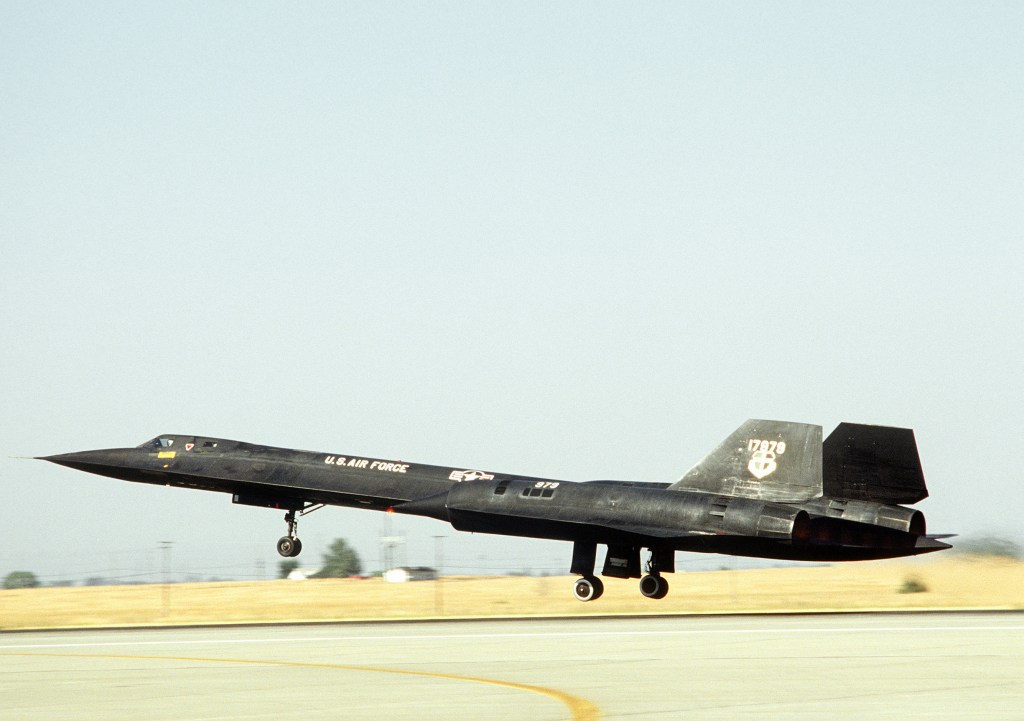
On March 6th, 1990, USAF pilots Lieutenant Colonel Raymond Edward Yeilding and Lieutenant Colonel Joseph Vida flew the SR-71 from Los Angeles, California, to Washington D.C.
The 2,299.7-mile flight took a total time of 1 hour, 4 minutes, and 20 seconds. This was an instant speed record for a manned, air-breathing, jet-propelled Los Angeles to Washington D.C. trip – with the average in-air speed being 2,144.8 miles an hour.

The same flight generated three other records that day: a West Coast-to-East Coast record (with total elapsed time 1 hour, 7 minutes, and 54 seconds), a Kansas City, Missouri to Washington, D.C. record (with a total elapsed time of 25 minutes and 59 seconds), and a St. Louis to Cincinnati record (with a total elapsed time of 8 minutes and 32 seconds).
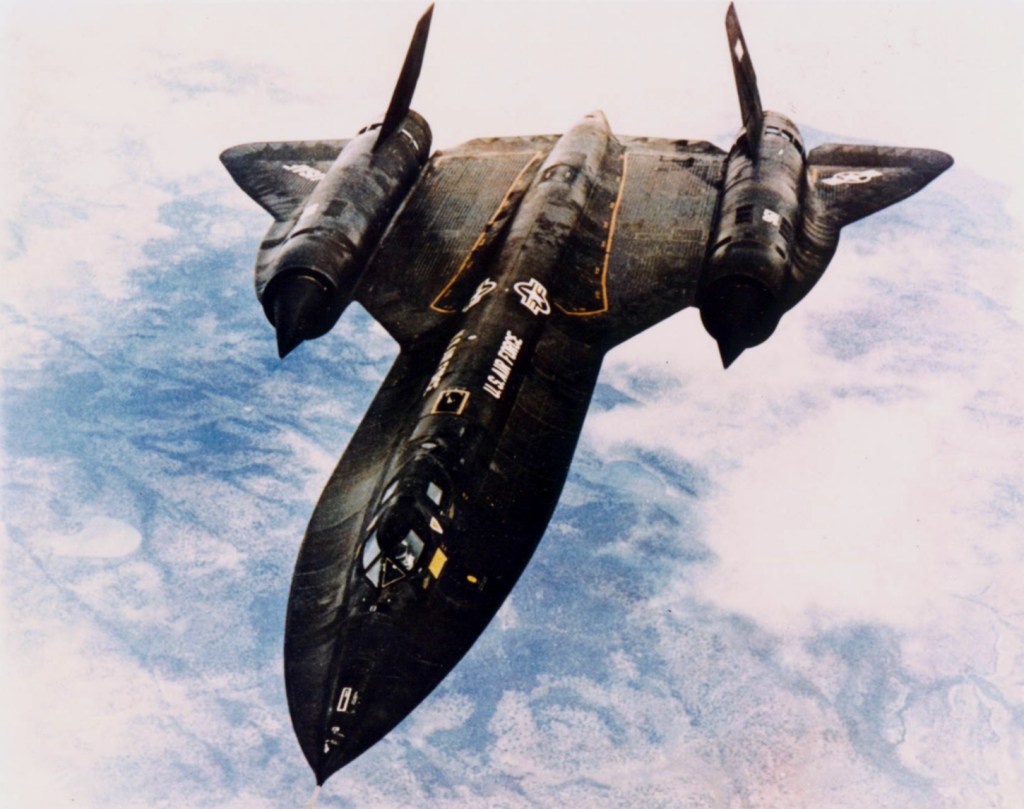
The March 1990 flight was to be one of the last USAF flights of the SR-71 in its original service run, since it was retired that year. The Blackbird did see revived service with NASA and the USAF later in the 1990s, but the SR-71 was ultimately retired for good on October 9th, 1999.
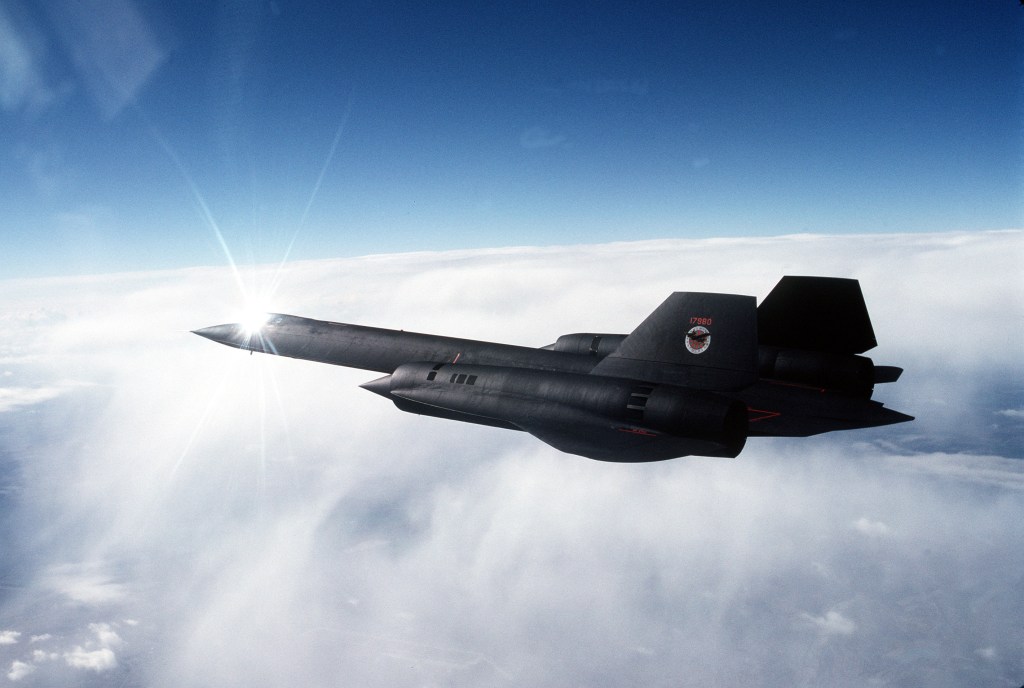
The SR-71’s legacy would be one of intriguing designs, technologies, altitudes, speeds, and records. Its computer system, engines, and design allowed it to travel faster and at higher altitudes than any other airplane at the time — in some ways a foundation for advanced military aircraft of all types to come.
 Waves To Jets